







Designing a zero-waste water treatment plant for a small island
A small island depends on a limited and fragile water supply. Rainfall can be seasonal, groundwater lenses can be easily contaminated, and seawater intrusion may increase as pumping intensifies or sea levels rise. At the same time, importing chemicals, replacement parts, and bottled water is expensive and vulnerable to storms or shipping delays.
A sustainable treatment facility must therefore do more than produce safe drinking water. It should protect the source, use little electricity, avoid unnecessary chemical inputs, recover as much water as possible, and operate reliably with a small local team. The best design is usually a compact treatment train matched to the island’s specific water chemistry rather than a large, complex plant copied from a mainland installation.
Zero-waste water treatment does not mean that every molecule is recovered under every condition. It means designing out avoidable sludge, chemical packaging, disposable cartridges, and poorly managed concentrate while finding a safe purpose or disposal route for unavoidable residuals.
Start with the island water reality
The design process begins with a year-round water assessment. Samples should be collected during wet and dry seasons, after heavy rainfall, and from every proposed source. Testing should cover turbidity, pH, conductivity, hardness, salinity, iron, manganese, arsenic, uranium, pesticides, nitrate, bacteria, and other locally relevant contaminants.
Source reliability matters as much as laboratory results. A shallow well may provide excellent water in one month and show salt intrusion or bacterial contamination in another. A rainwater reservoir may be low in minerals but vulnerable to roof debris, bird waste, and long periods of storage. A desalination feed may be consistent but demand significantly more energy than a protected freshwater source.
The survey should also document elevation, storage capacity, land availability, electricity quality, flood risk, access roads, and the skills available for maintenance. These details determine whether the plant needs a gravity-fed layout, backup generation, remote monitoring, modular equipment, or a mobile unit that can be moved between communities.
Protect the source before treating it
Source protection is the most efficient form of water treatment. Establishing sanitary zones around wells, repairing leaking septic systems, controlling agricultural runoff, and preventing fuel storage near intake points can reduce contaminant loads before water reaches the plant. On a small island, these measures may cost less than adding another treatment stage and can extend equipment life.
Rainwater systems need screened gutters, first-flush diversion, covered tanks, and measures that prevent animals from entering storage areas. Groundwater wells should be sealed correctly and monitored for salinity and microbial changes. If surface water is unavoidable, intake protection and low-impact pretreatment can reduce algae, silt, and organic matter without creating a large waste stream.
The plant should include a sampling point before treatment, between major stages, and at the finished-water outlet. This creates an operating record that can reveal source deterioration early. It also helps operators adjust flow, backwashing, or treatment intensity instead of running every component at maximum capacity.
Choose treatment that avoids unnecessary waste
A low-waste treatment train often combines physical separation, targeted media, disinfection, and efficient storage. A typical arrangement may include a coarse screen, sediment control, catalytic or adsorptive media, cartridge protection where necessary, ultraviolet disinfection, and a final secure tank. The exact sequence depends on the contaminants and whether the source is freshwater, brackish water, or seawater.
Catalytic media can be useful for oxidizing and filtering dissolved iron and manganese, especially when the process is designed around the source’s pH and oxygen conditions. The benefits of catalytic media for manganese include reducing staining and limiting the need for chemical-intensive treatment in suitable applications. Media selection must still be supported by pilot testing, because arsenic, uranium, pesticides, and manganese behave differently in water.
Backwashing deserves special attention in a zero-waste design. Instead of sending washwater directly to the sea or a drainage ditch, the plant can use a settling tank, allow solids to dewater, and return clarified water to the head of the process when regulations and water quality permit. Where a residual cannot be reused, the plant should provide a defined, monitored disposal method that protects soil and coastal ecosystems.
Disinfection should be selected according to water quality and operational capacity. Ultraviolet systems can avoid chemical transport and storage, but they require low turbidity, reliable power, lamp maintenance, and a secure post-treatment tank. Chlorination may provide a useful residual in a long distribution network, although it introduces chemical handling and by-products that must be controlled. A hybrid strategy may be appropriate for public systems with extensive pipelines.
Compare core design choices
Island plants benefit from comparing treatment options by lifecycle impact rather than by purchase price alone. Energy consumption, replacement media, shipping requirements, waste production, operator workload, and resilience during outages should all be included in the decision. A slightly more expensive system may have a much lower cost over ten years if it uses less power and produces fewer consumables.
| Treatment approach | Main strength | Waste and energy profile | Best fit |
|---|---|---|---|
| Protected well with media filtration | Simple operation and low energy use | Limited backwash; low power demand | Freshwater with iron, manganese, or moderate turbidity |
| Rainwater harvesting with disinfection | Uses local rainfall and reduces groundwater pressure | Minimal treatment residuals; storage is essential | Seasonal rainfall and suitable roof catchments |
| Brackish-water reverse osmosis | Produces reliable drinking water from saline sources | Concentrate requires careful management; higher energy use | Islands with persistent salinity and adequate renewable power |
| UV with prefiltration | Chemical-free microbial inactivation | Little solid waste; electricity and lamp replacement required | Clear water with dependable power |
| Adsorptive media treatment | Targets selected dissolved contaminants | Media replacement must be planned and responsibly handled | Arsenic, uranium, pesticides, or other specific contaminants |
Reverse osmosis should not be rejected automatically, but it should be used only when its benefits justify its reject stream and power demand. High-recovery membranes, energy-recovery devices, brine minimization, and a scientifically assessed concentrate outlet can reduce impacts. Discharging concentrated water into a shallow lagoon without dilution or ecological review is not a zero-waste solution.
For small communities, modular treatment can make expansion more practical. A plant may begin with one treatment skid sized for current demand and add a parallel module as population, tourism, or agricultural use grows. This approach also allows one module to remain online while another is serviced.
Match energy and controls to local conditions
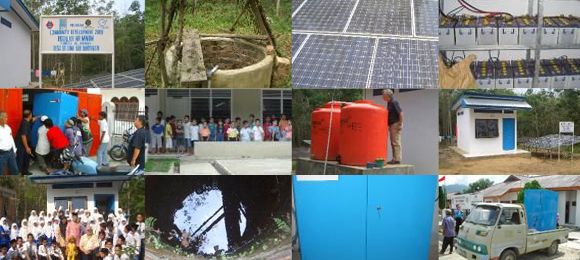
Energy planning should be integrated into the treatment design from the beginning. Solar photovoltaic generation paired with battery storage can operate pumps, ultraviolet units, instruments, and communications, while a high-efficiency backup generator protects essential services during prolonged cloudy weather. Water production can be scheduled during periods of strong renewable generation when storage capacity allows.
Gravity should replace pumping wherever the terrain permits. Locating raw-water storage above the treatment plant, using low-loss piping, and selecting variable-speed pumps can reduce energy demand. Oversized pumps often waste power and create unstable flow conditions, so equipment should be matched to realistic average and peak demand rather than an inflated design figure.
Controls should be simple enough for local operators to understand. Flow, pressure, tank level, conductivity, turbidity, ultraviolet intensity, and critical water-quality indicators can be monitored through a clear interface. Remote alerts are valuable, but the plant must still support manual operation when internet access fails.
Preventive maintenance is part of resilience. The facility should include accessible valves, standard fittings, spare sensors, washable prefilters, and a small inventory of critical parts. Training should cover sampling, sanitation, media inspection, backwash procedures, electrical safety, and what to do when measurements move outside normal limits.
Build circular water management into the layout
A genuinely low-waste facility treats water, solids, energy, and materials as connected flows. Non-potable water recovered from suitable treatment stages may serve equipment washing, landscape irrigation, toilet flushing, or agriculture, provided public-health rules and salinity limits are respected. Potable water should never be compromised to increase recovery.
Sludge and spent media require a documented management plan before construction begins. Settled solids may be suitable for controlled disposal, but contaminant levels must be tested. Media loaded with arsenic, uranium, pesticides, or other hazardous substances should be handled according to local regulations and supplier guidance rather than mixed with ordinary waste.
Storage capacity can improve both sustainability and reliability. Producing water during periods of renewable power, low demand, or good source quality allows the plant to reduce peak loads. Separate tanks for raw, treated, and non-potable water help operators isolate problems without shutting down the entire supply.
Public communication also supports long-term performance. Residents, hotels, farms, and livestock operators should understand which water sources are protected, why conservation matters, and how to report unusual taste, odor, color, or pressure. Clear information reduces misuse and helps identify contamination events early.
Design for emergencies and changing demand
A small island can lose its normal supply after a cyclone, earthquake, drought, fuel shortage, or damaged transmission line. Emergency planning should include protected equipment, elevated electrical components, flood-resistant access, and a procedure for isolating contaminated sources. Critical treatment and storage should be able to operate independently of the wider grid for a defined period.
Modular and transportable equipment can provide an additional layer of security. Mobile purification units can support temporary shelters, remote settlements, construction sites, or a community whose permanent plant is offline. Connections, lifting points, hose fittings, and a suitable hardstand should be prepared before an emergency rather than improvised afterward.
Demand forecasting should include residents, visitors, schools, clinics, farms, livestock, and fire protection. Tourism may multiply water use during the dry season, while agriculture may create the highest demand outside the tourist period. Metering and tiered conservation measures can reveal where treated water is being consumed and protect essential uses during shortages.
The final design should be validated with pilot testing and a lifecycle assessment. Pilot work confirms removal performance, backwash frequency, recovery rates, and media life under local conditions. Lifecycle costing then combines construction, energy, labor, shipping, maintenance, residual management, and eventual replacement.
Priorities for a practical island project
A strong project brief should turn sustainability goals into measurable requirements. The following priorities keep the system efficient without making it unnecessarily complicated:
- Protect and test every viable source before selecting treatment equipment.
- Use gravity, renewable energy, high-recovery processes, and storage to reduce energy demand.
- Select targeted, chemical-light treatment for contaminants confirmed by laboratory analysis.
- Recover suitable backwash and process water while documenting safe handling of residuals.
- Specify modular equipment, local operator training, remote alerts, and emergency operating procedures.
Swiss Cleanwater Group can help translate water-quality results and local operating conditions into a treatment concept for municipal, agricultural, industrial, mobile, or community use. Begin with a source assessment, contaminant profile, demand estimate, and site review, then develop a treatment plant that protects the island’s water security while minimizing waste from day one.
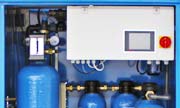
SCM 24
|
|
Cleans 24.000 liters per day
|
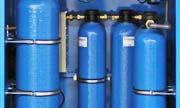
SCM 60
|
|
Cleans 60.000 liters per day
|
Video: How it works
The SCG Advantage
Our market-leading, water cleaning solutions have many advantages. To read more click the items below:
No Chemicals
Our machines and technology does not use any chemicals, at all.
Read more...
No Waste Water
Our machines do not waste any water. Yield = 100%.
Read more...
Low energy use
Uses 50 times less energy than a Reverse Osmosis Machine.
Read more...
Low ownership cost
Lower maintenance and operation costs due to our technology.
Read more...
Easy to install
Simple "plug and play" installation makes for easy deployment.
Read more...
Extremely compact
A compact system, contained in an easy to transport cabinet.
Read more...
Outperforms R.O.
SCG technologies outperform Reverse Osmosis systems.
Read more...
Faster ROI
Get a faster Return on Investment with our systems.
Read more...
Latest News
Latest Blog Posts
| Chemicals in water treatment? |
| Water storage - Whats best for keeping water clean and drinkable? |
| Case: Disaster Management Water Treatment |
Contact SCG
891 Showroom Place
Suite 101
Chula Vista, CA, 91914
Phone: +1 619-878-2730
Contact us by email