








Mobile Water Purification Units for Emergency Response and Military Use
When floods, earthquakes, wildfires, conflicts, or infrastructure failures interrupt a safe water supply, access to treatment can be as important as access to food and shelter. Mobile water purification units provide a flexible way to produce drinking water close to where it is needed, using available surface water, groundwater, wells, tanks, or other local sources.
Emergency agencies and military teams require equipment that can be transported quickly, installed with limited tools, and operated under demanding conditions. A suitable system must also deliver consistent water quality while keeping chemical handling, waste production, and energy consumption under control.
Swiss Cleanwater Group develops water treatment technologies for municipalities, government projects, agriculture, industry, livestock operations, buildings, swimming pools, and mobile applications. Its approach focuses on sustainable purification processes that can address contaminants such as manganese, arsenic, bacteria, pesticides, and uranium.
Why Mobility Matters During Water Emergencies
A fixed treatment plant depends on functioning infrastructure, stable electricity, and permanent intake and distribution networks. These may be unavailable after a disaster or in remote operational areas. Mobile equipment can be delivered by truck, trailer, container, or other transport platform and positioned near a temporary camp, field hospital, evacuation center, or military base.
This flexibility reduces the distance between the raw water source and the people who need treated water. It can also support several locations during a prolonged response. Once one site has stabilized, a mobile purification unit can be relocated to another community or operational zone.
Rapid deployment does not remove the need for careful planning. Teams must assess the source water, expected flow rate, daily demand, available power, weather conditions, access roads, and operator skills. These details determine whether a compact skid-mounted system, a containerized plant, or a larger transportable installation is appropriate.
Treatment Performance In Uncertain Conditions
Emergency water sources can change quickly. Heavy rain may increase turbidity and introduce bacteria, while groundwater may contain naturally occurring minerals. Agricultural areas can present pesticide risks, and some geological regions have elevated arsenic, uranium, or manganese. A system designed for one source may require different pretreatment or configuration at another.
Water analysis should therefore guide equipment selection. The treatment train may include screening, sediment removal, oxidation, adsorption, membrane filtration, ultraviolet treatment, or other processes. The goal is to match the technology to the contaminants rather than rely on a single universal method.
Chemical-free treatment can simplify logistics by reducing the need to transport, store, and dose reagents. It may also limit chemical residues and handling risks in crowded emergency environments. For groundwater containing manganese, Swiss Cleanwater Group explains how a chemical-free filtration process can support removal without adding treatment chemicals to the water.
Choosing A System For Field Deployment
Portability includes more than physical size. A practical field water treatment system should be easy to load, secure, connect, operate, clean, and maintain. Connections should be accessible, components should withstand transport, and the unit should be compatible with the vehicles and lifting equipment already available to the response team.
Power requirements are equally important. Some deployment sites have reliable grid electricity, while others depend on generators, batteries, or renewable power. Lower energy demand can reduce fuel consumption and simplify resupply. Operators should also understand startup requirements, flow limitations, backwashing or cleaning procedures, and the need for replacement filters or other consumables.
A robust design should support safe operation by personnel with different levels of technical experience. Clear controls, monitoring points, alarms, and documented procedures help teams identify problems before water quality is affected. Remote monitoring may also assist centralized technical staff when specialist personnel cannot travel to the site.
| Consideration | Emergency Response | Military And Remote Operations |
|---|---|---|
| Deployment | Rapid installation near affected communities | Transport by vehicle, trailer, or container |
| Water source | Wells, rivers, tanks, or temporary intakes | Local groundwater or surface water |
| Main priorities | Safe drinking water and simple operation | Reliability, mobility, discretion, and endurance |
| Power | Grid connection, generator, or hybrid supply | Generator, battery, or independent power |
| Maintenance | Accessible parts and clear procedures | Long service intervals and field repairability |
| Treatment goals | Microbial and chemical contaminant control | Consistent quality under changing conditions |
| Expansion | Adaptable capacity for changing demand | Modular systems for different missions |
Contaminant Removal Without Excessive Logistics
The most useful purification unit is one that addresses the actual risks in the source water. Bacteria require effective disinfection or physical removal, while dissolved contaminants such as arsenic, uranium, or pesticides may require specialized media or membrane processes. Turbidity and suspended solids can interfere with downstream treatment, making pretreatment an important part of reliable operation.
Manganese can cause discoloration, taste, staining, and operational problems even when it is not immediately visible in raw water. Arsenic is a more serious concern because it can occur naturally in groundwater and may remain undetected without testing. A rural community case study on arsenic removal methods illustrates why source-specific treatment is essential when chemical-free purification is being considered.
The treatment process should be verified through water testing before deployment and monitored during operation. Portable testing equipment can help operators track key parameters, while laboratory analysis provides more detailed confirmation. This combination supports practical decisions about flow, maintenance, and when treatment media or filters need attention.
Supporting Humanitarian And Military Missions
Emergency responders need water for drinking, cooking, medical care, hygiene, and sometimes firefighting support. A mobile purification plant can help restore basic services while permanent infrastructure is repaired. In refugee or displacement settings, it may operate as part of a larger water distribution network that includes storage tanks, pumps, filling points, and transport containers.
Military applications place additional demands on equipment. Units may need to operate in remote terrain, under strict transport constraints, or with limited access to spare parts. Systems should be designed around the mission profile, including expected daily volume, source variability, concealment or noise considerations, climate, and the number of people available for operation.
A modular approach allows capacity and treatment stages to be matched to a specific mission. Smaller units may supply a patrol base or medical team, while larger containerized systems can support a temporary installation. The same equipment may also be useful for disaster relief, civil protection, construction camps, and remote industrial operations.
Sustainability, Waste, And Lifecycle Value
Fuel, chemicals, replacement parts, and waste disposal can become major costs during long deployments. Water purification technologies that use less energy and produce limited waste can reduce the logistical burden. This is especially valuable where roads are damaged, transport is expensive, or resupply exposes personnel to additional risk.
Chemical-free operation may also improve safety around temporary housing, food preparation areas, and medical facilities. It does not eliminate the need for monitoring, cleaning, or correct process control, but it can reduce dependence on hazardous substances and simplify storage requirements.
Lifecycle value should be assessed rather than focusing only on the purchase price. Buyers should consider transport, installation, operator training, energy use, consumables, maintenance, water recovery, and eventual relocation. A well-selected system can continue serving different communities or missions over many years instead of becoming redundant after a single emergency.
Practical Selection Recommendations
Before ordering a mobile purification unit, response planners and procurement teams should document the operational environment and define measurable water quality targets. The following points help create a more reliable specification:
- Test the intended raw water for microbial, mineral, and chemical contaminants before selecting treatment technology.
- Define daily production, peak demand, storage volume, and the number of people or facilities to be supplied.
- Confirm transport dimensions, lifting points, installation time, power supply, and operating conditions.
- Choose equipment with accessible maintenance points, clear controls, available spare parts, and documented training.
- Include sampling, quality verification, cleaning, waste management, and relocation procedures in the deployment plan.
A supplier should be able to explain how the system responds to changing source water and how performance will be monitored in the field. Technical documentation, product specifications, case studies, and commissioning support are valuable when equipment must be deployed quickly and used by teams working under pressure.
Swiss Cleanwater Group can help organizations evaluate sustainable water treatment options for emergency services, government projects, military applications, and other mobile operations. Contact the company to discuss source-water conditions, required capacity, contaminant risks, and a purification configuration suited to the mission.
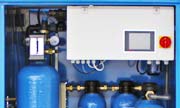
SCM 24
|
|
Cleans 24.000 liters per day
|
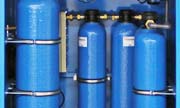
SCM 60
|
|
Cleans 60.000 liters per day
|
Video: How it works
The SCG Advantage
Our market-leading, water cleaning solutions have many advantages. To read more click the items below:
No Chemicals
Our machines and technology does not use any chemicals, at all.
Read more...
No Waste Water
Our machines do not waste any water. Yield = 100%.
Read more...
Low energy use
Uses 50 times less energy than a Reverse Osmosis Machine.
Read more...
Low ownership cost
Lower maintenance and operation costs due to our technology.
Read more...
Easy to install
Simple "plug and play" installation makes for easy deployment.
Read more...
Extremely compact
A compact system, contained in an easy to transport cabinet.
Read more...
Outperforms R.O.
SCG technologies outperform Reverse Osmosis systems.
Read more...
Faster ROI
Get a faster Return on Investment with our systems.
Read more...
Latest News
Latest Blog Posts
| Chemicals in water treatment? |
| Water storage - Whats best for keeping water clean and drinkable? |
| Case: Disaster Management Water Treatment |
Contact SCG
891 Showroom Place
Suite 101
Chula Vista, CA, 91914
Phone: +1 619-878-2730
Contact us by email