









How Catalytic Media Can Reduce Lead in Drinking Water
Lead in drinking water is usually a plumbing problem rather than a source-water problem. The metal can enter water as it passes through lead service lines, brass fittings, solder, valves, or aging household plumbing. Because lead is invisible and tasteless, reliable testing is essential before selecting a treatment method.
Catalytic media can form part of an effective lead-removal system when the media, contact time, water chemistry, and flow rate are correctly matched. These granular materials provide reactive or high-surface-area sites that capture dissolved contaminants as water moves through a pressure vessel. Their performance depends on the actual chemical form of lead and the other substances present.
A treatment strategy should also address the source of contamination. Filtration can reduce lead in water at a tap, while replacing corroding components may prevent the metal from entering the supply in the first place. For homes, public buildings, farms, and larger installations, treatment design should combine laboratory analysis with practical operating requirements.
How Lead Enters Drinking Water
Lead rarely occurs as a major naturally dissolved contaminant in most public water supplies. It is more commonly released when water remains in contact with lead-containing materials. Low pH, low alkalinity, high chloride levels, elevated temperature, and changes in disinfectant chemistry can increase corrosion and lead leaching.
The first-draw sample from a tap may contain a higher concentration than water collected after several minutes of flushing. This variation makes sampling procedure important. A laboratory should generally analyze both stagnant water and flushed water when the source of contamination is uncertain. Testing can also reveal whether lead is present as dissolved ions, attached to particles, or in both forms.
Particle-bound lead requires a different approach from dissolved lead. Sediment filtration can capture flakes and corrosion particles, but it will not reliably remove soluble lead ions. A treatment train may therefore need prefiltration followed by a catalytic or adsorptive medium designed for dissolved metals.
What Catalytic Media Do
Catalytic media are engineered granules that promote surface reactions or provide active sites for contaminant capture. Depending on the product, lead may be retained through adsorption, surface complexation, ion exchange, precipitation, or a combination of these mechanisms. The term “catalytic” does not describe one universal material, so the manufacturer’s performance data should be reviewed carefully.
Some media use manganese dioxide coatings or other mineral surfaces primarily developed for iron and manganese oxidation. These materials may assist with lead control under particular water conditions, but they should not automatically be treated as certified lead-removal media. Other specialized media are formulated for heavy metals and may offer stronger affinity for lead, copper, or other charged contaminants.
Water chemistry determines how available the active sites remain. Hardness, dissolved organic matter, silica, iron, manganese, sulfate, and competing metals can occupy surface sites or alter lead speciation. pH is especially important: a medium can perform well within a defined range and poorly outside it. Pilot testing or validated technical data is preferable to relying on a general contaminant list.
Building A Treatment Train
A dependable system often begins with a sediment filter or multimedia filter. This stage protects the catalytic bed from suspended solids, rust, and corrosion debris that could cause pressure loss or reduce contact with active surfaces. If iron or manganese is present, removing or controlling those contaminants may also protect the lead-removal stage.
The catalytic vessel should be sized for the required peak flow, not merely the average daily volume. Water must remain in contact with the media long enough for the capture reaction to occur. Excessive velocity can shorten contact time and push lead through the bed. A correctly sized vessel, controlled flow, and suitable distribution system are central to consistent performance.
Backwashing may be necessary to remove trapped particles and prevent channeling. The frequency depends on suspended solids, loading, media density, and vessel design. Backwash discharge should be managed responsibly because it can contain concentrated metals. Systems serving agricultural or livestock sites also need practical drainage and maintenance arrangements; guidance on a livestock water system illustrates why treatment must fit the wider operation.
| Treatment approach | Main role | Strengths | Important limitations |
|---|---|---|---|
| Sediment filtration | Removes particulate lead and rust | Simple protection stage; reduces turbidity | Does not reliably remove dissolved lead |
| Catalytic or specialty adsorptive media | Captures dissolved lead on reactive surfaces | Continuous treatment; suitable for point-of-entry systems | Sensitive to pH, competing ions, flow, and media exhaustion |
| Reverse osmosis | Separates dissolved contaminants through a membrane | High reduction potential for many dissolved metals | Produces reject water; needs pressure and pretreatment |
| Ion exchange | Exchanges lead ions for other ions on a resin | Can provide strong metal removal when properly selected | Resin fouling and competing ions require control |
| Point-of-use cartridge | Treats water at a drinking tap | Useful where only a few outlets need protection | Requires timely replacement and does not protect all plumbing |
Managing Media Capacity And Maintenance
Every treatment medium has a finite capacity. Once active sites become occupied, lead breakthrough can occur, sometimes before a visible change in taste, color, or pressure. A replacement interval should therefore be based on influent concentration, treated volume, peak flow, water chemistry, and the supplier’s capacity data.
Routine monitoring helps identify performance loss. Testing should be performed after commissioning and at intervals appropriate to the risk level and system size. A sudden change in source water, pH, disinfectant, flow, or sediment load is a reason to test again. Pressure gauges can indicate fouling, while flow controls help prevent accidental overloading.
Media handling also matters. Spent material should be treated as potentially contaminated and disposed of according to local requirements. Operators should keep records of installation date, batch or lot information, flow settings, backwash cycles, sample results, and replacement dates. This documentation supports compliance and makes it easier to diagnose a problem.
Matching The System To The Site
A point-of-use filter under a kitchen sink may be appropriate for a small building where only drinking and cooking water require protection. A point-of-entry system is more suitable when lead exposure may occur through multiple outlets, such as showers, food preparation areas, schools, healthcare facilities, or worker accommodations. The decision should consider exposure pathways as well as hydraulic demand.
Large facilities require additional planning. Municipal buildings, industrial sites, farms, and mobile units may have variable demand, multiple pressure zones, intermittent operation, or limited space for backwash. Water treatment equipment should be selected around those conditions rather than installed as an isolated cartridge. Sustainable design can also reduce operating costs by limiting chemical use, unnecessary waste, and excessive energy consumption.
Agricultural water systems demonstrate the value of source-specific planning. The chemistry needed for a greenhouse water treatment system may be shaped by irrigation, fertilizer, and nutrient balance, while drinking-water treatment must prioritize health protection and stable residual quality. The same principle applies to livestock operations, swimming pools, and industrial reuse: application determines the right treatment train.
Verifying Lead Reduction
A claim that a medium “treats heavy metals” is not enough to establish suitability for drinking water. Look for test data identifying lead concentration, pH, flow rate, empty bed contact time, competing contaminants, and the point at which breakthrough occurred. Independent certification or compliance with applicable drinking-water standards adds valuable assurance.
Sampling should include the treated outlet and, where relevant, untreated water entering the system. Samples need clean containers, correct preservation, and a laboratory method appropriate for trace metals. Improper sampling can introduce lead from taps, fittings, dust, or handling and produce misleading results.
Treatment does not eliminate the need to address a lead service line or corroding fixture. If the contamination source remains in place, a filter protects water only after it reaches the treatment point. A water professional can help determine whether component replacement, corrosion control, filtration, or a combination provides the most durable solution.
Practical Design Priorities
A lead-removal installation is more dependable when design decisions are documented before equipment is ordered. The following priorities provide a useful basis for a site assessment:
- Test both source water and representative tap water for total and dissolved lead.
- Measure pH, alkalinity, hardness, turbidity, iron, manganese, chloride, sulfate, and organic matter.
- Confirm the media’s validated lead capacity and operating pH range.
- Size the vessel for peak flow and provide suitable pretreatment, bypass control, and backwash management.
- Establish a sampling, maintenance, and media-replacement schedule before commissioning.
Operators should also consider whether a temporary point-of-use solution is needed while permanent work is completed. Drinking and cooking outlets can be prioritized, and flushing protocols may provide short-term risk reduction where recommended by local health authorities. These measures complement treatment; they do not replace source control or performance verification.
For organizations managing several sites, standard operating procedures make results more consistent. Staff should know which valves to operate, how to record pressure and flow, when to collect samples, and how to respond to an alarm or failed test. Clear responsibilities are particularly important in schools, public buildings, farms, and remote installations.
Catalytic media can be a low-waste, continuous option for reducing dissolved lead when the medium is selected for the water chemistry and operated within its design limits. Swiss Cleanwater Group provides water-treatment information and equipment options for applications that range from buildings and municipalities to industrial and mobile systems. For service updates or account choices, users can review the newsletter preferences.
Arrange a site-specific water analysis before choosing a catalytic vessel, cartridge, or complete treatment train. With verified media performance, appropriate pretreatment, controlled flow, and regular testing, a lead-removal system can protect drinking-water quality while fitting the practical and environmental requirements of the facility.
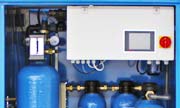
SCM 24
|
|
Cleans 24.000 liters per day
|
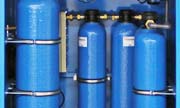
SCM 60
|
|
Cleans 60.000 liters per day
|
Video: How it works
The SCG Advantage
Our market-leading, water cleaning solutions have many advantages. To read more click the items below:
No Chemicals
Our machines and technology does not use any chemicals, at all.
Read more...
No Waste Water
Our machines do not waste any water. Yield = 100%.
Read more...
Low energy use
Uses 50 times less energy than a Reverse Osmosis Machine.
Read more...
Low ownership cost
Lower maintenance and operation costs due to our technology.
Read more...
Easy to install
Simple "plug and play" installation makes for easy deployment.
Read more...
Extremely compact
A compact system, contained in an easy to transport cabinet.
Read more...
Outperforms R.O.
SCG technologies outperform Reverse Osmosis systems.
Read more...
Faster ROI
Get a faster Return on Investment with our systems.
Read more...
Latest News
Latest Blog Posts
| Chemicals in water treatment? |
| Water storage - Whats best for keeping water clean and drinkable? |
| Case: Disaster Management Water Treatment |
Contact SCG
891 Showroom Place
Suite 101
Chula Vista, CA, 91914
Phone: +1 619-878-2730
Contact us by email