


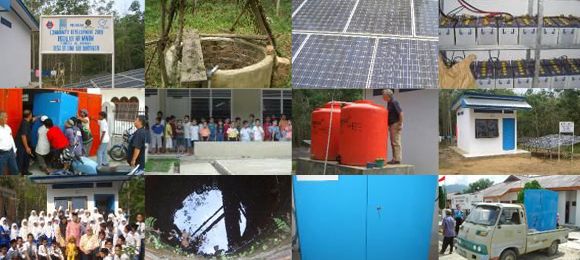







Removing Nitrates From Groundwater Without Ion Exchange Resins
Nitrate contamination is a growing concern for drinking-water suppliers, farms, food processors, and private well owners. It commonly enters groundwater through agricultural fertiliser, manure storage, septic systems, wastewater infiltration, and industrial activity. Because nitrate is highly soluble, it can travel through soil and remain in aquifers for long periods.
Ion exchange has traditionally been used to reduce nitrate, but resin systems bring operational considerations such as brine regeneration, spent regenerant disposal, resin replacement, and sensitivity to competing ions. Facilities seeking lower chemical use and less waste can consider biological treatment, membrane separation, and electrochemical processes.
The most suitable solution depends on nitrate concentration, flow rate, water chemistry, treatment goals, and the intended use of the water. A well-designed system can target nitrate while preserving water quality and controlling energy consumption.
Why Nitrate Requires Targeted Treatment
Nitrate is a dissolved nitrogen compound that passes easily through conventional sediment filters, activated carbon, and many standard oxidation systems. These technologies may improve colour, odour, suspended solids, or organic contamination, but they generally do not remove nitrate ions from groundwater.
The health concern is especially important for drinking water prepared for infants and vulnerable groups. Nitrate can also signal broader agricultural or wastewater contamination, which may include nitrite, pathogens, pesticides, or elevated salinity. Testing should therefore cover the full water profile rather than focusing on nitrate alone.
A treatment design begins with laboratory analysis. Useful parameters include nitrate and nitrite, pH, alkalinity, dissolved oxygen, temperature, iron, manganese, sulphate, chloride, hardness, organic carbon, and microbial activity. Seasonal sampling can reveal whether contamination changes during rainfall, irrigation, or pumping cycles.
Resin-Free Routes For Nitrate Reduction
Biological denitrification uses microorganisms to convert nitrate into nitrogen gas under controlled low-oxygen conditions. The process can be configured as a fixed-bed reactor, fluidised bed, membrane bioreactor, or other engineered biological stage. Depending on the design, a carbon source may be supplied to support microbial activity, although the overall process can avoid ion exchange brine and reduce chemical waste.
Reverse osmosis is another established approach. A semi-permeable membrane separates a purified permeate stream from a concentrated reject stream containing nitrate and other dissolved salts. RO can provide broad contaminant reduction, which is valuable where groundwater also contains arsenic, pesticides, uranium, hardness, or high conductivity.
Electrodialysis and electrodialysis reversal use an electric field and selective membranes to move charged ions out of the treated stream. These systems can be efficient for certain mineral compositions and may offer useful control over recovery and concentrate management. Capacitive deionisation is another electrochemical option for lower-salinity water, although its suitability depends strongly on nitrate levels and competing ions.
Comparing Treatment Options
No resin-free method is universally best. Biological systems may offer lower pressure requirements, while membrane systems can provide predictable separation across a wider range of dissolved contaminants. Electrochemical technologies can be attractive where modular operation, selective ion removal, or reduced chemical handling is important.
The final choice should include concentrate or residuals management. A process that removes nitrate from one stream but creates an unmanaged waste stream is incomplete. Pilot testing can establish recovery, cleaning frequency, biological stability, membrane life, and actual energy demand before full-scale installation.
| Treatment route | Main removal principle | Residual stream | Energy profile | Best suited to |
|---|---|---|---|---|
| Biological denitrification | Microbial conversion of nitrate to nitrogen gas | Biomass and treated water; possible carbon residuals | Low to moderate, depending on reactor | Stable flows with suitable biological control |
| Reverse osmosis | Membrane separation under pressure | Concentrate containing nitrate and salts | Moderate to high | Broad dissolved-contaminant reduction |
| Electrodialysis reversal | Electrically driven ion migration | Concentrate stream | Moderate | Mineral-rich water with controllable chemistry |
| Capacitive deionisation | Ion adsorption in charged electrodes | Regeneration stream | Low to moderate for suitable feed water | Lower-salinity groundwater and polishing |
| Hybrid treatment | Combination of biological, membrane, or polishing stages | Depends on configuration | Variable | Complex water chemistry and strict targets |
Biological Denitrification In Practice
A biological nitrate removal system must maintain the right conditions for denitrifying bacteria. Dissolved oxygen, oxidation-reduction potential, temperature, pH, nutrient balance, and hydraulic retention time all affect performance. Excess oxygen can suppress denitrification, while insufficient carbon or unstable flow can reduce nitrate conversion.
After the biological stage, water may require aeration, filtration, disinfection, or polishing. This is especially important when the water will be distributed as drinking water. Monitoring should verify that nitrate and nitrite remain within the applicable legal limits and that microbial by-products do not pass into the finished water.
Temperature has a direct influence on reaction rates and microbial activity. Seasonal groundwater changes can therefore affect capacity and start-up time. Guidance on temperature effects is useful when evaluating how changing conditions may influence chemical-free or biologically assisted filtration performance.
Membrane And Electrochemical Systems
Reverse osmosis can remove nitrate without resin regeneration, but it should be designed around recovery and concentrate disposal. Pretreatment may be required to limit scaling, fouling, and particulate loading. Depending on the source water, this can include sediment removal, iron and manganese control, antiscaling measures, or a low-chemical pretreatment strategy.
RO permeate may be too low in minerals for some applications, so stabilisation or blending can be necessary. A well-designed control system can adjust production to demand, protect membranes during abnormal feed conditions, and reduce unnecessary flushing. For industrial users, recovered water can sometimes be directed to suitable process steps instead of being discharged.
Electrodialysis reversal can periodically change the direction of ion movement, helping control membrane fouling and scaling. It can be a strong candidate where nitrate removal must be combined with conductivity reduction and where a concentrate stream can be managed responsibly. Its performance depends on ion composition, electrical conductivity, current density, and target recovery.
Water efficiency should be assessed across the entire site. An industrial water reuse case study shows why treatment design may need to consider reuse opportunities alongside contaminant removal. Reducing freshwater demand can improve the overall environmental performance of a nitrate treatment project.
Designing A Reliable Groundwater System
Treatment capacity should reflect average demand, peak flow, storage volume, and future changes in water use. Municipal systems may require continuous duty and redundancy, while a farm or industrial facility may operate in batches. Mobile units and emergency applications place greater emphasis on compact equipment, rapid commissioning, and simple controls.
Pretreatment is often decisive. Suspended solids can block membranes, iron and manganese can foul equipment, and organic matter can support unwanted microbial growth. A staged arrangement may include raw-water screening, oxidation or biological conditioning, media filtration, nitrate removal, disinfection, and final water-quality monitoring.
Automation should track pressure, conductivity, flow, nitrate concentration, tank levels, oxidation-reduction potential, and alarms. Online nitrate analysers can support process control, but periodic laboratory testing remains important for verification. Operators also need clear procedures for cleaning, backwashing, biological start-up, membrane replacement, and residuals handling.
Practical Selection Criteria
A feasibility assessment should compare treatment performance with the site’s environmental and operational priorities. Chemical consumption, waste volume, energy use, land requirements, operator skills, and maintenance access can be as important as the headline nitrate-removal rate.
Useful decision points include:
- Confirm nitrate, nitrite, salinity, hardness, iron, manganese, sulphate, organic matter, and microbial conditions through representative sampling.
- Define the required treated-water quality for drinking, irrigation, livestock, industrial reuse, or discharge.
- Compare biological, RO, electrodialysis, and hybrid options using recovery, residuals, energy, and maintenance data.
- Run pilot testing when feed-water chemistry varies seasonally or when nitrate removal must be combined with other contaminant controls.
- Plan for monitoring, concentrate management, system redundancy, and future water reuse before selecting equipment.
A technology provider should be able to explain the complete water balance, including what enters the system, what becomes treated water, and what leaves as concentrate, biomass, backwash, or cleaning waste. This approach prevents a narrow nitrate solution from creating a larger management problem elsewhere.
Nitrate contamination can be addressed without ion exchange resins when the treatment process is matched to the groundwater chemistry and operating context. Biological conversion, pressure-driven membranes, electrochemical separation, and hybrid systems each provide a pathway to cleaner water with different resource requirements.
Swiss Cleanwater Group supports water-treatment projects across municipal, agricultural, industrial, livestock, building, mobile, and government applications. To discuss a suitable approach for your groundwater, arrange a free demonstration and use site-specific analysis to guide the next design decision.
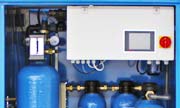
SCM 24
|
|
Cleans 24.000 liters per day
|
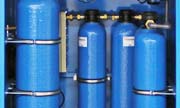
SCM 60
|
|
Cleans 60.000 liters per day
|
Video: How it works
The SCG Advantage
Our market-leading, water cleaning solutions have many advantages. To read more click the items below:
No Chemicals
Our machines and technology does not use any chemicals, at all.
Read more...
No Waste Water
Our machines do not waste any water. Yield = 100%.
Read more...
Low energy use
Uses 50 times less energy than a Reverse Osmosis Machine.
Read more...
Low ownership cost
Lower maintenance and operation costs due to our technology.
Read more...
Easy to install
Simple "plug and play" installation makes for easy deployment.
Read more...
Extremely compact
A compact system, contained in an easy to transport cabinet.
Read more...
Outperforms R.O.
SCG technologies outperform Reverse Osmosis systems.
Read more...
Faster ROI
Get a faster Return on Investment with our systems.
Read more...
Latest News
Latest Blog Posts
| Chemicals in water treatment? |
| Water storage - Whats best for keeping water clean and drinkable? |
| Case: Disaster Management Water Treatment |
Contact SCG
891 Showroom Place
Suite 101
Chula Vista, CA, 91914
Phone: +1 619-878-2730
Contact us by email