







Removing Pesticides From Rainwater Harvesting Systems
Rainwater harvesting can provide a dependable source of water for farms, buildings, livestock facilities, and remote sites. Yet rainfall does not always arrive as a clean raw material. As it passes through polluted air or flows across roofs, gutters, and collection surfaces, it may carry traces of herbicides, fungicides, insecticides, petroleum residues, metals, and microorganisms into the storage tank.
Pesticide contamination is often difficult to detect without laboratory testing. Many compounds have no noticeable taste, smell, or color, and concentrations can vary after every storm. A system that produces clear water may still require treatment before the water is used for drinking, food preparation, animal care, irrigation, or industrial processes.
Effective protection therefore combines source control, good harvesting design, targeted filtration, and regular monitoring. The right process depends on the pesticide family, concentration, water volume, intended use, and the presence of other contaminants. A treatment system should be selected from measured water quality rather than from appearance alone.
Why Pesticides Enter Harvested Rainwater
Pesticides can reach a collection system through atmospheric deposition, especially near intensively cultivated land, greenhouses, orchards, vineyards, and areas where spraying is frequent. Wind can carry fine droplets or dust beyond the treated field. Rain then washes these residues from the atmosphere onto roofs and paved collection surfaces.
The first runoff from a roof often contains the highest contaminant load. Dust, bird droppings, decaying leaves, and chemical residues accumulate between rainfall events and are released when the next storm begins. Roofing materials, bitumen coatings, wood preservatives, and old gutter components can add further pollutants to the harvested water.
Storage conditions also influence water quality. Warm tanks exposed to sunlight may support biological growth, while sediment at the bottom can retain hydrophobic pesticide compounds. Turbidity and organic matter can consume filter capacity and make downstream disinfection less reliable. These factors make pretreatment an important part of pesticide control.
Start With A Water Quality Assessment
A representative sample should be collected after the water has passed through the normal roof, first-flush device, and storage arrangement. Testing only a clean tank or a laboratory-prepared sample can give a misleading result. Samples should reflect the water that users will actually receive at the point of use.
Laboratory analysis may include a broad pesticide screen followed by targeted testing for compounds commonly used in the surrounding area. It is also useful to measure turbidity, pH, conductivity, dissolved organic carbon, hardness, iron, manganese, bacteria, and other site-specific contaminants. These parameters affect adsorption, membrane performance, and maintenance intervals.
The same disciplined approach applies when several contaminants occur together. Information from a rural arsenic case study illustrates why treatment decisions should be based on actual source-water conditions, operating requirements, and verification after installation. Pesticide removal should be validated in the same way.
Build A Treatment Train Around The Contaminant
A rainwater purification system commonly begins with a leaf screen, roof washer, first-flush diverter, and sediment filter. These components reduce the solids and organic debris that would otherwise shorten the life of finer treatment media. They do not, by themselves, reliably remove dissolved pesticides.
Granular activated carbon is one of the most established options for reducing many organic pesticides. Its porous structure adsorbs compounds onto the media surface, although performance varies according to molecular structure, carbon quality, contact time, temperature, and competing organic matter. Carbon beds require correct sizing and timely replacement or regeneration. A saturated cartridge can become ineffective and may release previously retained contaminants.
Membrane processes can provide another level of protection. Reverse osmosis may reject a broad range of dissolved chemicals, but its performance depends on membrane type, pressure, pretreatment, and pesticide characteristics. Nanofiltration can be suitable for selected compounds and may use less energy than reverse osmosis, while ultrafiltration is primarily a barrier for particles, colloids, and microorganisms rather than small dissolved molecules. Ultraviolet treatment is valuable for microbial inactivation but does not remove pesticides.
Hardness, scale, and dissolved metals can interfere with membrane systems. Where these issues are present, a salt-free softening approach may help protect equipment without adding salt to the water stream. The solution still needs to be matched to the water chemistry and the required flow rate.
Comparing Pesticide Removal Options
No single technology is ideal for every harvested-water application. A small household system may need compact point-of-use treatment, while a municipality, farm, or industrial site may require continuous flow, automated backwashing, remote alarms, and a defined media replacement schedule. The intended use also determines the acceptable residual concentration and level of treatment redundancy.
| Treatment option | Main role | Strengths | Important limitations |
|---|---|---|---|
| First-flush diversion | Removes contaminated initial runoff | Low energy, simple source protection | Does not treat pesticides arriving after the first flush |
| Sediment filtration | Controls particles and turbidity | Protects downstream equipment | Does not reliably remove dissolved pesticides |
| Activated carbon | Adsorbs many organic compounds | Proven, adaptable, and relatively low energy | Media exhaustion and breakthrough require monitoring |
| Nanofiltration | Reduces selected dissolved contaminants | Lower pressure than reverse osmosis in some cases | Rejection varies by pesticide and water chemistry |
| Reverse osmosis | Broad dissolved contaminant reduction | High treatment capability | Produces concentrate and needs pretreatment and energy |
| Ultraviolet disinfection | Inactivates microorganisms | Chemical-free microbial barrier | Does not remove dissolved pesticide residues |
For high-risk sources, a combined process is often more dependable than a single barrier. A typical arrangement may include first-flush diversion, sediment removal, activated carbon, membrane treatment where necessary, and ultraviolet disinfection as the final microbial safeguard. The sequence should be confirmed through pilot testing or validated performance data.
Protect Storage And Distribution
The best treatment unit can be undermined by poor collection and storage practices. Roofs should be kept free from pesticide storage, treated timber, flaking coatings, and materials that can leach unwanted chemicals. Gutters and screens need routine cleaning, and tanks should be sealed against insects, light, and animal access.
Tanks should also allow safe inspection and sediment removal. Opaque construction or shading helps limit algae growth. A drain at the lowest point makes it easier to remove accumulated solids before they enter the treatment line. Separate plumbing and clear labels can prevent untreated rainwater from being connected to drinking-water outlets.
Backflow protection is essential when harvested water is used alongside a municipal or well supply. Distribution pipes should be selected for potable-water compatibility when drinking use is intended. Water quality should be checked after treatment and again at representative outlets, since contamination can sometimes occur inside storage vessels, pumps, or distribution lines.
Practical Design Recommendations
A reliable pesticide-control program should be designed around the complete water cycle rather than a filter cartridge alone. The following measures provide a practical starting point:
- Install a first-flush diverter sized for the roof area, local rainfall pattern, and length of dry periods.
- Test raw and treated water for relevant pesticide groups, microbial indicators, turbidity, and competing contaminants.
- Use sediment pretreatment before activated carbon, nanofiltration, or reverse osmosis.
- Size carbon beds and membranes for the actual flow, peak demand, contact time, and expected contaminant load.
- Keep maintenance records for inspections, pressure changes, laboratory results, media replacement, and tank cleaning.
For drinking-water applications, treatment should include a clear control point and a response plan if test results exceed the target level. A bypass should never allow untreated water to reach potable outlets without deliberate authorization. Automatic shutoff, alarms, and remote monitoring can be valuable in public buildings, farms, military facilities, and other sites where water is consumed continuously.
Operate For Long-Term Reliability
Pesticide removal performance changes as filters load and adsorption sites become occupied. Pressure gauges before and after each major stage can reveal fouling, while flow meters help identify declining capacity. Carbon replacement should follow measured breakthrough risk or a conservative service interval, not simply visual inspection.
Seasonal conditions deserve special attention. Application periods, drought, intense storms, and long storage intervals can all alter contaminant concentrations. Sampling schedules should reflect these events. A system that performs well in spring may need a different operating strategy after summer spraying or a heavy first rainfall.
Technology selection should also consider energy use, concentrate management, consumable waste, and local maintenance capability. Sustainable treatment means producing safe water with a manageable operating burden. The Swiss Cleanwater vision reflects this broader goal: designing water solutions that address contamination while limiting unnecessary chemicals, waste, and energy demand.
Rainwater can remain a valuable resource when its risks are understood and controlled. Begin with a site survey and representative laboratory analysis, then define the required water quality for each use. Swiss Cleanwater Group can help evaluate collection conditions, select compatible treatment stages, and develop a monitoring and maintenance program for reliable pesticide reduction. Contact the technical team to turn harvested rainwater into a safer, better-managed water source.
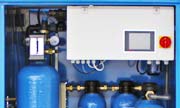
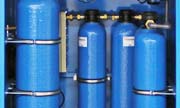
SCM 24
|
|
Cleans 24.000 liters per day
|
SCM 60
|
|
Cleans 60.000 liters per day
|
Video: How it works
The SCG Advantage
Our market-leading, water cleaning solutions have many advantages. To read more click the items below:
No Chemicals
Our machines and technology does not use any chemicals, at all.
Read more...
No Waste Water
Our machines do not waste any water. Yield = 100%.
Read more...
Low energy use
Uses 50 times less energy than a Reverse Osmosis Machine.
Read more...
Low ownership cost
Lower maintenance and operation costs due to our technology.
Read more...
Easy to install
Simple "plug and play" installation makes for easy deployment.
Read more...
Extremely compact
A compact system, contained in an easy to transport cabinet.
Read more...
Outperforms R.O.
SCG technologies outperform Reverse Osmosis systems.
Read more...
Faster ROI
Get a faster Return on Investment with our systems.
Read more...
Latest News
Latest Blog Posts
| Chemicals in water treatment? |
| Water storage - Whats best for keeping water clean and drinkable? |
| Case: Disaster Management Water Treatment |
Contact SCG
891 Showroom Place
Suite 101
Chula Vista, CA, 91914
Phone: +1 619-878-2730
Contact us by email