








Managing Uranium In Water For Agricultural Irrigation
Groundwater is an essential source of irrigation for farms, greenhouses, livestock operations, and rural communities. In some regions, however, naturally occurring uranium can dissolve into aquifers and accumulate in well water. Its presence may be invisible, odorless, and unrelated to the water’s appearance, making laboratory analysis essential before long-term use.
Uranium in irrigation water is primarily a chemical toxicity concern for the kidneys, although it is also radioactive. Crops can take up small amounts of uranium from soil and water, while livestock may receive repeated exposure through drinking water and feed. The level of risk depends on uranium concentration, soil characteristics, irrigation volume, crop type, and the duration of exposure.
An effective treatment strategy begins with measurement and continues through system design, process monitoring, and responsible management of the removed contaminants. Swiss Cleanwater Group develops water purification solutions for agricultural, municipal, industrial, and mobile applications, with an emphasis on efficient treatment and reduced chemical consumption.
Why Uranium In Irrigation Water Requires Attention
Uranium occurs naturally in minerals and rock formations. Groundwater moving through these formations can dissolve uranium compounds, especially where the water has a neutral to alkaline pH and contains carbonate. Concentrations may vary considerably between nearby wells, so results from one source should not be assumed to represent another.
The concern is usually long-term ingestion rather than immediate crop damage. Irrigated produce, dairy animals, and livestock can all contribute to human exposure when contaminated water is used repeatedly. Uranium can also remain in agricultural soils, depending on soil chemistry, drainage, and the form in which it is deposited.
Testing should distinguish total uranium concentration and, where appropriate, uranium isotopes or related radiological indicators. A complete water analysis should also include pH, alkalinity, hardness, sulfate, nitrate, iron, manganese, arsenic, dissolved solids, and microbial quality. These parameters influence treatment performance and help identify whether several contaminants require one integrated process.
Testing The Source Before Selecting Equipment
A representative sample should be collected from the well after allowing the pump and distribution line to operate long enough to reflect normal groundwater conditions. Seasonal sampling is valuable where aquifer chemistry changes during drought, heavy rainfall, or periods of intensive pumping. Samples should be sent to an accredited laboratory using containers and preservation procedures suitable for uranium analysis.
The water demand profile is equally important. A farm may require modest flow for a household and drinking troughs but much greater volumes for drip irrigation, sprinklers, or greenhouse production. Treating every liter used for a large field may be unnecessary if the primary objective is protecting livestock or producing potable water. Separating drinking-water treatment from bulk irrigation can reduce equipment size and operating costs.
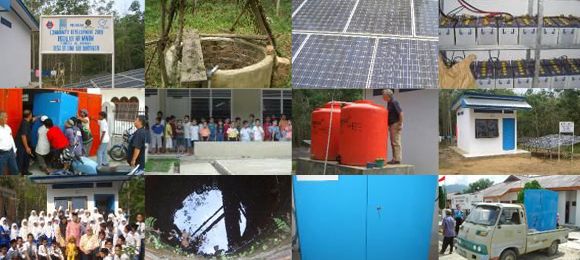
The planning principles described in school water system design also apply to agricultural projects: define users, estimate peak demand, consider maintenance capacity, and plan for reliable operation when technical support is limited. A farm treatment system should be designed around actual flow rates rather than only the laboratory concentration.
Treatment Methods For Uranium Removal
Reverse osmosis is often an effective option for reducing dissolved uranium. A semipermeable membrane rejects uranium ions along with many salts, metals, and other dissolved contaminants. The process can produce a high-quality treated stream, but it requires pressure, membrane maintenance, pretreatment, and a plan for the concentrated reject water.
Ion exchange uses a resin that captures uranium from water as it passes through a treatment vessel. It can provide strong removal when the water chemistry is suitable, although competing ions such as sulfate, nitrate, bicarbonate, and dissolved organic matter may reduce capacity. The resin must eventually be regenerated or replaced, creating a waste stream that requires controlled handling.
Adsorptive media can also remove uranium by binding it to a specialized surface. Performance depends on pH, contact time, loading rate, and the presence of competing contaminants. In some projects, adsorption is useful as a dedicated treatment stage; in others, it works as polishing after another process. A pilot test is often the safest way to determine media life before full installation.
| Treatment approach | Main strengths | Key design considerations | Suitable role |
|---|---|---|---|
| Reverse osmosis | Broad contaminant reduction and high treated-water quality | Energy demand, membrane fouling, concentrate management | Drinking water, livestock water, high-quality irrigation |
| Ion exchange | Efficient uranium capture at suitable chemistry | Resin exhaustion, competing ions, regeneration waste | Dedicated uranium treatment or polishing |
| Adsorptive media | Simple vessel-based operation and targeted removal | pH sensitivity, media capacity, replacement disposal | Point treatment and final polishing |
| Blended treatment | Combines strengths of multiple processes | More complex controls and commissioning | Variable or multi-contaminant sources |
Preparing Water For Reliable Performance
Pretreatment protects uranium removal equipment from fouling and premature exhaustion. Suspended solids may require sediment filtration, while iron and manganese can coat membranes or consume adsorption capacity. Oxidation and filtration may be appropriate for some water sources, but the selected process should be based on measured chemistry rather than a standard package.
When both metals are present, combined iron and manganese filtration can simplify the treatment train and protect downstream uranium equipment. This is especially useful for private wells and agricultural sources where iron staining, black deposits, or metallic taste indicate that several groundwater contaminants are being removed together.
pH adjustment may improve uranium capture, but chemical dosing is not always necessary or desirable. Low-chemical or chemical-free configurations can be considered where the water quality, treatment medium, and operating objectives support them. The final selection should balance removal efficiency, energy use, maintenance requirements, available space, and the farm’s ability to manage replacement media or concentrate.
Designing A Farm-Ready Treatment System
A practical installation commonly includes a raw-water pump, sampling point, prefilter, uranium removal stage, treated-water tank, distribution pump, and monitoring instruments. A bypass line can allow irrigation to continue during maintenance, although bypass water must never be connected to livestock or domestic supplies unless its quality is verified.
Treatment capacity should reflect peak demand and the recovery rate of the process. Reverse osmosis systems, for example, do not convert all feed water into product water. Storage tanks can help meet short periods of high demand and allow the purification unit to operate steadily rather than cycling continuously.
Where electricity is unreliable, the system may need solar power, backup generation, low-energy pressure controls, or gravity-fed storage. Remote farms benefit from straightforward valve arrangements, clear alarms, accessible sampling ports, and components that local technicians can service. A system that achieves excellent laboratory results but cannot be maintained in the field is not a dependable agricultural solution.
Handling Concentrate And Removed Contaminants
Uranium treatment creates a concentrated contaminant stream or spent treatment material that must be managed carefully. Reverse osmosis reject water should not automatically be discharged onto fields, into shallow drainage channels, or near the production well. Disposal options depend on local regulations, hydrogeology, concentration, and the volume generated.
Spent ion-exchange resin and exhausted adsorptive media may contain elevated uranium levels. They should be stored securely, documented, and transferred through an approved disposal or treatment route. Operators need records showing when media was installed, how much water it treated, and the results of follow-up testing.
Monitoring should include raw-water uranium, treated-water uranium, flow, pressure, pH, conductivity, and any contaminant that affects the chosen process. Sampling frequency can be increased during commissioning and reduced after stable performance is demonstrated, subject to regulatory requirements. A clear response plan should define what happens if treated water exceeds the target value.
Practical Priorities For Agricultural Projects
A well-designed uranium treatment program should align health protection with agricultural realities. The following priorities help create a system that remains effective beyond the initial installation:
- Test the well water through an accredited laboratory before selecting treatment equipment.
- Separate potable and livestock water requirements from high-volume irrigation demand where practical.
- Include iron, manganese, hardness, sulfate, alkalinity, and pH in the design analysis.
- Pilot-test ion exchange or adsorptive media when water chemistry is variable or competing ions are significant.
- Plan concentrate, spent media, maintenance access, and verification sampling before commissioning.
Mobile farms, emergency agricultural projects, and remote livestock sites may need compact systems that can be transported and installed quickly. The military water treatment solution demonstrates the value of modular equipment for demanding locations where mobility, autonomy, and rapid deployment matter. Similar principles can support temporary irrigation facilities, disaster-relief farming, and isolated water points.
Removing uranium from water used for agricultural irrigation is a technical task that should be guided by evidence rather than appearance or assumptions. With source testing, suitable pretreatment, carefully selected purification technology, and responsible residual management, farms can protect drinking-water users, livestock, crops, and groundwater resources.
Swiss Cleanwater Group can help evaluate water quality, treatment objectives, flow requirements, and operating conditions to develop an appropriate purification concept. Contact the company to discuss a reliable uranium-removal system for your agricultural water supply.
SCM 24
|
|
Cleans 24.000 liters per day
|
SCM 60
|
|
Cleans 60.000 liters per day
|
Video: How it works
The SCG Advantage
Our market-leading, water cleaning solutions have many advantages. To read more click the items below:
No Chemicals
Our machines and technology does not use any chemicals, at all.
Read more...
No Waste Water
Our machines do not waste any water. Yield = 100%.
Read more...
Low energy use
Uses 50 times less energy than a Reverse Osmosis Machine.
Read more...
Low ownership cost
Lower maintenance and operation costs due to our technology.
Read more...
Easy to install
Simple "plug and play" installation makes for easy deployment.
Read more...
Extremely compact
A compact system, contained in an easy to transport cabinet.
Read more...
Outperforms R.O.
SCG technologies outperform Reverse Osmosis systems.
Read more...
Faster ROI
Get a faster Return on Investment with our systems.
Read more...
Latest News
Latest Blog Posts
| Chemicals in water treatment? |
| Water storage - Whats best for keeping water clean and drinkable? |
| Case: Disaster Management Water Treatment |
Contact SCG
891 Showroom Place
Suite 101
Chula Vista, CA, 91914
Phone: +1 619-878-2730
Contact us by email