







Sustainable Brackish Water Treatment for Coastal Communities
Coastal regions often have water sources that appear plentiful but cannot be used safely without treatment. Seawater intrusion, tidal movement, drought, and excessive groundwater pumping can increase salt levels in wells, lagoons, and surface water. This creates brackish water: less saline than seawater, yet too mineralized for reliable drinking, irrigation, or many industrial processes.
A sustainable treatment strategy must address salinity while also managing bacteria, suspended solids, metals, pesticides, and other contaminants. It should deliver consistent water quality without creating unnecessary chemical waste, excessive energy demand, or an unmanageable concentrate stream.
Swiss Cleanwater Group focuses on water treatment technologies for municipalities, farms, industry, buildings, and mobile applications. Its equipment-based approach supports decentralized purification where coastal communities need dependable water close to the source rather than relying entirely on distant infrastructure.
Why Coastal Brackish Water Needs Careful Treatment
Brackish water quality can change quickly. Saltwater may move farther inland during dry periods, while storms and flooding can introduce microorganisms, fuel residues, agricultural chemicals, and organic matter. A treatment plant designed around a single laboratory sample may struggle when conductivity, turbidity, or microbial activity rises unexpectedly.
Salinity is only one concern. Iron and manganese can stain fixtures and damage equipment, while arsenic, uranium, pesticides, and bacteria may require specific treatment stages. Effective planning begins with a complete water analysis that covers seasonal variation, source depth, nearby land use, and the intended application.
Reverse osmosis is commonly used to remove dissolved salts, but it performs best when the incoming water has been properly conditioned. Sediment removal, activated carbon, ultrafiltration, or other pretreatment can protect membranes and reduce cleaning requirements. Selecting the right sequence is often more sustainable than simply installing a larger desalination unit.
Build a Treatment Train Around the Source
A treatment train combines several technologies, with each stage handling a defined water-quality problem. Coarse screening can remove leaves and debris, followed by sediment filtration to reduce suspended particles. Where organic compounds, pesticides, or unpleasant tastes are present, carbon-based treatment may improve the feed water before membrane purification.
Ultrafiltration is useful when bacteria, viruses, colloids, and fine particles are important concerns. The membrane barrier does not remove dissolved salt in the same way as reverse osmosis, so the two technologies can serve different roles. Swiss Cleanwater Group explains ultrafiltration for bacteria as part of a broader strategy for producing microbiologically safer drinking water.
For brackish groundwater, a practical arrangement may include prefiltration, iron or manganese removal, ultrafiltration, and reverse osmosis, followed by remineralization and disinfection where required. The exact design should reflect the raw water analysis. Over-treating relatively clean feed water wastes energy, while under-treatment can shorten membrane life and compromise water quality.
Reduce Energy and Waste at Every Stage
Energy efficiency depends on more than the rated power of a pump. High pressure, frequent membrane cleaning, poor recovery rates, and oversized equipment can increase operating costs throughout the year. Variable-speed pumps, pressure monitoring, efficient membrane elements, and automatic controls help adjust production to real demand.
Water recovery is equally important. Reverse osmosis produces treated permeate and a concentrated reject stream. Careful system design can improve recovery while protecting membranes from scaling. Depending on local regulations and environmental conditions, concentrate may be directed to an approved discharge point, blended for a permitted non-potable use, or managed through evaporation and other specialized methods.
| Treatment approach | Main role | Sustainability benefit | Important consideration |
|---|---|---|---|
| Sediment filtration | Removes suspended particles | Protects downstream equipment with low energy use | Requires regular backwashing or filter replacement |
| Activated carbon | Reduces selected organic compounds, odors, and tastes | Can reduce dependence on intensive chemical treatment | Media must be monitored for exhaustion |
| Ultrafiltration | Removes bacteria, colloids, and fine solids | Operates at relatively low pressure and supports membrane protection | Does not provide full desalination |
| Reverse osmosis | Removes dissolved salts and many dissolved contaminants | Produces high-quality water from brackish sources | Requires energy and responsible concentrate management |
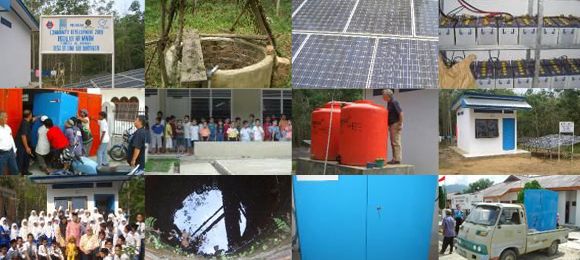
| Solar-assisted pumping | Supplies power for remote systems | Reduces reliance on diesel and grid electricity | Needs storage, controls, and adequate site conditions |
Renewable energy can strengthen the sustainability profile of a coastal treatment plant. Solar photovoltaic systems are especially useful for small facilities, agricultural sites, and remote communities with strong sunlight. Battery storage or hybrid power can maintain operation during cloudy periods, while energy-efficient production schedules can align water treatment with available solar generation.
Match Systems to Communities and Operations
A municipal plant may require continuous production, remote monitoring, laboratory verification, and redundancy for maintenance periods. A farm may prioritize irrigation water, seasonal demand, and protection against salinity-related crop damage. A hotel, housing development, or industrial facility may need compact equipment that fits within an existing building and integrates with current storage tanks.
Modular systems make it easier to scale capacity as demand changes. A smaller unit can serve an isolated settlement or livestock operation, while multiple modules can be added for a growing population. Standardized components also simplify maintenance and reduce the risk that a single equipment failure will stop the entire water supply.
Mobility matters after hurricanes, floods, infrastructure failures, and contamination events. A treatment unit mounted for rapid transport can support temporary shelters, emergency teams, and isolated coastal communities while permanent systems are repaired. Guidance on mobile purification units illustrates how compact treatment capacity can serve emergency and military operations where conventional water networks are unavailable.
Protect Public Health Through Monitoring
A sustainable plant must produce safe water consistently, not just during commissioning. Sensors can track conductivity, pressure, flow, turbidity, temperature, and membrane performance. Sudden changes may indicate fouling, a damaged membrane, saltwater intrusion, or a problem with the pretreatment stage.
Water quality testing should combine online measurements with scheduled laboratory analysis. Microbiological testing is essential for drinking-water applications, while chemical testing may need to include arsenic, uranium, manganese, pesticides, nitrate, and other locally relevant substances. Monitoring requirements should be established before construction so that operators have clear response procedures.
Disinfection may still be required after membrane treatment, depending on the end use and distribution network. Storage tanks and pipelines can reintroduce contamination if they are poorly maintained. A complete water safety plan therefore covers the source, treatment stages, storage, distribution, operator training, and recordkeeping.
Plan Responsible Deployment and Operation
Good engineering begins with site-specific information. Coastal projects should evaluate groundwater levels, tidal influence, flood exposure, electricity availability, access roads, discharge options, and space for tanks or solar equipment. Operators should also understand how production demand changes during tourism seasons, irrigation cycles, droughts, or emergency conditions.
Lifecycle cost is more useful than the initial purchase price. A system with efficient pumps, accessible filters, durable components, and straightforward controls may cost less to operate over many years. Local training and a supply of critical replacement parts can prevent extended outages and reduce dependence on distant technical support.
The following priorities help guide a practical project:
- Test the source during wet and dry seasons before selecting treatment equipment.
- Use pretreatment to protect desalination membranes and reduce cleaning frequency.
- Set measurable targets for energy use, water recovery, concentrate handling, and maintenance.
- Choose modular equipment that can expand with population, agricultural, or industrial demand.
- Establish monitoring, operator training, and replacement-part plans before commissioning.
Create Long-Term Value From Every Drop
Brackish water treatment is most effective when it is designed as a complete resource-management system. Producing drinking water is only part of the task; the project must also protect the source, manage energy, control residual streams, and maintain stable performance over time.
For coastal agriculture and industry, treated brackish water can reduce pressure on freshwater aquifers. For communities, decentralized purification can improve resilience when pipelines are damaged or rainfall is unreliable. For public facilities and remote sites, efficient modular systems can provide dependable water without the footprint of a large centralized plant.
Swiss Cleanwater Group can help evaluate treatment requirements for municipal, agricultural, industrial, building, livestock, swimming pool, mobile, and emergency applications. Explore the available water purification technologies and contact the company to develop a treatment solution suited to the source, capacity, contaminants, and operating conditions of your coastal project.
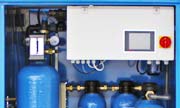
SCM 24
|
|
Cleans 24.000 liters per day
|
SCM 60
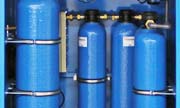
|
|
Cleans 60.000 liters per day
|
Video: How it works
The SCG Advantage
Our market-leading, water cleaning solutions have many advantages. To read more click the items below:
No Chemicals
Our machines and technology does not use any chemicals, at all.
Read more...
No Waste Water
Our machines do not waste any water. Yield = 100%.
Read more...
Low energy use
Uses 50 times less energy than a Reverse Osmosis Machine.
Read more...
Low ownership cost
Lower maintenance and operation costs due to our technology.
Read more...
Easy to install
Simple "plug and play" installation makes for easy deployment.
Read more...
Extremely compact
A compact system, contained in an easy to transport cabinet.
Read more...
Outperforms R.O.
SCG technologies outperform Reverse Osmosis systems.
Read more...
Faster ROI
Get a faster Return on Investment with our systems.
Read more...
Latest News
Latest Blog Posts
| Chemicals in water treatment? |
| Water storage - Whats best for keeping water clean and drinkable? |
| Case: Disaster Management Water Treatment |
Contact SCG
891 Showroom Place
Suite 101
Chula Vista, CA, 91914
Phone: +1 619-878-2730
Contact us by email