


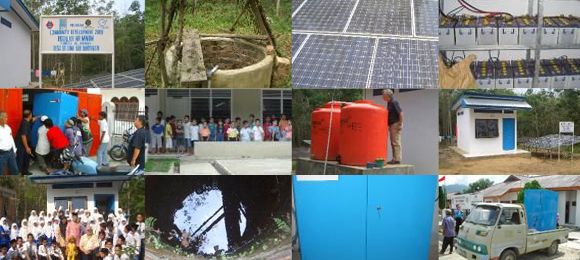







The economics of chemical-free water treatment for small towns
For a small town, drinking-water treatment is a financial decision as much as a public-health responsibility. The system must meet changing regulations, remove local contaminants, operate with limited staff, and remain affordable for households. Capital cost matters, but the long-term expense of chemicals, sludge disposal, electricity, replacement parts, and emergency repairs can matter even more.
Chemical-free purification refers to treatment processes that avoid routine dosing of substances such as chlorine, coagulants, or oxidants. Depending on the raw-water profile, a system may use pressure-driven filtration, adsorption, aeration, ultraviolet disinfection, biological treatment, or combinations of these methods. The best solution is determined by the contaminants present, the required flow rate, and the town’s operating capacity.
Small communities also need to consider resilience. A treatment plant that depends on regular chemical deliveries may become vulnerable when roads are blocked, suppliers are distant, or storage facilities are inadequate. A properly designed low-input system can reduce these risks while supporting reliable access to clean drinking water.
Where the financial case begins
The first economic question is not whether a chemical-free plant has the lowest purchase price. It is whether the technology delivers the required water quality at the lowest total cost over its useful life. A system with a higher initial price may become less expensive if it uses little power, creates minimal residual waste, and needs fewer consumables.
Raw-water testing is therefore essential. Arsenic, manganese, uranium, pesticides, bacteria, turbidity, hardness, and organic matter each require different removal strategies. Treating the wrong contaminant, or choosing a generic process without sufficient testing, can produce expensive upgrades later. A detailed water analysis reduces the risk of oversizing and prevents a town from paying for equipment it does not need.
The history of water treatment shows how public health priorities, engineering methods, and operating practices have evolved over time. Reviewing that water treatment history can help decision-makers understand why a process became standard and whether newer low-chemical alternatives fit the town’s current needs.
Capital cost versus operating cost
Chemical-free equipment can require significant investment in vessels, pumps, membranes, filters, control systems, monitoring instruments, and civil works. A town may also need a new building, electrical connection, backup power, storage tanks, or a distribution upgrade. These costs should be assessed as a complete project rather than as the price of a single treatment unit.
Operating expenditure includes electricity, labor, routine testing, replacement media, membrane cleaning, spare parts, calibration, and disposal. Conventional chemical treatment adds recurring costs for delivery, storage, dosing equipment, safety controls, and residual management. Chemical-free treatment does not eliminate maintenance, but it can shift spending from consumables toward predictable equipment servicing.
Financing terms can change the result. Grants, development funds, public-private partnerships, and low-interest infrastructure loans may make a higher-efficiency system more practical. Town councils should compare annualized costs over the expected service life instead of focusing solely on the first budget allocation.
The value of lower waste and simpler logistics
Residual waste is a major cost that is sometimes overlooked during project planning. Chemical coagulation can produce sludge that must be thickened, transported, tested, and disposed of according to local rules. A process that produces less concentrated waste may reduce handling obligations and limit the need for additional infrastructure.
Zero-liquid-discharge designs aim to recover water and concentrate residuals rather than discharge a liquid stream. They are not automatically the best choice for every small town because they may require extra energy, specialized equipment, and careful management of concentrated solids. Still, the discussion around zero-liquid discharge is useful when disposal options are limited or environmental requirements are strict.
Logistics also have an economic value. Eliminating routine chemical deliveries can reduce exposure to fuel price increases, supply interruptions, and hazardous-material handling. Remote municipalities may benefit especially because every delivery involves distance, scheduling, storage, and staff time. These savings are often modest in a single month but substantial across a plant’s operating life.
Comparing treatment economics
The following comparison is a planning framework, not a universal ranking. Local water chemistry, regulatory standards, labor costs, electricity prices, and the selected equipment will determine the actual figures.
| Cost factor | Chemical-based treatment | Chemical-free or low-chemical treatment |
|---|---|---|
| Initial investment | May be moderate, depending on dosing and clarification equipment | Can be higher when advanced filtration, controls, or membrane systems are required |
| Chemical purchases | Recurring and sensitive to transport and market prices | Often limited or eliminated during normal operation |
| Energy use | Varies widely; pumping and mixing may be significant | Can be low for gravity systems, but membranes and high-pressure processes may use more |
| Residuals | Sludge and chemical containers may require management | Often less liquid waste, though spent media or concentrated solids still need handling |
| Staffing | Requires chemical handling, dosing checks, and safety procedures | Requires monitoring, cleaning, backwashing, and technical maintenance |
| Supply resilience | Dependent on reliable chemical deliveries | Less dependent on consumables, but spare parts and electricity remain important |
| Water-quality flexibility | Can respond quickly to some changing conditions | Performance depends heavily on correct process selection and pretreatment |
The table highlights why “chemical-free” should not be treated as a guarantee of low cost. A high-pressure membrane plant may avoid chemical dosing but still carry substantial electricity and replacement costs. Conversely, a gravity-fed filtration system may be inexpensive to run but unsuitable for a water source with difficult contaminants.
The most credible financial assessment models several scenarios. Towns should test low, average, and peak demand; account for seasonal raw-water changes; include equipment replacement; and estimate the cost of regulatory sampling. A lifecycle model of 15 to 25 years often reveals differences that are invisible in a one-year operating budget.
Designing for small-town operating capacity
A technically advanced plant is only economical if local operators can run it safely. Automated controls, remote monitoring, clear alarms, and modular components can reduce the burden on a small utility team. However, automation must be supported by training and a maintenance plan. A system that becomes unusable after a sensor fails is not resilient.
Modularity can improve affordability. A town may begin with one treatment train sized for current demand and add capacity as the population or industrial base grows. This approach avoids paying for unused capacity while preserving a path for expansion. It also allows part of the plant to remain operational during maintenance.
Preventive maintenance should be priced before procurement. Operators need access to replacement filters, membranes, lamps, pumps, seals, sensors, and control components. A low purchase price can become expensive if parts are proprietary or technicians must travel long distances for every repair. Local service partnerships and stocked critical spares can protect the economics of the project.
Measuring public and environmental returns
Water treatment investment produces benefits beyond the utility balance sheet. Reliable removal of arsenic, uranium, pesticides, manganese, and microbial contaminants can lower health risks and reduce the social cost of waterborne illness. Better water quality may also support local businesses, schools, healthcare facilities, farming, and livestock operations.
Environmental savings can include reduced chemical transport, lower packaging waste, smaller sludge volumes, and less risk from accidental releases. These benefits can be difficult to express in currency, but they matter when municipalities compare infrastructure options against climate, watershed, and waste-reduction objectives.
For remote buildings and isolated communities, treatment economics also includes independence from centralized supply chains. Practical off-grid water solutions demonstrate why compact, efficient treatment can be valuable where grid access, transport, and technical support are constrained. Small towns can apply similar principles at a larger scale by combining efficient equipment with backup power and local monitoring.
Steps for a defensible investment decision
A council or utility manager can strengthen the business case by treating water treatment as a long-term service rather than a one-time equipment purchase.
- Test the source water in different seasons and identify every regulated and operationally relevant contaminant.
- Compare lifecycle cost, including energy, labor, consumables, residual disposal, financing, and equipment replacement.
- Request performance data at the town’s actual flow rate, pressure, temperature, and water-quality conditions.
- Specify operator training, spare parts, remote support, warranties, and response times in the procurement documents.
- Include resilience measures such as modular capacity, backup power, bypass protection, and emergency water storage.
The procurement process should also require clear performance verification. A supplier should explain how the system will be commissioned, how treated water will be sampled, and what happens if the equipment does not meet its guaranteed output. Transparent criteria help a small municipality avoid choosing a low-cost system that creates hidden expenses later.
Chemical-free treatment is most financially attractive when it matches the source water and the town’s operational reality. It can reduce recurring chemical purchases, waste handling, and supply-chain dependence, but it still demands careful design, monitoring, and maintenance. The strongest projects balance public health, affordability, environmental performance, and the practical skills available locally.
Swiss Cleanwater Group provides water-treatment technologies for municipalities, remote applications, agriculture, industry, and other demanding settings. Review the available treatment options and contact the company to discuss water analysis, lifecycle economics, and a system sized for your community’s needs.
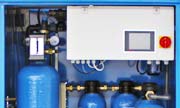
SCM 24
|
|
Cleans 24.000 liters per day
|
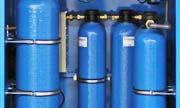
SCM 60
|
|
Cleans 60.000 liters per day
|
Video: How it works
The SCG Advantage
Our market-leading, water cleaning solutions have many advantages. To read more click the items below:
No Chemicals
Our machines and technology does not use any chemicals, at all.
Read more...
No Waste Water
Our machines do not waste any water. Yield = 100%.
Read more...
Low energy use
Uses 50 times less energy than a Reverse Osmosis Machine.
Read more...
Low ownership cost
Lower maintenance and operation costs due to our technology.
Read more...
Easy to install
Simple "plug and play" installation makes for easy deployment.
Read more...
Extremely compact
A compact system, contained in an easy to transport cabinet.
Read more...
Outperforms R.O.
SCG technologies outperform Reverse Osmosis systems.
Read more...
Faster ROI
Get a faster Return on Investment with our systems.
Read more...
Latest News
Latest Blog Posts
| Chemicals in water treatment? |
| Water storage - Whats best for keeping water clean and drinkable? |
| Case: Disaster Management Water Treatment |
Contact SCG
891 Showroom Place
Suite 101
Chula Vista, CA, 91914
Phone: +1 619-878-2730
Contact us by email