









Why pre-filtration matters in chemical-free arsenic removal
Arsenic in groundwater is a serious drinking-water concern because it can remain invisible, tasteless, and odourless while exceeding safe limits. Its concentration and chemical form vary widely between wells, aquifers, and seasons. A reliable treatment system therefore needs more than an arsenic-specific filter placed at the end of a pipeline.
Pre-filtration creates the stable conditions that allow chemical-free arsenic removal to work effectively. By reducing suspended solids, iron particles, manganese deposits, organic matter, and other interfering substances, it protects the main treatment stage and helps maintain predictable water quality.
This preparatory step is relevant to municipalities, private buildings, farms, food producers, livestock operations, and mobile water systems. It can reduce maintenance, extend media life, and make a compact treatment plant easier to operate without chemical dosing or excessive energy consumption.
What pre-filtration removes before arsenic treatment
Raw groundwater often carries fine sand, silt, clay, rust particles, and precipitated minerals. These materials may enter the well during pumping or form when water contacts air in a storage tank or treatment vessel. If they reach an arsenic-removal medium, they can block pores, cover active surfaces, and increase pressure loss.
A pre-filter can capture these larger and suspended contaminants before the water reaches the specialized treatment stage. Depending on the source-water analysis, the setup may include a coarse screen, sediment filter, multimedia bed, cartridge filter, or another physical barrier. The correct choice depends on particle size, flow rate, turbidity, and the level of automation required.
Iron and manganese deserve particular attention. They may occur in dissolved form underground, then oxidize and form particles during treatment. These precipitates can be useful in some natural filtration processes, but uncontrolled loading can shorten operating cycles and create uneven flow. Pre-filtration helps manage this transition instead of allowing accumulated solids to overwhelm the final arsenic barrier.
Why source-water variability affects performance
Arsenic removal is influenced by pH, oxidation conditions, alkalinity, competing ions, and the ratio between arsenite and arsenate. Water containing phosphate, silicate, dissolved organic carbon, or high concentrations of iron can behave very differently from relatively clear, low-mineral groundwater. A system that performs well at one borehole may require adjustment at another.
Pre-filtration provides a more consistent feed to the core process. It limits sudden changes in turbidity and particulate loading, which can otherwise cause breakthrough or make test results difficult to interpret. Stable inlet conditions also make it easier to monitor arsenic concentrations and determine when a filter medium needs cleaning, regeneration, replacement, or safe disposal.
A detailed water analysis should cover arsenic species, iron, manganese, turbidity, pH, conductivity, hardness, sulphate, phosphate, silicate, microbial indicators, and flow demand. Seasonal sampling is valuable where wells experience changes after heavy rainfall, drought, flooding, or shifts in pumping intensity. Treatment design should reflect the worst realistic operating condition rather than a single laboratory sample.
How a physical barrier protects the treatment stage
A well-designed pre-filtration line reduces the risk of clogging and channeling. Clogging raises differential pressure and lowers throughput, while channeling allows water to bypass portions of the media. Both conditions can reduce contact between the water and the active surface, even when the equipment appears to be operating normally.
Backwashing or periodic flushing removes accumulated solids from reusable filter beds. The interval depends on suspended solids, flow velocity, bed depth, and the available backwash water. Cartridge filters may be suitable for low-volume applications, but larger facilities often benefit from self-cleaning or backwashable units that reduce manual intervention and waste.
Pre-filtration also supports microbiological control. It does not automatically disinfect water, and a sediment filter should never be treated as a substitute for a validated disinfection step. However, reducing particles and organic deposits can prevent the formation of protected zones where microorganisms survive and can improve the reliability of downstream ultraviolet or other approved treatment methods.
The aim is not to add as many stages as possible. Every component should have a defined purpose, acceptable pressure loss, and manageable maintenance requirement. A simple arrangement that is correctly sized will generally outperform a complicated train that is poorly matched to the water source.
The role of oxygen in chemical-free filtration
Some chemical-free arsenic treatment approaches depend on natural oxidation and filtration conditions. Dissolved oxygen can help transform arsenite into arsenate or promote the formation of iron and manganese oxides that interact with arsenic. These reactions must be controlled through contact time, hydraulic conditions, pH, and the characteristics of the filter media.
The role of dissolved oxygen is therefore closely connected to pre-filtration. If oxygenated water carries excessive suspended solids into the treatment bed, the reaction and filtration zones may become fouled. If oxygen transfer is insufficient, oxidation may be incomplete and arsenic capture may become less predictable.
Aeration, cascade contactors, oxygen-enriched mixing, or naturally oxygenated filter beds may be considered according to the application. The best option depends on raw-water chemistry and the required production rate. Measurements of dissolved oxygen before and after relevant treatment stages can help verify whether the process is operating as designed.
Chemical-free does not mean maintenance-free. Operators still need to inspect pressure differences, verify arsenic breakthrough, remove accumulated solids, and confirm that the system delivers the required quality over time. Proper pre-filtration makes these tasks more manageable by keeping the main media within its intended operating range.
Building an efficient treatment train
A practical system usually begins with source protection and pumping control, followed by screening or sediment removal. Depending on the analysis, it may then include aeration or oxidation, iron and manganese filtration, arsenic adsorption or co-filtration, fine polishing, and disinfection. Storage and distribution must also be considered because treated water can be recontaminated after leaving the treatment unit.
The sequence should be selected according to the contaminants that accompany arsenic. For example, removing excessive iron and manganese first may protect an arsenic-specific medium. In another source, a combined filter may provide sufficient performance with fewer components. Pilot testing is useful when concentrations fluctuate or when the planned installation will serve a large population or industrial process.
| Treatment stage | Main purpose | Typical monitoring |
|---|---|---|
| Screen or coarse filter | Capture sand and larger particles | Visual inspection, pressure loss |
| Sediment or multimedia filter | Reduce turbidity and suspended solids | Turbidity, differential pressure |
| Aeration or oxygen contact | Support oxidation and improve water chemistry | Dissolved oxygen, pH |
| Iron and manganese filter | Remove oxidized metal particles | Iron, manganese, head loss |
| Arsenic-removal stage | Capture arsenic through adsorption or filtration | Arsenic before and after treatment |
| Polishing or disinfection | Protect final water quality | Microbiology, residual or UV performance |
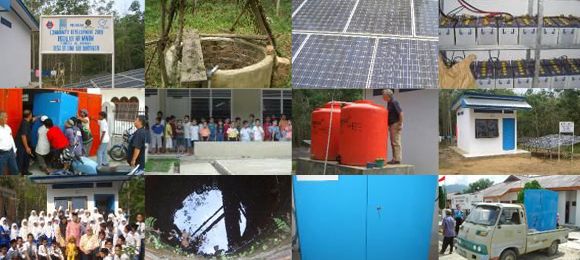
For smaller communities, affordability and operational simplicity are essential design factors. A staged system with accessible controls may be more sustainable than an advanced installation that requires specialist attendance for every adjustment. The experience described in this municipal water project illustrates why resilience, lifecycle cost, and local operating capacity should be considered alongside removal efficiency.
Choosing pre-filtration for the application
A household or small building may need a compact sediment stage and a carefully selected arsenic filter, while a municipality may require parallel vessels, automatic backwash, flow control, sampling points, and standby capacity. Farms and livestock operations may prioritize high flow and robust equipment, whereas mobile or military applications may require low weight, rapid deployment, and tolerance for changing source conditions.
Swimming pools and industrial facilities have different priorities again. Their systems may need to manage recirculating solids, organic loading, corrosion-related particles, or process-specific contaminants. The same pre-filter specification cannot be transferred from one application to another without checking hydraulic demand and water chemistry.
Useful design questions include where solids originate, how much water must be treated per hour, whether backwash water is available, and how operators will respond to an alarm. Sampling valves before and after each critical stage are especially valuable. They show whether a problem is caused by the source, the pre-filter, the arsenic medium, or the distribution system.
Practical design priorities
- Analyse raw water for arsenic species, turbidity, iron, manganese, pH, and competing substances before selecting equipment.
- Size the pre-filter for peak flow rather than average demand, while keeping filtration velocity within the manufacturer’s operating range.
- Include pressure gauges, sampling points, and a clear backwash or cartridge-replacement procedure.
- Protect the arsenic-removal stage from sudden solids loading caused by well disturbance, maintenance, or seasonal changes.
- Establish a monitoring schedule that verifies arsenic performance as well as turbidity, pressure loss, and microbial quality.
Turn water analysis into dependable protection
The strongest chemical-free arsenic-removal systems are designed as complete treatment trains rather than isolated pieces of equipment. Pre-filtration protects the process, oxygen and contact conditions support the chemistry, and routine monitoring confirms that the finished water remains safe.
Swiss Cleanwater Group develops water-treatment solutions for public, agricultural, industrial, building, and mobile applications. To discuss a source-water analysis or a suitable pre-filtration arrangement, request a meeting and begin planning a system that matches the water chemistry, operating capacity, and long-term maintenance requirements.
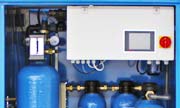
SCM 24
|
|
Cleans 24.000 liters per day
|
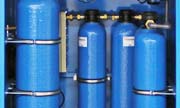
SCM 60
|
|
Cleans 60.000 liters per day
|
Video: How it works

The SCG Advantage
Our market-leading, water cleaning solutions have many advantages. To read more click the items below:
No Chemicals
Our machines and technology does not use any chemicals, at all.
Read more...
No Waste Water
Our machines do not waste any water. Yield = 100%.
Read more...
Low energy use
Uses 50 times less energy than a Reverse Osmosis Machine.
Read more...
Low ownership cost
Lower maintenance and operation costs due to our technology.
Read more...
Easy to install
Simple "plug and play" installation makes for easy deployment.
Read more...
Extremely compact
A compact system, contained in an easy to transport cabinet.
Read more...
Outperforms R.O.
SCG technologies outperform Reverse Osmosis systems.
Read more...
Faster ROI
Get a faster Return on Investment with our systems.
Read more...
Latest News
Latest Blog Posts
| Chemicals in water treatment? |
| Water storage - Whats best for keeping water clean and drinkable? |
| Case: Disaster Management Water Treatment |
Contact SCG
891 Showroom Place
Suite 101
Chula Vista, CA, 91914
Phone: +1 619-878-2730
Contact us by email