








How Dissolved Oxygen Shapes Catalytic Filtration Performance
Dissolved oxygen (DO) is a key operating variable in many water treatment systems that use catalytic media. It affects how efficiently a filter converts soluble contaminants into particles that can be captured, especially when the process targets iron, manganese, hydrogen sulfide, or other oxidizable compounds.
Catalytic filtration is often described as a media-based alternative to chemical oxidation. In practice, the media does not work in isolation. Its performance depends on water chemistry, contact time, pH, temperature, hydraulic loading, and the amount of oxygen available at the filter surface.
Understanding this relationship helps operators select suitable equipment and avoid unstable removal rates. It also supports lower chemical consumption and more predictable production of clean drinking water for municipal, agricultural, industrial, and decentralized applications.
Why Oxygen Matters In Catalytic Oxidation
Many contaminants enter water in a dissolved form. Ferrous iron and manganous manganese, for example, are generally more difficult to remove than their oxidized forms. When sufficient oxygen is present, these soluble species can be transformed into less soluble hydroxides or oxides. The resulting particles can then attach to catalytic grains and be retained by the filter bed.
Catalytic media accelerates this surface reaction. It provides active sites where oxidation and precipitation can occur more readily than they would in untreated water. The process may also create a coating on the media that improves its ability to promote further reactions, provided the coating remains active and the bed is properly maintained.
Oxygen availability therefore influences both reaction speed and contaminant loading. Low DO can leave oxidation incomplete, allowing dissolved manganese or iron to pass through the filter. Excessive turbulence or poorly controlled aeration, however, may introduce operational complications such as air binding, unstable flow, or premature precipitation before water reaches the intended filtration zone.
Dissolved Oxygen And Contaminant Chemistry
The required oxygen level depends on the contaminant and the surrounding water conditions. Iron oxidation is usually faster than manganese oxidation, while manganese removal often requires a higher pH, an active catalytic surface, and sufficient oxidation potential. Hydrogen sulfide can consume oxygen rapidly, creating a demand that must be accounted for before the water enters the filter.
Organic matter may also compete for oxidant capacity. In waters affected by agricultural runoff, pesticides and natural organic compounds can alter reaction conditions and increase the complexity of treatment. A broader assessment of pesticide contamination can help determine whether catalytic filtration should be combined with activated carbon, membrane treatment, or another barrier.
pH is especially important because oxidation-reduction reactions and precipitation equilibria change with acidity. A system with adequate DO may still show poor manganese removal if the pH is too low. Alkalinity, temperature, competing ions, and the age of the filter media should therefore be evaluated alongside oxygen concentration rather than treated as separate issues.
Measuring And Managing Oxygen Supply
A DO probe provides a direct indication of oxygen concentration, but a single reading may not represent conditions throughout the treatment train. Oxygen can be consumed rapidly as water passes through an aeration chamber, contact tank, or catalytic bed. Measurements at the raw-water inlet, after aeration, and at the filter outlet provide a clearer picture of process performance.
Aeration may be achieved with cascade steps, diffused air, venturi injection, spray systems, or packed contactors. The best method depends on flow rate, available head, temperature, contaminant demand, and the required footprint. The purpose is to transfer enough oxygen into the water while avoiding unnecessary energy use.
Contact time also determines how effectively oxygen dissolves and reacts. Fine bubbles can increase gas-transfer efficiency, while a well-designed contact vessel gives oxidation reactions time to begin before filtration. Operators should watch for short-circuiting, dead zones, and seasonal changes in raw-water temperature, since colder water generally holds more oxygen but may react more slowly.
Media Design And Filter Hydraulics
Catalytic media differs in composition, density, grain size, surface activity, and regeneration requirements. Some products are based on manganese dioxide coatings, while others use engineered mineral or composite structures. The appropriate selection depends on the target contaminants, raw-water analysis, desired filtration rate, and whether pre-aeration is available.
Uniform distribution through the bed is essential. If water channels through only part of the media, some grains receive excessive contaminant loading while other zones remain underused. A correctly designed underdrain, suitable bed depth, and controlled filtration velocity help maintain consistent contact between dissolved oxygen, contaminants, and active surfaces.
Backwashing restores hydraulic capacity and removes accumulated precipitates. The cycle must be strong enough to lift and clean the media without causing excessive attrition or loss of fine catalytic particles. If backwashing is too infrequent, pressure loss increases and oxygen transfer through the bed may decline. If it is too aggressive, the media may lose its active coating.
| Operating factor | Effect on catalytic filtration | Practical control |
|---|---|---|
| Dissolved oxygen | Determines oxidation capacity and reaction stability | Measure before and after aeration |
| pH and alkalinity | Influences oxidation rates and precipitation | Test regularly and adjust when required |
| Contact time | Provides time for oxygen transfer and particle formation | Use suitable vessel volume and flow control |
| Filtration velocity | Affects contact, head loss, and solids capture | Stay within the media supplier’s design range |
| Backwash quality | Removes deposits and protects permeability | Verify flow, duration, and media expansion |
| Organic load | Consumes oxidant capacity and may foul media | Add pretreatment where raw water requires it |
Balancing Performance With Energy Use
A high-oxygen process is not automatically an efficient process. Injecting more air than the water can use may increase blower demand, produce excess foaming, or encourage precipitation in pipes and tanks. Good design matches oxygen transfer to the contaminant load and leaves enough capacity for fluctuations in raw-water quality.
Passive aeration can be attractive where elevation differences or gravity flow are available. Mechanical aeration offers greater control for variable flow and high-demand installations, including industrial sites, livestock facilities, and mobile treatment units. Variable-speed blowers and automated valves can reduce energy consumption during periods of lower demand.
Water treatment systems should also account for the oxygen consumed by background reactions. A laboratory jar test or pilot trial can reveal the actual DO demand, oxidation rate, and filter run length. This is more reliable than selecting an aeration capacity from contaminant concentration alone, especially where iron, manganese, sulfide, ammonia, or organic matter occur together.
Monitoring The Complete Treatment Train
A stable system uses several indicators rather than relying on outlet water quality alone. Useful measurements include DO, oxidation-reduction potential, pH, turbidity, pressure differential, flow, and concentrations of the target contaminants. Together, these values help distinguish oxygen shortage from media exhaustion, hydraulic problems, or changes in raw-water chemistry.
A sudden fall in DO after aeration may indicate increased contaminant demand, fouling in the contactor, or poor air transfer. Rising outlet manganese with normal DO may point to insufficient pH, inadequate media activity, excessive flow, or a need for backwashing. Trend data makes these patterns easier to identify before treated water falls outside its required specification.
Bacteria control should also be considered separately. Catalytic oxidation and filtration can reduce some particulate and chemical contaminants, but they should not automatically be treated as a complete microbiological barrier. Where microbial safety is critical, a properly selected disinfection or membrane step may be required; the role of ultrafiltration in drinking water illustrates how an additional treatment barrier can address bacteria more directly.
Practical Design And Operating Priorities
The most dependable installations begin with representative water testing. Samples should reflect seasonal conditions and include iron, manganese, sulfide, pH, alkalinity, turbidity, organic matter, temperature, and relevant site-specific contaminants. Testing supports correct sizing of aeration, contact volume, catalytic media, and backwash equipment.
Operators can improve reliability by focusing on these priorities:
- Measure dissolved oxygen at multiple points instead of assuming aeration performance from equipment settings.
- Match oxygen transfer and contact time to the full contaminant demand, including sulfide and organic matter.
- Maintain pH, alkalinity, filtration velocity, and backwash conditions within the media manufacturer’s operating range.
- Use pilot testing when water chemistry is variable or several contaminants compete for oxidation capacity.
- Trend pressure loss, DO, turbidity, and treated-water quality to identify declining performance early.
These controls are valuable in both large treatment plants and compact systems. A municipality may need automated monitoring and redundant equipment, while a farm or remote facility may prioritize simple aeration, robust media, and low-maintenance controls. In each case, dissolved oxygen should be treated as a design parameter rather than an incidental measurement.
When oxygen supply, catalytic surface activity, and hydraulic conditions are aligned, filtration becomes more consistent and resource-efficient. For a site-specific assessment of raw-water chemistry, treatment capacity, and equipment requirements, contact Swiss Cleanwater Group to discuss a suitable catalytic filtration solution.
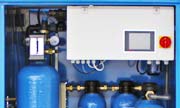
SCM 24
|
|
Cleans 24.000 liters per day
|
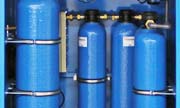
SCM 60
|
|
Cleans 60.000 liters per day
|
Video: How it works
The SCG Advantage
Our market-leading, water cleaning solutions have many advantages. To read more click the items below:
No Chemicals
Our machines and technology does not use any chemicals, at all.
Read more...
No Waste Water
Our machines do not waste any water. Yield = 100%.
Read more...
Low energy use
Uses 50 times less energy than a Reverse Osmosis Machine.
Read more...
Low ownership cost
Lower maintenance and operation costs due to our technology.
Read more...
Easy to install
Simple "plug and play" installation makes for easy deployment.
Read more...
Extremely compact
A compact system, contained in an easy to transport cabinet.
Read more...
Outperforms R.O.
SCG technologies outperform Reverse Osmosis systems.
Read more...
Faster ROI
Get a faster Return on Investment with our systems.
Read more...
Latest News
Latest Blog Posts
| Chemicals in water treatment? |
| Water storage - Whats best for keeping water clean and drinkable? |
| Case: Disaster Management Water Treatment |
Contact SCG
891 Showroom Place
Suite 101
Chula Vista, CA, 91914
Phone: +1 619-878-2730
Contact us by email