








Chemical-Free Filtration Transforms Golf Course Irrigation
A golf course in south-east Queensland was spending heavily to keep its irrigation ponds usable through hot summers, stormwater inflows and long dry periods. The ponds supplied water for fairways, greens and landscaped areas, yet rising sediment, algae, iron and manganese were reducing irrigation reliability. Chemical dosing controlled some symptoms, but it added handling requirements and left the course dependent on regular deliveries.
The club chose a chemical-free filtration system to improve pond water quality without creating a waste stream or increasing its energy burden. This case study follows the practical changes, from the original water-quality problems to the operating results and lessons that apply to Australian golf facilities, sports grounds and other large landscape irrigation sites.
Water Quality Problems Began In The Irrigation Ponds
The 18-hole course collected stormwater in a series of interconnected storage ponds. Run-off from turf, car parks and surrounding vegetation carried fine clay, organic matter and nutrients into the system. During Queensland’s warmer months, sunlight and stagnant sections of the ponds encouraged algae growth. After heavy rain, the water became visibly turbid and deposited sediment around pump inlets.
The irrigation team also recorded elevated iron and manganese in periodic tests. These naturally occurring minerals can stain turf, block filters and contribute to deposits inside sprinklers. Fine particles created additional wear on pumps and valves, while algae increased the frequency of screen cleaning. Water was available in sufficient volume, but its variable quality made the irrigation network less predictable.
This pattern is familiar across Australia. Courses around Brisbane, the Gold Coast and Newcastle often balance harvested stormwater, bore water and mains supply while managing intense rainfall followed by extended dry weather. Water restrictions and higher potable-water charges make non-potable sources attractive, but stored water needs dependable treatment before it can move through a modern irrigation system.
A Filtration System Replaced Routine Chemical Dosing
The club first mapped the water pathway, including pond inlets, pump stations, storage levels and the most sensitive irrigation zones. Samples were collected at different times because pond quality changed after rainfall and during periods of high evaporation. Testing focused on turbidity, suspended solids, iron, manganese, pH, algae indicators and microbiological conditions relevant to the intended use.
The selected treatment train used mechanical and media-based filtration to separate particles and reduce mineral contamination without routine coagulants, chlorine or other chemical additives. The design was sized around the course’s irrigation demand rather than the theoretical peak flow of the entire property. This helped control capital costs and allowed the filtration unit to operate during scheduled pond-replenishment and irrigation cycles.
A central benefit was the absence of chemical storage. Staff no longer needed to receive, store and handle treatment products beside the pump station. The approach also avoided the concentrated sludge or backwash chemicals associated with some conventional processes. The precise treatment configuration must always reflect site testing, since chemical-free filtration is not a universal substitute for disinfection where water may contact people or be used for drinking.
Installation Was Planned Around Daily Course Operations
The filtration unit was installed near the main irrigation pump station, with bypass arrangements that allowed the course to maintain essential watering during commissioning. Pipework was configured so water could be drawn from the pond, treated and returned to the irrigation supply without requiring a major reconstruction of fairways or greens. This reduced disruption during the playing season.
Operators received straightforward procedures for checking differential pressure, inspecting screens and recording flow. Automated controls initiated cleaning cycles when pressure rose, while visual inspections remained important after major storm events. The course retained laboratory testing to verify performance rather than relying solely on clear-looking water. Appearance can improve before every relevant contaminant has been adequately addressed.
The project team also reviewed the complete cost of ownership, including power, consumables, labour, maintenance and irrigation downtime. This broader lifecycle cost analysis helped the club compare the filtration system with continuing chemical treatment. For a facility with tight seasonal budgets, fewer deliveries and simpler maintenance can be as important as the initial water-quality improvement.
Irrigation Reliability Improved Across The Property
Following commissioning, the club reported clearer irrigation water and less visible accumulation around pump intakes. Filter cleaning became more manageable, and irrigation staff spent less time responding to blocked screens and sprinkler problems. The improvement was most noticeable after storm events, when treated water reached the distribution network with a more consistent solids load.
Turf managers were able to use pond water with greater confidence for regular irrigation. This reduced pressure on mains supplies during dry periods and supported the course’s water-efficiency objectives. Better source-water consistency also made it easier to plan irrigation cycles, which matters in Queensland where evaporation can be rapid and watering may need to occur during restricted overnight or early-morning windows.
The project did not remove the need for monitoring. Nutrient inflows, seasonal algae and microbial risks still require attention, particularly when ponds receive urban run-off. A treatment system should be matched to the end use and operated within its verified limits. For technical background on treatment options for different water sources, the company’s water treatment systems provide a useful reference point for site planning.
The Business Case Extends Beyond Cleaner Water
The financial result came from several smaller gains rather than a single dramatic saving. Reduced chemical purchasing, fewer deliveries and lower staff exposure to hazardous products improved operating efficiency. Less fouling also helped protect pumps, valves and irrigation heads, potentially extending equipment life. Avoiding unnecessary potable-water use provided additional value during periods of scarcity or elevated water pricing.
Environmental performance was another important consideration. Chemical-free treatment meant the club did not need to manage routine chemical residues in its irrigation process, and the system did not depend on high-energy treatment stages for this application. The facility could make use of stored stormwater while reducing the likelihood that untreated sediment and mineral-rich water would circulate through the course.
Australian operators should still obtain advice on local approvals and water-quality obligations. Requirements vary between states and depend on whether the source is stormwater, recycled water, bore water or a mixed supply. A project may involve local council conditions, environmental authority requirements, workplace chemical rules and guidance under the Australian Guidelines for Water Recycling. If treated water could contact workers, golfers or edible plants, additional risk controls and verification may be needed.
The same design principles can apply beyond golf. Farms, livestock properties, industrial sites and remote facilities often need reliable non-potable water without a complicated chemical supply chain. A related livestock case study shows how source-water treatment can support a different operating environment, where animal health, equipment protection and dependable supply are central concerns.
For golf clubs, the strongest lesson is to treat irrigation water as an operational asset rather than an unavoidable maintenance problem. Start with seasonal sampling, identify the contaminants that affect pumps and turf, and calculate the full cost of the existing approach. A correctly specified filtration system can then turn pond water into a more dependable resource while supporting water conservation and responsible course management.
Swiss Cleanwater Group can assess irrigation ponds, stormwater reservoirs and other non-potable sources to determine whether chemical-free treatment is suitable. Contact the team to discuss water testing, system sizing and a practical filtration pathway for your course or landscape irrigation project.
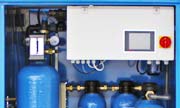
SCM 24
|
|
Cleans 24.000 liters per day
|
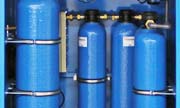
SCM 60
|
|
Cleans 60.000 liters per day
|
Video: How it works

The SCG Advantage
Our market-leading, water cleaning solutions have many advantages. To read more click the items below:
No Chemicals
Our machines and technology does not use any chemicals, at all.
Read more...
No Waste Water
Our machines do not waste any water. Yield = 100%.
Read more...
Low energy use
Uses 50 times less energy than a Reverse Osmosis Machine.
Read more...
Low ownership cost
Lower maintenance and operation costs due to our technology.
Read more...
Easy to install
Simple "plug and play" installation makes for easy deployment.
Read more...
Extremely compact
A compact system, contained in an easy to transport cabinet.
Read more...
Outperforms R.O.
SCG technologies outperform Reverse Osmosis systems.
Read more...
Faster ROI
Get a faster Return on Investment with our systems.
Read more...
Latest News
Latest Blog Posts
| Chemicals in water treatment? |
| Water storage - Whats best for keeping water clean and drinkable? |
| Case: Disaster Management Water Treatment |
Contact SCG
891 Showroom Place
Suite 101
Chula Vista, CA, 91914
Phone: +1 619-878-2730
Contact us by email