









California Municipality Replaces Chlorine With Catalytic Filtration
A California municipality faced a familiar water-treatment problem: chlorine helped control oxidation and biological risk, yet it also created handling, maintenance, and operating concerns. Chemical storage required strict procedures, dosing equipment needed regular attention, and the treatment plant depended on a continuous supply of consumables.
The municipality began evaluating a chemical-free alternative for groundwater treatment. Its goals were practical: produce reliable drinking water, reduce the burden on operators, limit chemical exposure, and lower the environmental cost of treatment without compromising regulatory performance.
The resulting project centered on catalytic filtration. Instead of relying on chlorine to oxidize dissolved contaminants, the system used a specialized filtration process supported by oxygen-rich water and catalytic media. The approach addressed the municipality’s treatment needs while creating a simpler and more sustainable operating model.
The Treatment Challenge
The source water contained naturally occurring compounds that can affect taste, color, and distribution-system performance. Manganese and iron were key concerns because they may cause staining, dark particles, turbidity, and customer complaints when they pass through conventional treatment or oxidize inside pipelines.
The existing chlorine-based process required chemical feeders, storage tanks, dosing controls, and routine inspections. Operators had to monitor chemical strength, replenish supplies, and respond to equipment wear. Even when the system performed correctly, the treatment train included additional hazards and maintenance points.
Chlorine can also contribute to disinfection by-products when it reacts with organic matter. The municipality therefore wanted to separate two functions that had become linked in its process: pathogen control and contaminant oxidation. Catalytic filtration offered a way to target dissolved metals and related impurities without using chlorine as the primary oxidation agent.
How Catalytic Filtration Works
Catalytic media provide an active surface that promotes the conversion of dissolved contaminants into particles that can be captured. In this California installation, dissolved oxygen played an important role in the oxidation process. Water was conditioned so that oxygen could react with iron and manganese before the flow entered the filter bed.
The media then retained the oxidized particles during filtration. Periodic backwashing removed the accumulated material, restoring hydraulic performance without requiring a chemical regeneration cycle. This created a treatment process with fewer consumable inputs and a lower dependence on mechanical dosing systems.
The relationship between oxygen and chemical-free treatment is central to the design. As explained in dissolved oxygen filtration, adequate oxygen availability can support contaminant removal while reducing the need for added oxidants. The exact configuration depends on source-water chemistry, flow rate, temperature, pH, and the target contaminants.
Designing The Municipal System
Engineers began with source-water testing rather than selecting equipment from a standard catalog. The analysis considered iron, manganese, arsenic, uranium, turbidity, hardness, pH, alkalinity, dissolved oxygen, and microbiological indicators. These parameters established whether catalytic filtration could provide the required treatment and whether additional processes would be needed.
Hydraulic conditions were equally important. The filtration vessels had to accommodate peak demand, backwash flow, pressure loss, and future capacity requirements. A municipal plant cannot be designed around average daily consumption alone, because morning demand, fire protection, seasonal irrigation, and storage-tank replenishment can place a short-term strain on the system.
The final arrangement included pretreatment and monitoring points suitable for the municipality’s source water. Flow controls helped maintain contact time through the media, while pressure gauges indicated when backwashing was necessary. Sampling locations before and after filtration allowed operators to verify performance and identify changes in raw-water quality.
Replacing chlorine as an oxidation tool did not mean ignoring microbiological safety. The municipality continued to evaluate disinfection requirements, distribution-system protection, and California drinking-water regulations. Catalytic filtration removes targeted chemical contaminants; it should not automatically be described as a complete substitute for validated pathogen treatment.
Operational Changes And Results
Once the catalytic filters were commissioned, operators moved from chemical-feed management toward process monitoring. Their routine focused on flow, pressure differential, backwash timing, dissolved oxygen, and finished-water quality. This reduced the number of tasks associated with chemical unloading, feeder calibration, and chlorine storage.
The plant also gained a cleaner physical working environment. Removing or reducing chemical inventories can simplify spill planning, personal-protective-equipment requirements, and emergency response procedures. For a small municipality with limited staffing, those changes can be as valuable as the reduction in chemical consumption.
The municipality tracked performance through regular sampling and operational records. The principal indicators included iron and manganese concentrations, turbidity, pressure loss, backwash frequency, water production, and customer reports. The project’s value was measured through dependable treatment and lower operational complexity rather than through a single headline number.
Maintenance planning changed as well. Filters still require inspection, backwashing, valve checks, and media evaluation, but the system avoids many problems associated with chemical feeders and storage equipment. Guidance on reducing plant maintenance shows why removing unnecessary dosing hardware can improve long-term reliability.
Comparing The Treatment Approaches
The comparison below summarizes the practical distinction between the municipality’s former oxidation process and its catalytic filtration configuration. Actual performance depends on water chemistry, equipment sizing, operating discipline, and the regulatory treatment objectives.
| Consideration | Chlorine-Based Oxidation | Catalytic Filtration |
|---|---|---|
| Main consumable | Chlorine or a related oxidant | Catalytic filter media and process water |
| Oxidation mechanism | Added chemical oxidizes dissolved compounds | Catalytic surface supports oxidation using available oxygen |
| Chemical storage | Required, with safety and inventory controls | Reduced or eliminated for contaminant oxidation |
| Maintenance focus | Feeders, pumps, tubing, tanks, calibration | Backwashing, valves, pressure, and media condition |
| Iron and manganese removal | Often effective when dose and contact time are controlled | Effective when oxygen, pH, loading, and media are properly matched |
| Disinfection role | Can provide a disinfectant residual | Does not automatically provide disinfection |
| Waste profile | Chemical containers, residual handling, and by-product concerns | Backwash water and captured solids require management |
| Energy profile | Depends on pumps and chemical systems | Depends on pumping, aeration, and backwash requirements |
This comparison also clarifies why the project was treated as a process redesign rather than a simple equipment swap. Eliminating chlorine feeders can reduce complexity, but the replacement process must be engineered around the source water and the municipality’s complete treatment obligation.
Environmental And Financial Benefits
Chemical-free or low-chemical treatment can reduce the environmental impacts associated with manufacturing, transporting, storing, and disposing of treatment chemicals. The benefit is especially relevant for remote facilities where deliveries are expensive or emergency access is limited. Fewer chemical components can also reduce the risk of accidental releases.
Operating costs may improve through lower chemical purchasing, fewer feeder repairs, and less staff time devoted to chemical handling. These savings should be evaluated over the full life of the installation. Capital cost, backwash disposal, media replacement, pumping energy, laboratory testing, and compliance monitoring all belong in the financial model.
The municipality also considered resilience. A treatment plant that depends on a regular chemical supply can be vulnerable during transport disruptions, price increases, or supplier shortages. A system based on locally available water, oxygen, filtration, and automated controls may offer greater continuity, provided that spare parts and qualified service support remain available.
Sustainability is therefore more than eliminating one chemical. It involves using an appropriate media volume, minimizing backwash waste, controlling pump energy, and designing equipment that can operate efficiently at actual—not merely theoretical—flow rates.
Lessons For Other Water Utilities
The California project offers a practical model for communities reviewing chlorine alternatives, manganese removal systems, or broader drinking-water treatment upgrades. The strongest projects begin with a detailed water analysis and define the treatment objective before selecting catalytic media or vessel sizes.
Municipal decision-makers can use these recommendations when evaluating a similar conversion:
- Test seasonal source-water conditions, including iron, manganese, pH, alkalinity, turbidity, and dissolved oxygen.
- Separate contaminant oxidation from disinfection planning and verify each function against applicable regulations.
- Size filters for peak flow, backwash demand, pressure loss, and expected future growth.
- Include sampling ports, pressure monitoring, automated backwash controls, and accessible maintenance points.
- Compare total life-cycle cost rather than focusing only on equipment purchase price.
Pilot testing can further reduce risk when water chemistry is variable or when several contaminants are present. A pilot system helps confirm removal rates, backwash intervals, media behavior, and finished-water quality before full-scale construction.
The same principles can apply beyond municipal groundwater. Farms, livestock operations, industrial facilities, buildings, swimming pools, mobile units, and government projects may also benefit from chemical-free water-treatment technologies when their water-quality objectives and compliance requirements are clearly defined.
A municipality considering this approach should document baseline performance first, then establish measurable acceptance criteria for the replacement system. With careful engineering, catalytic filtration can help deliver cleaner water, simpler operations, and a more resilient treatment plant. Contact Swiss Cleanwater Group to discuss source-water testing, pilot design, and a treatment configuration suited to your facility.
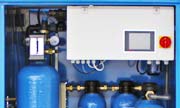
SCM 24
|
|
Cleans 24.000 liters per day
|
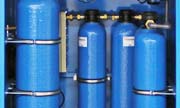
SCM 60
|
|
Cleans 60.000 liters per day
|
Video: How it works
The SCG Advantage
Our market-leading, water cleaning solutions have many advantages. To read more click the items below:
No Chemicals
Our machines and technology does not use any chemicals, at all.
Read more...
No Waste Water
Our machines do not waste any water. Yield = 100%.
Read more...
Low energy use
Uses 50 times less energy than a Reverse Osmosis Machine.
Read more...
Low ownership cost
Lower maintenance and operation costs due to our technology.
Read more...
Easy to install
Simple "plug and play" installation makes for easy deployment.
Read more...
Extremely compact
A compact system, contained in an easy to transport cabinet.
Read more...
Outperforms R.O.
SCG technologies outperform Reverse Osmosis systems.
Read more...
Faster ROI
Get a faster Return on Investment with our systems.
Read more...
Latest News
Latest Blog Posts
| Chemicals in water treatment? |
| Water storage - Whats best for keeping water clean and drinkable? |
| Case: Disaster Management Water Treatment |
Contact SCG
891 Showroom Place
Suite 101
Chula Vista, CA, 91914
Phone: +1 619-878-2730
Contact us by email