









How A Canadian Municipality Removed Uranium Without Chemicals
A municipality in Canada faced a familiar rural water challenge: its drinking-water source was dependable in volume, but naturally occurring uranium made the raw water unsuitable for direct distribution. The contaminant was not linked to an industrial spill or a temporary event. It came from the local geology and required a treatment solution that could operate continuously at municipal scale.
The project demonstrates how uranium removal can be achieved without routine chemical dosing, excessive energy consumption, or a complicated treatment train. Instead of treating the issue as a one-size-fits-all filtration problem, the municipality assessed the source water, selected a suitable purification process, and integrated monitoring into everyday operations.
This case study is relevant to communities using groundwater, especially where uranium, arsenic, manganese, or other dissolved contaminants occur together. It also shows why a sustainable water-treatment system must be evaluated through its whole life cycle, including maintenance, operator workload, energy use, and residual management.
Why Uranium Required A Different Response
Uranium in groundwater is usually present in a dissolved form. That makes it different from sediment, turbidity, or larger particles that can be captured by conventional media filters. Clear water can still contain uranium, so visual quality alone cannot demonstrate that a supply is safe.
The municipality needed to protect public health while preserving the dependable groundwater source. Drilling a new well or transporting water from another location would have created significant infrastructure and operating costs. A treatment plant at the existing source offered a more practical route, provided the equipment could achieve consistent uranium reduction under changing flow and water chemistry.
Treatment selection also had to account for the wider composition of the water. pH, alkalinity, hardness, iron, manganese, organic matter, and competing ions can influence how well a purification process performs. This is why an engineered solution begins with laboratory analysis and site-specific testing rather than relying on a generic filter specification.
Designing Around The Source Water
The project team evaluated the raw water before finalizing the equipment configuration. This assessment established the uranium concentration, flow requirements, daily demand, and likely operating conditions. It also identified whether other contaminants could interfere with the selected treatment stage or require pretreatment.
A similar source-water approach is useful for agricultural projects, where runoff may carry a changing mixture of dissolved pollutants. The pesticide runoff case study illustrates why treatment design must respond to the actual contaminant profile instead of assuming that every water source behaves the same way.
For the Canadian municipality, the objective was a compact system that could be installed near the water source and operated with limited chemical handling. The selected technology was designed to separate uranium from the treated water while avoiding routine chemical precipitation. That reduced the need for chemical storage, dosing pumps, mixing tanks, and specialist handling procedures.
The final design also considered hydraulic capacity and redundancy. Municipal treatment cannot be judged only by its removal rate during a short test. It must continue working during peak demand, scheduled maintenance, seasonal changes, and minor variations in feed-water quality.
From Pilot Testing To Municipal Supply
Pilot or validation testing provided confidence that the treatment process could reduce uranium to the required level under representative conditions. Testing also helped determine the appropriate flow rate, contact time, filtration sequence, and monitoring points. These details are critical because a process that performs well in a laboratory may need adjustment when scaled to a public water system.
The municipality’s installation used a treatment approach focused on physical and selective purification rather than chemical dosing. Depending on the water profile, systems of this type may incorporate specialized filtration, adsorption, membrane separation, or a combination of stages. The appropriate configuration is determined by the site data and the performance target.
The broader water treatment technology platform reflects the same principle: purification equipment should be adapted to the contaminant and application. A municipal groundwater installation has different requirements from a mobile unit, livestock operation, swimming pool, or industrial process-water system.
Once commissioned, the system supplied treated water for distribution while operators tracked performance through routine sampling and equipment checks. The installation was intended to fit into normal municipal operations rather than require a completely new operating culture.
Comparing Treatment Approaches
The municipality considered more than contaminant removal alone. Each option was reviewed for energy demand, chemical use, residuals, maintenance, operator requirements, and compatibility with the existing site. The comparison below summarizes the practical differences among common uranium-treatment approaches.
| Treatment approach | Uranium reduction potential | Chemical demand | Main operating consideration |
|---|---|---|---|
| Chemical precipitation | High when carefully controlled | Regular dosing usually required | Produces sludge and requires chemical management |
| Ion exchange | High for suitable water chemistry | Regeneration chemicals may be needed | Resin capacity, competing ions, and brine handling |
| Reverse osmosis | High, with broad contaminant reduction | Usually no primary coagulant dosing | Higher pressure, energy use, and concentrate management |
| Specialized adsorption or filtration | Site-dependent and highly design-specific | Can operate without routine chemical dosing | Media selection, contact conditions, and replacement planning |
| Blended or multi-stage treatment | High when stages are properly matched | Varies by configuration | More components and greater control complexity |
No single method is ideal for every groundwater source. Reverse osmosis can be effective but may use more energy and create a concentrate stream. Ion exchange can provide strong removal, but regeneration and spent media management must be addressed. Chemical precipitation may be robust, yet it adds dosing equipment and sludge handling.
The Canadian case favored a lower-complexity route that aligned with the municipality’s sustainability goals. Avoiding routine chemicals simplified storage and handling, while an appropriately designed purification stage reduced the need for energy-intensive operation. The result was a treatment system selected for the complete operating context rather than for laboratory performance alone.
Reliability Beyond The First Test
Successful uranium removal depends on ongoing verification. Operators need a clear sampling plan for raw water, treated water, and, where relevant, points within the distribution network. Testing confirms that the process continues to meet the required performance as water chemistry, flow, and equipment condition change.
Preventive maintenance is equally important. Filters, pumps, valves, sensors, and control systems must be inspected at defined intervals. If the process uses specialized media or membranes, replacement or cleaning schedules should be based on performance data rather than a fixed calendar alone.
The municipality also benefited from a system that reduced routine chemical logistics. Fewer chemical deliveries can mean lower spill risk, less storage infrastructure, and simpler operator training. Those benefits matter particularly for smaller communities with limited technical staff or remote facilities.
The same planning principles apply to public buildings. Guidance on designing school water systems shows why demand patterns, local skills, maintenance access, and long-term operating resources should be considered at the design stage. A treatment plant is more resilient when its daily requirements match the people and budget available to run it.
Practical Priorities For Similar Projects
Communities investigating uranium in drinking water can reduce uncertainty by treating the project as a combination of water analysis, engineering, operations, and compliance. The following priorities help create a dependable and sustainable solution:
- Test the raw water for uranium and related parameters, including pH, hardness, alkalinity, iron, manganese, and competing dissolved ions.
- Define the required flow, peak demand, treated-water quality target, and acceptable level of operator involvement.
- Compare chemical, membrane, ion-exchange, adsorption, and combined treatment options using whole-life costs.
- Confirm how the system will be monitored, maintained, and verified after commissioning.
- Address residuals, spent media, concentrate, or backwash streams before selecting the final equipment.
A municipality should also plan for future changes. Population growth, additional wells, seasonal demand, or new regulatory requirements can affect the required capacity. Modular treatment equipment may allow a community to expand gradually instead of replacing the entire installation.
The Canadian example shows that removing uranium without chemical treatment is technically achievable when the process is matched to the source water. The strongest outcome comes from combining validated contaminant removal with low operating complexity, responsible resource use, and a clear maintenance plan.
Water authorities, engineering teams, and project developers can begin by reviewing their source-water data and defining the treatment objectives. Swiss Cleanwater Group can then help assess suitable purification technologies for municipal groundwater, industrial water, agricultural applications, and other settings where reliable clean water is essential.
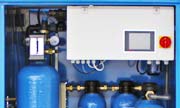
SCM 24
|
|
Cleans 24.000 liters per day
|
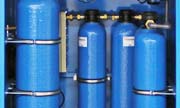
SCM 60
|
|
Cleans 60.000 liters per day
|
Video: How it works
The SCG Advantage
Our market-leading, water cleaning solutions have many advantages. To read more click the items below:
No Chemicals
Our machines and technology does not use any chemicals, at all.
Read more...
No Waste Water
Our machines do not waste any water. Yield = 100%.
Read more...
Low energy use
Uses 50 times less energy than a Reverse Osmosis Machine.
Read more...
Low ownership cost
Lower maintenance and operation costs due to our technology.
Read more...
Easy to install
Simple "plug and play" installation makes for easy deployment.
Read more...
Extremely compact
A compact system, contained in an easy to transport cabinet.
Read more...
Outperforms R.O.
SCG technologies outperform Reverse Osmosis systems.
Read more...
Faster ROI
Get a faster Return on Investment with our systems.
Read more...
Latest News
Latest Blog Posts
| Chemicals in water treatment? |
| Water storage - Whats best for keeping water clean and drinkable? |
| Case: Disaster Management Water Treatment |
Contact SCG
891 Showroom Place
Suite 101
Chula Vista, CA, 91914
Phone: +1 619-878-2730
Contact us by email