








A European municipality removes manganese and arsenic
A small European municipality faced a problem familiar to many communities that depend on groundwater: the source was reliable in volume, yet difficult to use for drinking water. Routine testing found elevated manganese and arsenic, two naturally occurring contaminants that can enter bore water as it moves through mineral-rich rock and aquifers. The council needed a treatment solution that was effective, compact and simple enough for local operators to manage.
This case study follows the municipality’s move to a single, chemical-free treatment system. The project demonstrates how a carefully selected filtration media train can address multiple contaminants in one installation, while reducing sludge, chemical handling and unnecessary energy consumption. For Australian councils, regional water authorities and remote operators, the approach offers useful lessons for bore water, decentralised supplies and mobile treatment assets.
The water quality problem
The municipality served several thousand residents through a groundwater supply. The raw water looked clear at the outlet, but laboratory analysis identified manganese and arsenic above the levels required for treated drinking water. Manganese was also causing operational concerns: dark staining appeared on fixtures, and customers reported an unpleasant metallic taste after periods of higher concentration.
Arsenic presented a different type of risk because it may have no obvious colour, smell or taste. The council therefore had to treat the issue as a long-term water safety matter rather than a cosmetic problem. Seasonal changes in the aquifer also meant that a system designed around a single test result could perform poorly when groundwater chemistry shifted.
The existing arrangement was based on conventional pumping and basic filtration. Adding separate chemical dosing, oxidation and waste-handling stages would have increased the plant footprint and placed greater demands on the small operating team. The preferred option was a compact treatment train capable of targeting both contaminants before final disinfection and distribution.
Designing one integrated treatment train
Swiss Cleanwater Group assessed the raw water chemistry, required flow rate, pressure conditions and expected operating pattern. The selected configuration combined pre-treatment with specialised media in a single system enclosure. Its purpose was to convert or capture dissolved contaminants as water passed through the treatment vessels, without continuous chemical addition.
Manganese removal depends on creating the right conditions for oxidation and filtration. In the treatment system, catalytic media supports the conversion of dissolved manganese into a particulate form that can be retained within the filter bed. Arsenic removal requires a different mechanism, with media selected to adsorb or bind arsenic species under the site’s specific pH and water chemistry.
Calling it a “single system” does not mean one generic filter removes everything in the same way. It means that the treatment functions are engineered as one coordinated installation, with flow, contact time and media selection matched to the source water. This distinction matters when a municipality wants dependable results rather than a collection of disconnected devices.
The design also avoided a large chemical storage area and reduced the need for frequent deliveries. That was valuable for a community where specialist contractors were not always nearby. Where arsenic or other trace metals are present, media selection should always follow laboratory testing and pilot assessment, rather than relying on a standard catalogue configuration.
Commissioning and performance control
Before commissioning, the municipality established a testing schedule covering raw water, treated water and key operating parameters. Samples were checked for manganese and arsenic, while operators monitored pressure loss, flow, pH and filter performance. This gave the council a baseline against which future changes could be measured.
The treatment vessels were commissioned progressively, allowing the operating team to confirm that the media was conditioning correctly and that the system could meet the required flow. Backwashing and maintenance procedures were documented in practical language, with clear instructions for routine inspections, sampling and escalation if results moved outside the target range.
This operational discipline is important because a treatment system is part of a wider water safety plan. Even an efficient media filter needs suitable upstream protection, correct hydraulic loading and regular verification. The municipality retained responsibility for compliance monitoring and continued to use independent laboratory testing to confirm that the treated water met its obligations.
A related consideration for many projects is the presence of additional contaminants. If lead is detected in plumbing or source water, catalytic media may form part of a broader treatment strategy, although the correct solution depends on the contaminant’s form, concentration and point of entry.
Why the approach matters in Australia
Australian water operators will recognise the practical pressures behind this European project. A council in regional New South Wales or Queensland may manage long pipe runs, seasonal demand and several remote assets with a small team. A treatment plant that reduces chemical deliveries and simplifies daily checks can make a real difference, especially when wet-season access or summer road conditions disrupt logistics.
The Australian Drinking Water Guidelines provide the national reference point, while state and territory regulators set approval and reporting requirements. In practice, a municipality still needs to verify the raw water profile, confirm treatment performance and fit the equipment into its local water safety plan. “Town water” may sound straightforward, but the supply can depend on bores, reservoirs, rainwater, desalination or a combination of sources.
Remote communities, agricultural properties and mining operations face another practical reality: equipment may need to operate far from a major service centre. A chemical-free or low-chemical design can reduce storage risks and the number of consumables that must be transported. It can also support operators who are comfortable with pumps, valves and sampling but do not want a complicated chemical dosing regime.
The same principle applies to livestock facilities, food-processing sites and swimming pools, although each application has different water quality targets. A system sized for a European municipal bore cannot simply be copied to a station near Dubbo, a community outside Cairns or an industrial site in Western Australia. The useful lesson is the method: test the source, define the compliance target and engineer the treatment around actual conditions.
A scalable model for clean water projects
The municipality’s result came from matching the treatment technology to the contaminants rather than selecting equipment by flow rate alone. The integrated system addressed manganese and arsenic in one coordinated installation, while keeping the plant compact and manageable. Reduced chemical use also simplified site operations and lowered the potential for handling and storage issues.
The project illustrates why treatment design should consider the entire lifecycle. Capital cost is only one part of the decision. Councils also need to assess energy demand, backwash requirements, replacement media, operator time, laboratory testing and the practical availability of technical support. A slightly more sophisticated system can be the better investment when it reduces recurring work and improves consistency.
Future upgrades can be planned around the same platform. Additional monitoring, remote alarms or a polishing stage may be added if the source changes or the supply expands. Where a facility needs activated carbon for pesticides, taste and odour compounds or other organic contaminants, the role of granular activated carbon should be assessed alongside the existing media rather than treated as an automatic replacement.
The approach is also relevant to emergency and defence applications. A treatment package designed for rapid deployment can help supply safe water where fixed infrastructure is damaged or unavailable. Swiss Cleanwater Group’s mobile water systems show how the same focus on contaminant removal, low logistics burden and adaptable operation can extend beyond a permanent municipal plant.
For the European municipality, the outcome was a clearer treatment process, more controlled water quality and a manageable operating routine. For Australian decision-makers, the case reinforces a straightforward point: groundwater that looks clean may still require targeted treatment, and one well-engineered system can address several risks without creating an oversized plant.
Swiss Cleanwater Group can assess groundwater and surface-water challenges for councils, utilities, farms, industry, buildings and remote operations. Share your laboratory results, flow requirements and site conditions to identify a treatment configuration built for reliable clean drinking water with lower chemical and waste demands.
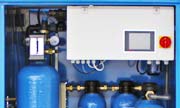
SCM 24
|
|
Cleans 24.000 liters per day
|
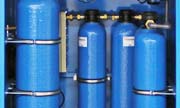
SCM 60
|
|
Cleans 60.000 liters per day
|
Video: How it works
The SCG Advantage
Our market-leading, water cleaning solutions have many advantages. To read more click the items below:
No Chemicals
Our machines and technology does not use any chemicals, at all.
Read more...
No Waste Water
Our machines do not waste any water. Yield = 100%.
Read more...
Low energy use
Uses 50 times less energy than a Reverse Osmosis Machine.
Read more...
Low ownership cost
Lower maintenance and operation costs due to our technology.
Read more...
Easy to install
Simple "plug and play" installation makes for easy deployment.
Read more...
Extremely compact
A compact system, contained in an easy to transport cabinet.
Read more...
Outperforms R.O.
SCG technologies outperform Reverse Osmosis systems.
Read more...
Faster ROI
Get a faster Return on Investment with our systems.
Read more...
Latest News
Latest Blog Posts
| Chemicals in water treatment? |
| Water storage - Whats best for keeping water clean and drinkable? |
| Case: Disaster Management Water Treatment |
Contact SCG
891 Showroom Place
Suite 101
Chula Vista, CA, 91914
Phone: +1 619-878-2730
Contact us by email