


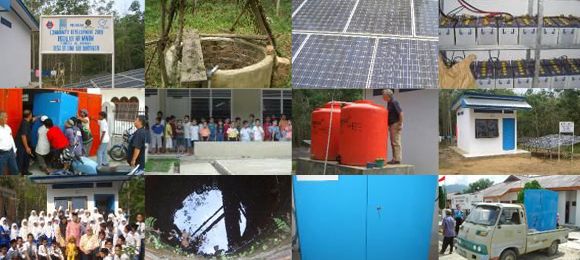







Chemical-Free Filtration for Clearer Rural Drinking Water
Rural community water supplies often become cloudy after heavy rain, seasonal flooding, construction, or changes in groundwater flow. This cloudiness, known as turbidity, is caused by suspended particles such as clay, silt, organic matter, rust, and microorganisms. Even when the water appears only slightly hazy, it can affect disinfection, taste, equipment life, and public confidence.
Chemical-free filtration offers a practical way to reduce turbidity without relying on coagulants, chlorine, or other treatment chemicals. Depending on the source and required flow rate, a system may use sediment separation, pressure-driven membranes, activated media, or several stages working together.
For rural communities, the strongest solution is rarely the most complicated one. Treatment must match local water quality, electricity availability, operator skills, maintenance capacity, and seasonal demand. A properly designed system can provide consistent drinking water while limiting waste, chemical storage, and operating costs.
Why Turbidity Matters In Rural Supplies
Turbidity is measured in nephelometric turbidity units, or NTU. A high reading signals that water contains suspended material, but the number does not identify every contaminant present. Particles can carry bacteria, viruses, pesticides, and metals across a treatment system, making cloudy water a broader health and operational concern.
Cloudiness also reduces the effectiveness of ultraviolet treatment because suspended particles can shield microorganisms from UV light. Sediment may clog pipes, damage pumps, fill storage tanks, and shorten the service life of downstream filters. In a village network, these problems can lead to frequent shutdowns and high maintenance demands.
Surface water sources are especially variable. A spring may be clear during dry weather and heavily loaded with sediment after rainfall. Wells can experience similar changes when aquifers are disturbed or when nearby agricultural activity affects recharge. Continuous monitoring and an adaptable treatment process are therefore essential.
How Chemical-Free Filtration Removes Suspended Particles
The first stage is often physical separation. Screens, settling chambers, hydrocyclones, or coarse prefilters remove larger particles before water reaches finer treatment equipment. Gravity-based systems can be useful where electricity is limited, while automated backwashing reduces the need for frequent manual cleaning.
Ultrafiltration and microfiltration use membranes with very small pores to retain suspended solids and many microorganisms. These systems can produce clear water with limited chemical input, although they require pressure, periodic cleaning, and effective pretreatment. The selected membrane must be sized for the source water rather than based only on the community’s average daily consumption.
Media filtration provides another chemical-free approach. Layers of sand, gravel, ceramic material, or specialized mineral media trap particles as water passes through. Some media can also support biological processes that improve water quality. Backwashing removes accumulated solids and returns the filter to service without adding coagulants.
Turbidity reduction is often combined with treatment for other contaminants. Systems intended for a wider water-quality challenge may address manganese, arsenic, bacteria, pesticides, or uranium through different filtration stages. For example, communities supporting agricultural operations can review this information on uranium removal for irrigation when turbidity control is part of a broader source-water strategy.
Selecting The Right Treatment Process
A sound design begins with laboratory testing and a record of seasonal changes. Important measurements include turbidity, flow, temperature, pH, conductivity, total dissolved solids, iron, manganese, microbial indicators, and any locally relevant contaminants. A single water sample may not represent conditions during a storm or dry season.
The table below compares common approaches for rural applications. Actual performance depends on source-water characteristics, equipment sizing, pretreatment, and operating discipline.
| Treatment approach | Turbidity performance | Main requirements | Suitable rural use |
|---|---|---|---|
| Settling and coarse screening | Good for large and heavy particles | Space, flow control, periodic sludge removal | Springs, rivers, and high-sediment intake water |
| Sand or multimedia filtration | Good for suspended solids and changing particle sizes | Backwashing, correct media depth, flow monitoring | Community networks with moderate turbidity |
| Microfiltration | Very good removal of fine particles and many microorganisms | Pressure, membrane cleaning, reliable pretreatment | Drinking-water systems requiring compact equipment |
| Ultrafiltration | Excellent clarification and microbial barrier | Pumping energy, backwash management, membrane care | Variable surface water and compact decentralized plants |
| Activated or specialized media | Depends on the media and target contaminant | Media replacement or regeneration planning | Combined turbidity and contaminant treatment |
The best choice may combine two or more methods. A settling stage can protect a membrane during storm events, while a final polishing filter can improve appearance and taste. Designers should also assess what happens to backwash water and retained sediment so that the process does not simply transfer pollution to another location.
Designing For Reliable Community Operation
Rural water treatment should be designed around the people who will operate it. Simple pressure indicators, automatic shutdowns, clear alarms, and accessible sampling points make it easier to detect a blocked filter or falling membrane performance. Equipment that depends on highly specialized technicians may become unreliable when spare parts and service visits are difficult to obtain.
Energy demand is another important consideration. Gravity-fed pretreatment can reduce pumping requirements, while solar power or battery storage can support systems in areas with unstable grids. Variable-speed pumps can adjust output to daily demand instead of running continuously at full capacity.
Storage tanks help separate treatment production from peak consumption. They also provide a buffer during backwashing, maintenance, or short power interruptions. However, storage must be protected from contamination, cleaned periodically, and sized to avoid long periods in which treated water remains stagnant.
A modular system can grow with the community. An initial unit may serve a school, clinic, or small village, while additional modules can be added as population and demand increase. This approach can be more practical than building an oversized plant that operates inefficiently for years.
Verifying Results And Protecting Public Health
Performance verification should include raw-water and treated-water samples. Operators can track turbidity before and after each stage, observe pressure changes, record flow rates, and document backwashing. A sudden rise in treated-water turbidity may indicate a damaged membrane, exhausted media, an open bypass valve, or a failure in pretreatment.
Clear water is not automatically safe water. Turbidity control should form part of a complete water safety plan that includes microbial testing, secure intakes, hygienic storage, distribution-line protection, and an appropriate final disinfection barrier where required. Chemical-free treatment describes the filtration method; it does not remove the need for responsible water-quality management.
Mobile treatment units can help communities respond to emergencies, seasonal demand, or temporary loss of a permanent source. A documented mobile water treatment case illustrates how transportable equipment can support independent water production where fixed infrastructure is limited.
Training should cover routine inspection, safe handling of filters and membranes, sampling procedures, alarm response, and maintenance records. Written instructions in the local working language can reduce errors and help new operators maintain continuity when staff change.
Practical Recommendations For Rural Projects
Before selecting equipment, communities and project managers should establish a baseline for both water quality and operational conditions. The following actions help create a dependable specification:
- Test the source during dry weather, normal conditions, and after heavy rainfall.
- Define the required flow rate, daily volume, peak demand, and future population growth.
- Use pretreatment to protect fine filters and membranes from sudden sediment loads.
- Plan backwash, sludge, and rejected-water handling before installation.
- Include operator training, spare parts, monitoring instruments, and a maintenance budget.
Procurement documents should specify measurable outcomes rather than relying on broad claims such as “clear water.” Requirements may include a maximum treated-water turbidity, minimum flow, expected recovery rate, energy consumption, and the testing method used for acceptance. This makes it easier to compare proposals and confirm that the installed system performs as intended.
Local participation also improves long-term reliability. Residents can help identify source changes, report taste or appearance problems, and protect intake areas from agricultural runoff, waste, and livestock access. Treatment technology works best when it is supported by source protection and practical community management.
Turning A Water Assessment Into Action
Chemical-free filtration can give rural communities a durable way to reduce suspended solids while limiting chemical handling and unnecessary waste. The right solution depends on source variability, contaminant risks, available power, operator capacity, and the level of water security required.
Swiss Cleanwater Group provides water-treatment technologies for municipal, agricultural, industrial, mobile, and other applications. Communities evaluating a new installation or upgrading an existing plant can arrange a free treatment demonstration to connect water-quality results with an appropriate filtration design.
Begin with representative testing, define clear performance targets, and select equipment that local operators can maintain. A carefully matched system can turn changing rural source water into a safer, clearer, and more dependable supply.
SCM 24

|
|
Cleans 24.000 liters per day
|
SCM 60

|
|
Cleans 60.000 liters per day
|
Video: How it works
The SCG Advantage
Our market-leading, water cleaning solutions have many advantages. To read more click the items below:
No Chemicals
Our machines and technology does not use any chemicals, at all.
Read more...
No Waste Water
Our machines do not waste any water. Yield = 100%.
Read more...
Low energy use
Uses 50 times less energy than a Reverse Osmosis Machine.
Read more...
Low ownership cost
Lower maintenance and operation costs due to our technology.
Read more...
Easy to install
Simple "plug and play" installation makes for easy deployment.
Read more...
Extremely compact
A compact system, contained in an easy to transport cabinet.
Read more...
Outperforms R.O.
SCG technologies outperform Reverse Osmosis systems.
Read more...
Faster ROI
Get a faster Return on Investment with our systems.
Read more...
Latest News
Latest Blog Posts
| Chemicals in water treatment? |
| Water storage - Whats best for keeping water clean and drinkable? |
| Case: Disaster Management Water Treatment |
Contact SCG
891 Showroom Place
Suite 101
Chula Vista, CA, 91914
Phone: +1 619-878-2730
Contact us by email