








Chemical-Free Brackish Water Treatment for Australian Coasts
Coastal communities need reliable drinking water even when freshwater aquifers are affected by saltwater intrusion. Brackish water, which contains more dissolved salts than potable water but less than seawater, can be found in shallow bores, estuaries, islands, agricultural areas and groundwater reserves under pressure from drought and rising demand. Treating it well requires more than selecting a filter; the entire system must be matched to the source, seasonal conditions and intended use.
A chemical-free approach aims to reduce contaminants through physical separation, adsorption, biological control and carefully managed hydraulics rather than routine dosing with chlorine, coagulants or antiscalants. The right design can address salinity alongside manganese, arsenic, uranium, bacteria, pesticides and suspended solids, while limiting concentrate waste and unnecessary electricity consumption.
For Australian operators, resilience is essential. A plant near Perth may face increasing groundwater salinity, while a remote Northern Territory community may need a compact system that can run with limited technical support. Agricultural sites in Queensland, island settlements and mining camps also require equipment that tolerates heat, variable feedwater quality and interruptions to transport or power.
Establishing The Water Quality Baseline
The first design decision is a detailed assessment of the raw water. Testing should cover electrical conductivity, total dissolved solids, pH, alkalinity, hardness, turbidity, temperature and flow variation. Laboratory analysis must also identify health-significant contaminants such as E. coli, nitrate, arsenic, uranium and pesticides. A single sample can be misleading if tidal movement or seasonal rainfall changes the bore chemistry.
Sampling should represent the conditions under which the plant will operate. In coastal aquifers, a pumping event can draw a saline boundary towards the bore, causing conductivity to rise over several hours. Heavy rain may flush sediment and agricultural residues into a surface intake. A monitoring plan with online conductivity, pressure and flow sensors allows the treatment train to respond before finished water falls outside the requirements of the Australian Drinking Water Guidelines.
The intended use determines the treatment target. Water for drinking, food preparation and worker accommodation requires a higher level of control than water used for livestock, irrigation or washdown. A modular system can produce a potable stream while directing a separately treated flow to lower-grade applications, conserving energy and reducing the volume that must undergo final purification.
Protecting The Treatment Train
Pretreatment is especially important when a chemical-free plant is supplied by an open intake, shallow bore or rainwater-fed storage tank. Screens and sediment separation protect pumps, while multimedia or cartridge filtration can remove grit, clay and organic particles. Where iron and manganese are present, aeration and catalytic filtration may convert dissolved metals into particles that can be captured without adding oxidising chemicals.
Biological contamination needs a barrier designed for the actual risk. Ultrafiltration, ultraviolet treatment or another validated physical disinfection method may be appropriate, depending on turbidity, flow and the required microbial performance. Ultraviolet equipment needs clear water and dependable power, so it should not be treated as a substitute for upstream filtration.
Brackish supplies can also contain agricultural residues. A coastal farming district may need protection from herbicides and pesticides entering shallow groundwater or stored rainwater. Guidance on pesticide removal is useful when the source combines roof catchment, tanks and bore water, since organic contaminants can require a different barrier from dissolved salts.
Selecting The Salt Removal Barrier
The central salt-removal stage may use membrane separation, depending on salinity, pressure requirements and the desired recovery rate. Nanofiltration can reduce selected dissolved ions and organic compounds, while reverse osmosis generally provides stronger desalination for brackish groundwater. The choice should be based on measured feedwater chemistry rather than the label “brackish”, because hardness, silica, iron and organic matter can affect performance as much as total dissolved solids.
A chemical-free design must address membrane fouling and scaling through physical pretreatment, suitable operating pressure, automatic flushing and accurate recovery control. In some applications, a staged membrane arrangement can produce potable water and a secondary stream for non-potable use. Lower-pressure operation is preferable where it can achieve the required quality, particularly for solar-powered or remote installations.
Membranes are not the only consideration. The treated water may be too low in alkalinity or minerals for stable distribution, so post-treatment should restore a suitable balance using a controlled contact medium or blending with a verified source. This avoids relying on unnecessary chemical correction while protecting pipes, tanks and fixtures from aggressive water.
Swiss Cleanwater Group presents a range of water treatment products that can be assessed for filtration, contaminant removal and modular deployment. Equipment selection should still follow site-specific water testing, hydraulic calculations and verification against the required drinking-water standard.
Managing Energy, Concentrate And Waste
A sustainable plant is designed around the full water balance. Reverse osmosis produces a concentrate stream containing the salts and contaminants removed from the feedwater. Discharging it to a sensitive wetland, shallow aquifer or poorly flushed drain can create environmental harm, so the receiving environment and regulatory approvals must be assessed before construction.
Possible strategies include improving recovery, separating high-salinity fractions, using concentrate for an approved industrial purpose or selecting a lower-waste treatment arrangement where water quality allows. In remote locations, concentrate management may influence the plant location more than the membrane skid itself. Tanks, lined evaporation areas and controlled disposal systems must be designed for local rainfall, wind and flood conditions.
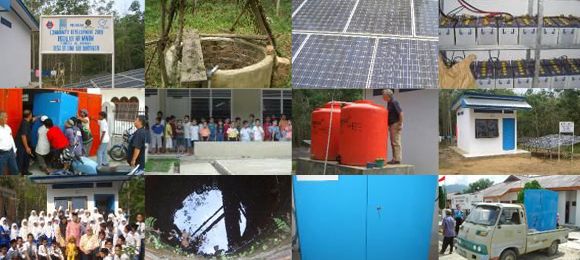
Energy demand can be reduced by using efficient pumps, variable-speed drives, gravity-fed pretreatment and automatic controls that avoid unnecessary operation. Solar generation with battery storage may support a small community or livestock installation, while a larger municipal plant can coordinate treatment with lower-cost electricity periods. In cyclone-prone parts of Queensland and northern Australia, electrical equipment needs secure mounting, weather protection and a safe restart sequence after outages.
Monitoring prevents both wasted power and premature maintenance. Conductivity, differential pressure, flow, tank level and turbidity can be tracked locally or remotely. Alarm thresholds should distinguish between a blocked prefilter, a failed sensor, a rising salt load and a membrane that needs cleaning. Clear operating data helps a small team respond before a minor fault becomes a water shortage.
Building For Local Operation
A treatment plant should fit the people, climate and logistics of its location. An installation outside Adelaide may connect to established municipal infrastructure, while a remote Western Australian community may need containerised equipment, spare cartridges and remote technical support. Access roads, crane capacity, replacement-part lead times and the availability of trained operators should be included in the design brief from the beginning.
Construction and temporary projects have different needs from permanent utilities. A mining camp, road project or coastal building site may need a rapidly deployable potable-water unit with storage and simple connection points. Practical advice on clean water for workers can help project managers consider worker welfare, testing, tank hygiene and changing demand during construction phases.
Australia’s heat and intense sunlight affect membranes, control cabinets, tanks and flexible pipework. Shade structures, ventilation, insulation and UV-resistant materials can extend equipment life. In northern regions, mosquito exclusion and secure tank lids are important, while island sites may require corrosion-resistant fittings because salt-laden air attacks ordinary metals.
Commissioning should include verified sampling, operator training and a written maintenance schedule. Staff need to know how to isolate a module, replace a prefilter, interpret a conductivity alarm and protect treated water from recontamination in storage. Routine verification is particularly important when the system operates without chemical residuals, because a clean production process still requires hygienic tanks, pipework and delivery practices.
A properly engineered system can give Australian coastal users a dependable source of drinking water without making chemical dosing the centre of operations. Begin with representative testing, define the quality target, select barriers for the measured contaminants and plan concentrate, energy and maintenance requirements together. Swiss Cleanwater Group can help assess a municipal, agricultural, industrial, livestock, construction or mobile application and develop a treatment configuration suited to its water source. Contact the company to discuss site data, pilot testing and a practical path from brackish feedwater to safe, usable water.
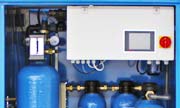
SCM 24
|
|
Cleans 24.000 liters per day
|
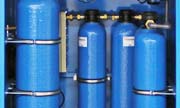
SCM 60
|
|
Cleans 60.000 liters per day
|
Video: How it works
The SCG Advantage
Our market-leading, water cleaning solutions have many advantages. To read more click the items below:
No Chemicals
Our machines and technology does not use any chemicals, at all.
Read more...
No Waste Water
Our machines do not waste any water. Yield = 100%.
Read more...
Low energy use
Uses 50 times less energy than a Reverse Osmosis Machine.
Read more...
Low ownership cost
Lower maintenance and operation costs due to our technology.
Read more...
Easy to install
Simple "plug and play" installation makes for easy deployment.
Read more...
Extremely compact
A compact system, contained in an easy to transport cabinet.
Read more...
Outperforms R.O.
SCG technologies outperform Reverse Osmosis systems.
Read more...
Faster ROI
Get a faster Return on Investment with our systems.
Read more...
Latest News
Latest Blog Posts
| Chemicals in water treatment? |
| Water storage - Whats best for keeping water clean and drinkable? |
| Case: Disaster Management Water Treatment |
Contact SCG
891 Showroom Place
Suite 101
Chula Vista, CA, 91914
Phone: +1 619-878-2730
Contact us by email