


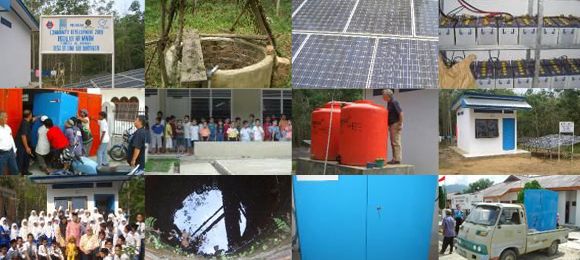







Designing Chemical-Free Water Treatment Systems for Emergency Relief Camps
Emergency relief camps need drinking water systems that are safe, transportable and simple to operate. A camp may be established after flooding, a cyclone, bushfire or infrastructure failure, with an uncertain source ranging from a bore or river to a tanker delivery. The treatment plant must respond to changing water quality while producing enough water for drinking, food preparation, hygiene and medical care.
A chemical-free approach removes the need to store, dose and transport substances such as chlorine, coagulants or oxidants. It does not mean that design decisions become less rigorous. Microbial protection, contaminant testing, flow control, power supply, operator training and hygienic storage all remain essential. For Australian emergency planners, the system should also align with the Australian Drinking Water Guidelines and relevant local procurement and public health requirements.
Start With The Water Source
The first design decision is a source assessment rather than a choice of equipment. Surface water collected after flooding can contain silt, organic matter, sewage contamination, pesticides and fuel residues. Groundwater may appear clear while carrying dissolved iron, manganese, arsenic, salinity or uranium. Tankered water may already be treated, yet the receiving tanks and hoses can introduce contamination if cleaning and connection procedures are poor.
A rapid field survey should record turbidity, pH, conductivity, temperature and the likely presence of bacteria, metals and agricultural chemicals. Laboratory testing is needed for decisions involving arsenic, uranium, pesticides or pharmaceuticals. The source may change during an operation, so the treatment train should include sampling points before and after critical stages.
In remote Queensland or the Northern Territory, a camp may depend on a bore with high mineral content. Around Brisbane or the Hawkesbury-Nepean region, floodwater can create a very different risk profile. Designing around a single “typical” sample is unsafe; a modular plant with adjustable operating ranges is more resilient.
Build A Suitable Treatment Train
A practical chemical-free system normally uses several physical treatment barriers. Coarse screening protects pumps from leaves and debris, followed by sediment removal through settling, cartridge filtration, multimedia filtration or ultrafiltration. The correct sequence reduces loading on the finer stages and helps maintain output when raw water quality deteriorates.
Catalytic media can target dissolved contaminants that ordinary sediment filters do not capture. Media selected for iron and manganese can reduce metallic taste, staining and discolouration without routine chemical dosing. The discussion of manganese staining control is particularly relevant where groundwater could mark laundry, basins and storage tanks.
Membrane systems can provide a strong barrier for suspended solids, bacteria and some dissolved substances, depending on membrane type and operating conditions. Reverse osmosis may be considered for salinity, nitrate or specific dissolved contaminants, although it produces a concentrate stream that must be managed responsibly. Activated carbon can help with pesticides, taste and odour, while specialised media may be needed for arsenic or uranium.
Protect Against Microbial Hazards
Chemical-free treatment still requires a reliable microbial barrier. Ultraviolet disinfection can inactivate many bacteria, viruses and protozoa when the water is sufficiently clear and the UV dose is maintained. It does not provide a disinfectant residual in downstream pipes or containers, so the design must minimise recontamination after treatment.
Ultrafiltration, UV and hygienic storage can work together, but each has operating limits. UV lamps need clean sleeves and stable electrical power. Membranes need monitoring for integrity and periodic cleaning. Tanks should be covered, washable and fitted with protected vents, screened openings and sanitary outlets. Drinking-water hoses should be dedicated to potable use rather than shared with firefighting, livestock or general wash-down activities.
In a temporary Australian camp, treated water may be carried in bowsers or distributed through temporary pipework over uneven ground. Operators should test water at the point of use, not just at the plant outlet. Handwashing stations, kitchen taps and medical areas deserve particular attention because poor hygiene after treatment can undermine an otherwise effective process.
Match Flow Rate To Real Demand
Capacity must be based on the camp population, climate, operating hours and expected peak demand. Drinking needs rise in hot conditions, while cooking, hand hygiene, showering and clinical services add to the load. A plant sized only for average consumption may fail during morning peaks or when tankers cannot reach the site.
Flow rate also affects contaminant removal. Water moving too quickly through media or membranes can reduce contact time, increase pressure and compromise performance. The relationship between hydraulics and treatment is explained in filtration flow rates, which can help planners set realistic design and operating parameters.
A useful arrangement includes raw-water storage, treatment capacity with some redundancy, and a treated-water tank sized for short interruptions. Variable-speed pumps, automatic shut-off controls and flow meters can reduce energy use and protect equipment. Where grid power is unreliable, hybrid systems using generators, batteries or solar may keep essential treatment running, though the power budget must include pumps, UV units, controls and communications.
Plan For Contaminants Beyond Sediment
Visible dirt is easy to identify, but dissolved contaminants can be more serious. Arsenic and uranium may occur naturally in groundwater, while pesticides can enter surface water after agricultural runoff. Manganese and iron affect appearance and taste, and some organic compounds can pass through basic filtration. A treatment design should therefore be linked to verified test results rather than a generic claim of “purification”.
Emergency planners should also consider medicines and personal-care chemicals in water affected by sewage overflow or wastewater discharge. Conventional steps may reduce some compounds but are not automatically effective for every pharmaceutical. Options such as activated carbon, advanced membranes and carefully selected media should be evaluated against the target chemicals, contact time and breakthrough risk. The evidence around chemical-free pharmaceutical filtration provides useful context for this less visible challenge.
Treatment performance needs verification throughout the deployment. Keep records of pressure, flow, turbidity, UV intensity, filter changes and laboratory results. Establish trigger levels that require a source change, reduced production, cartridge replacement or technical inspection. This makes the plant easier to manage when experienced water engineers are not present at every shift.
Design For Deployment And Handover
Emergency systems should be built around rugged, modular components that can be transported by truck, trailer or aircraft and assembled with minimal specialist tooling. Quick-connect fittings, clear pipe labels, lifting points and weatherproof control cabinets reduce setup time. Units should be protected from heat, dust, flooding and unauthorised access, especially in exposed inland locations.
The Australian market includes councils, state emergency services, Defence contractors, humanitarian organisations and private water-carrier operators. Procurement teams should assess total operating cost rather than purchase price alone, including replacement media, membranes, spare pumps, testing equipment, freight to regional areas and operator instruction. A system that cannot obtain parts quickly in Western Australia or Far North Queensland may be less useful than a slightly larger unit with local support.
Handover documentation should include a process diagram, start-up and shutdown steps, sampling instructions, fault codes, cleaning procedures and contact details for technical assistance. Operators need practical training in safe water handling, electrical isolation and confined-space risks around tanks. Community communication matters too: clearly labelled taps and simple advice about approved drinking points can prevent people from using untreated streams or private supplies.
A well-designed chemical-free plant gives relief teams a controlled way to produce potable water while reducing chemical storage, transport hazards and avoidable waste. Its success depends on matching treatment barriers to the source, keeping flow within validated limits and maintaining clean storage from intake to cup.
Swiss Cleanwater Group can help organisations assess source-water risks, select suitable treatment technologies and plan a mobile or fixed installation for emergency operations. Contact the team to discuss Australian site conditions, contaminant testing, capacity requirements and a dependable clean-water system for your next relief deployment.
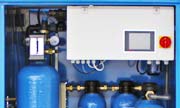
SCM 24
|
|
Cleans 24.000 liters per day
|
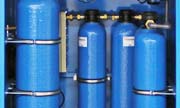
SCM 60
|
|
Cleans 60.000 liters per day
|
Video: How it works
The SCG Advantage
Our market-leading, water cleaning solutions have many advantages. To read more click the items below:
No Chemicals
Our machines and technology does not use any chemicals, at all.
Read more...
No Waste Water
Our machines do not waste any water. Yield = 100%.
Read more...
Low energy use
Uses 50 times less energy than a Reverse Osmosis Machine.
Read more...
Low ownership cost
Lower maintenance and operation costs due to our technology.
Read more...
Easy to install
Simple "plug and play" installation makes for easy deployment.
Read more...
Extremely compact
A compact system, contained in an easy to transport cabinet.
Read more...
Outperforms R.O.
SCG technologies outperform Reverse Osmosis systems.
Read more...
Faster ROI
Get a faster Return on Investment with our systems.
Read more...
Latest News
Latest Blog Posts
| Chemicals in water treatment? |
| Water storage - Whats best for keeping water clean and drinkable? |
| Case: Disaster Management Water Treatment |
Contact SCG
891 Showroom Place
Suite 101
Chula Vista, CA, 91914
Phone: +1 619-878-2730
Contact us by email