







Designing a hybrid water treatment system with UV safety
Designing a hybrid system: catalytic filtration followed by UV for extra safety can give Australian water suppliers a strong barrier against both chemical contaminants and microorganisms. Catalytic media tackles dissolved pollutants such as manganese, arsenic and uranium, while ultraviolet disinfection provides a final safeguard against bacteria, viruses and other organisms that may remain after filtration. Learn more about Case Study A Municipality In California Replaces Chlorine With Catalytic Filtration.
This arrangement is useful where source quality changes throughout the year. A bore in regional Queensland, a rainwater tank near Perth or a remote Northern Territory supply may look clear while still carrying invisible risks. Combining treatment stages creates a more resilient process than relying on appearance, taste or a single piece of equipment. Learn more about Case Study Providing Clean Water For A Remote Swiss Mountain Village.
| Treatment stage | Main purpose | Typical concern addressed | Key design requirement |
|---|---|---|---|
| Screening and prefiltration | Protect downstream equipment | Sand, grit and suspended solids | Correct micron rating and easy cleaning |
| Catalytic filtration | Remove dissolved contaminants | Manganese, arsenic, uranium, pesticides and some organic compounds | Correct media, contact time and flow rate |
| Fine polishing | Improve clarity before disinfection | Fine particles and residual turbidity | Stable pressure and low particle loading |
| UV disinfection | Inactivate microorganisms | Bacteria, viruses and protozoa | Validated dose, clean quartz sleeve and reliable flow control |
| Monitoring and controls | Keep treatment within safe limits | Flow surges, lamp failure and media exhaustion | Alarms, automatic shut-off and service records |
Why the two barriers work together
Catalytic filtration and UV perform different jobs, which is the central advantage of the hybrid design. Catalytic media uses surface reactions and adsorption to capture or transform selected dissolved substances. It can reduce contaminants that UV cannot remove, including manganese, arsenic and certain pesticides. It also helps produce water with better clarity before the final disinfection step.
UV treatment is a physical process rather than a chemical one. A UV lamp exposes passing water to a controlled dose of ultraviolet light, disrupting the ability of microorganisms to reproduce. It does not add chlorine, alter the taste of water or create a chemical residual. Its role is best understood as a final microbiological barrier, rather than a replacement for contaminant removal.
The order matters. Placing UV after catalytic filtration means the lamp receives cleaner water and can deliver its intended dose more consistently. If suspended solids or colour shield microorganisms from the light, disinfection performance may fall even when the lamp is operating.
Start with the source water
A reliable design begins with a laboratory assessment of the raw water. Testing should cover turbidity, pH, hardness, iron, manganese, arsenic, uranium, nitrate, pesticides and microbiological indicators where relevant. The results show whether the selected catalytic medium is suitable and whether additional pretreatment is needed.
Source conditions in Australia can vary sharply. A farm bore in the Murray-Darling Basin may have a different contaminant profile from a shallow coastal aquifer near Adelaide. A station relying on a storage tank may experience a sudden microbial load after dust, bird activity or a long dry period. Seasonal sampling is often valuable when rainfall, flooding or groundwater extraction changes water chemistry.
Flow data is equally important. A system sized for the average demand may struggle during morning peaks at a regional accommodation site or when several livestock troughs fill together. Designers should establish minimum, normal and maximum flow, daily volume, operating hours and available pressure before selecting vessels, pumps or UV equipment.
Select catalytic media for the actual contaminants
“Catalytic filtration” is not a single universal process. Different media and configurations are suited to different contaminants, so the equipment should be matched to verified water chemistry rather than chosen from a generic capacity chart. Media depth, empty bed contact time, loading rate and pH can all influence the result.
Manganese removal, for example, may require a particular oxidation environment and sufficient contact time. Arsenic and uranium may require media with appropriate adsorption characteristics and careful monitoring of exhaustion. Where pesticides or complex organic compounds are present, a different treatment approach may be needed. Pilot testing can reduce the risk of installing an attractive-looking system that underperforms in the field.
The media vessel should also be designed for service access. Backwashing, draining, media replacement and safe handling of captured contaminants need to be practical for the operator. In a remote Western Australian mining camp, a simple layout with clear valves and accessible sample points may be more valuable than a compact but difficult-to-maintain installation.
A municipal chlorine replacement case study shows how catalytic filtration can support a lower-chemical treatment strategy when the process is matched to the supply and operating objectives.
Protect the UV stage with stable water quality
UV performance depends on more than lamp wattage. Turbidity, colour, flow rate, lamp age and quartz sleeve condition all affect the dose received by the water. Fine filtration ahead of the reactor can help maintain transmittance and reduce the chance that particles shield microorganisms from UV exposure.
The UV unit should be selected using validated performance data at the intended flow range. A device that achieves the required dose at 2,000 litres per hour may provide inadequate protection at 4,000 litres per hour. Flow control, a UV intensity sensor and an alarm for low output can make the difference between a monitored barrier and a lamp that merely appears to be working.
Automatic shut-off or diversion is prudent when the UV intensity falls below the operating threshold. The same applies when the lamp fails, the reactor overheats or flow exceeds the validated limit. These controls are particularly important for unmanned installations, mobile treatment units and sites where an operator may only visit once a day.
Build the process around Australian operating conditions
An Australian installation must cope with heat, dust, power variability and long distances between service providers. Equipment in the Pilbara or inland Queensland may need weather protection, ventilation and a control cabinet suited to high ambient temperatures. A solar-battery system can support remote operation, but the energy budget must include pumps, controls and the UV lamp rather than the lamp alone.
Councils and commercial operators should also consider how the treated water enters the distribution network. UV leaves no continuing disinfectant residual, so a long or poorly protected downstream pipe can reintroduce risk after treatment. A clean storage tank, hygienic pipework, backflow prevention and sensible turnover are part of the safety design.
For a household or small facility using rainwater, the setup may be relatively compact. For a livestock operation, food processor, swimming pool or emergency supply, the system may require duty and standby pumps, larger vessels, remote alarms and a bypass arrangement that fails safe. Clear labels in plain Australian workplace language—such as “UV fault: use alternate supply”—help staff respond quickly during a busy arvo.
Plan validation, monitoring and maintenance
The treatment train should include sample points before catalytic filtration, after filtration and after UV. These locations allow operators to confirm contaminant reduction, check microbial performance and identify whether a problem originates in the media vessel, polishing filter or disinfection stage. Records of flow, pressure, UV intensity, lamp hours and laboratory results support defensible operating decisions.
Catalytic media may eventually become exhausted or fouled. Backwashing can remove accumulated solids where the media allows it, but it does not restore every adsorption capacity indefinitely. The replacement interval should be based on contaminant loading, treated volume and verification testing rather than a convenient calendar date.
UV maintenance includes replacing lamps according to the manufacturer’s operating schedule, cleaning the quartz sleeve and checking seals and sensors. A spare lamp, sleeve-cleaning procedure and documented restart sequence are sensible for remote sites. The Australian Drinking Water Guidelines can provide a useful reference point, while the final design should also meet the requirements of the relevant state or territory authority and site risk assessment.
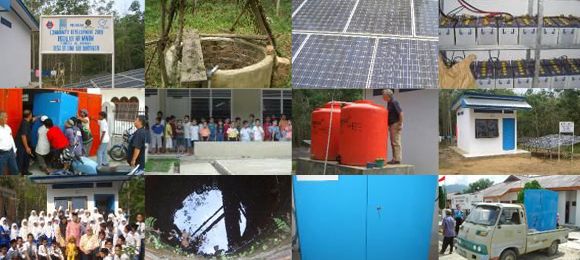
A practical case from a remote mountain village water project illustrates why dependable treatment, straightforward controls and maintainability matter when technical support is not immediately nearby.
Integrate the system into a dependable package
A hybrid plant works best when its components are engineered as one process. The inlet should include isolation and pressure protection, followed by appropriate sediment removal, catalytic vessels, polishing filtration and a correctly sized UV reactor. Bypass lines should be locked or controlled so untreated water cannot quietly enter the drinking-water supply.
Controls can be simple or highly automated. A small building may need only status lights, a flow switch and a UV alarm. A council facility or mobile military unit may benefit from telemetry, automatic valve sequencing, remote fault notifications and a logged record of operating conditions. The objective is useful oversight, not unnecessary complexity.
Swiss Cleanwater Group provides water-treatment technologies aimed at reducing contaminants without excessive chemical use, waste or energy consumption. Its equipment can be considered for municipal supplies, agriculture, industry, livestock, buildings and mobile applications where a tailored treatment train is more suitable than a one-size-fits-all filter.
Move from concept to verified water safety
The most effective next step is a site-specific assessment covering raw-water analysis, peak flow, treatment goals, available power, storage and maintenance access. From there, a supplier can recommend catalytic media, vessel sizing, prefiltration, UV dose and monitoring points that reflect the actual Australian operating environment.
Contact Swiss Cleanwater Group to discuss a hybrid treatment design for your bore, rainwater, municipal, industrial or remote supply. With the right testing and commissioning plan, catalytic filtration can remove the contaminants UV cannot address, while UV adds a final microbiological barrier for cleaner, safer water.
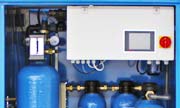
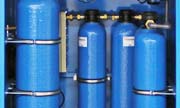
SCM 24
|
|
Cleans 24.000 liters per day
|
SCM 60
|
|
Cleans 60.000 liters per day
|
Video: How it works
The SCG Advantage
Our market-leading, water cleaning solutions have many advantages. To read more click the items below:
No Chemicals
Our machines and technology does not use any chemicals, at all.
Read more...
No Waste Water
Our machines do not waste any water. Yield = 100%.
Read more...
Low energy use
Uses 50 times less energy than a Reverse Osmosis Machine.
Read more...
Low ownership cost
Lower maintenance and operation costs due to our technology.
Read more...
Easy to install
Simple "plug and play" installation makes for easy deployment.
Read more...
Extremely compact
A compact system, contained in an easy to transport cabinet.
Read more...
Outperforms R.O.
SCG technologies outperform Reverse Osmosis systems.
Read more...
Faster ROI
Get a faster Return on Investment with our systems.
Read more...
Latest News
Latest Blog Posts
| Chemicals in water treatment? |
| Water storage - Whats best for keeping water clean and drinkable? |
| Case: Disaster Management Water Treatment |
Contact SCG
891 Showroom Place
Suite 101
Chula Vista, CA, 91914
Phone: +1 619-878-2730
Contact us by email