


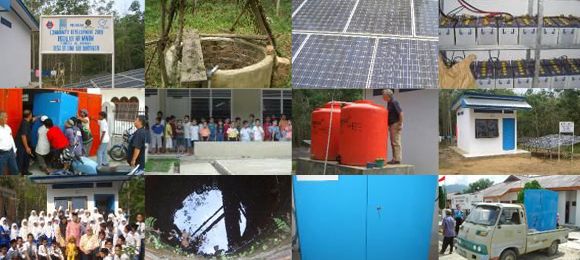







Chemical-Free Water Reuse For Resilient Agriculture
Agriculture is under growing pressure from longer dry periods, depleted aquifers, uncertain rainfall, and competition for freshwater. Irrigation remains essential for food production, yet conventional water supplies are becoming less reliable and more expensive. Reuse systems offer a practical way to reduce demand by treating available water and returning it to productive use.
Chemical-free treatment can make this approach more sustainable. Instead of relying on continuous chemical dosing, advanced filtration and oxidation methods can reduce contaminants while limiting residual waste, handling requirements, and energy consumption. The right system depends on the source water, crop requirements, irrigation method, and local regulations.
A successful reuse strategy does more than install a filter. It connects source assessment, contaminant removal, storage, disinfection, monitoring, and farm operations into one managed cycle. This allows growers, agricultural businesses, and public water programs to protect yields while making every cubic metre of water work harder.
Water Scarcity Needs Circular Thinking
Water scarcity is often treated as a supply problem, but it is also a management problem. Agricultural drainage, lightly contaminated process water, rainwater, groundwater, and treated municipal effluent may all represent usable resources when their quality is understood and controlled. Reuse reduces the need to draw fresh water for every irrigation cycle.
The aim is not to reuse water indiscriminately. Water should be matched to its intended application after treatment. Water suitable for orchard irrigation may require a different treatment level from water used in hydroponics, livestock facilities, or washing harvested produce. This source-to-use approach avoids unnecessary treatment while maintaining plant, soil, and worker safety.
Chemical-free reuse systems can also support soil health. Excess salts, suspended solids, metals, pathogens, and organic residues may accumulate when untreated water is repeatedly applied. A carefully designed treatment process helps control these risks and protects irrigation equipment from clogging, scaling, and biofilm formation.
Start With Water Quality
Every project should begin with a detailed water analysis rather than a standard equipment package. Testing may include turbidity, electrical conductivity, pH, hardness, iron, manganese, arsenic, uranium, pesticides, nutrients, bacteria, and other site-specific contaminants. Seasonal sampling is valuable because stormwater, shallow wells, and agricultural runoff can change considerably throughout the year.
Temperature can affect filtration performance, reaction rates, dissolved oxygen, and microbial activity. Understanding these relationships is especially important when a system must remove naturally occurring contaminants such as arsenic. Guidance on water temperature effects can help engineers and operators interpret performance changes across cold mornings, hot irrigation periods, and seasonal transitions.
The analysis should also consider how water is collected and stored. Open reservoirs may introduce algae and pathogens, while tanks can create stagnant zones. Mixing, pre-screening, and controlled residence times can reduce the load placed on the main treatment process. These details often determine whether a reuse system remains stable during peak demand.
Build Treatment Around Reuse
A chemical-free treatment train may combine screening, sedimentation, catalytic filtration, activated media, ultrafiltration, ultraviolet disinfection, and final polishing. Each stage should have a defined purpose. Screens protect pumps, sedimentation removes heavier particles, media filtration captures suspended matter, and membrane or UV technologies can address smaller particles and microorganisms.
Source water with elevated salinity requires special attention. Brackish groundwater or coastal water may be useful for agriculture only after dissolved salts are reduced to a crop-appropriate level. The feasibility of brackish water treatment depends on salinity, recovery targets, concentrate management, energy availability, and the sensitivity of the crop.
Chemical-free does not mean maintenance-free. Filters need backwashing or replacement, membranes require cleaning protocols, and UV lamps or sensors must be inspected. A good design minimizes consumables and chemical dependence while making routine service predictable. Where concentrate or backwash water is produced, the project should define whether it can be safely reused, settled, further treated, or disposed of under local rules.
Compare System Choices
The most suitable configuration depends on water quality, farm size, available power, and the reliability required during irrigation. A modular system can be expanded as water demand grows, while a centralized installation may be more efficient for a large agricultural district or cooperative.
| Treatment approach | Main role in reuse | Advantages | Important considerations |
|---|---|---|---|
| Screening and sedimentation | Remove debris and heavier solids | Simple, low energy, protects downstream equipment | Requires regular cleaning and adequate settling space |
| Catalytic or media filtration | Reduce selected metals and suspended matter | Chemical-light operation and adaptable media | Performance depends on water chemistry and flow control |
| Membrane filtration | Remove fine particles, pathogens, and some dissolved contaminants | High-quality treated water in a compact footprint | Needs pretreatment, pressure, and management of concentrate |
| Ultraviolet disinfection | Inactivate microorganisms | No chemical residual and rapid treatment | Requires low turbidity and dependable lamp maintenance |
| Managed storage and blending | Balance quality and irrigation demand | Improves operational flexibility | Poorly managed tanks can encourage algae or microbial growth |
A farm may use more than one water source and blend treated water with rainwater or groundwater. Blending can reduce treatment demand, but only when quality is measured continuously enough to prevent sudden changes in salinity or contaminant concentration. Automated diversion should send water away from irrigation when readings exceed defined limits.
Operate Safely Across Seasons
Reuse water quality can change after heavy rain, drought, harvest activity, or equipment shutdown. Online sensors for flow, turbidity, conductivity, pH, and oxidation conditions provide early warnings. Periodic laboratory testing remains necessary for contaminants that cannot be measured reliably with simple field instruments.
Storage and distribution deserve the same attention as the treatment plant. Covered tanks reduce contamination from dust, birds, and sunlight. Separate pipework and clear labeling prevent accidental cross-connections with potable water. Drip irrigation can improve application efficiency and reduce contact between reclaimed water and edible plant parts, while filtration protects emitters from blockage.
Compact installations are useful when treatment must fit beside a greenhouse, livestock unit, remote well, or mobile agricultural operation. Compact purification systems can reduce land requirements and simplify deployment, provided their flow capacity and pretreatment requirements match the actual site conditions. Smaller equipment should not mean smaller monitoring or safety standards.
Make Projects Work In The Field
The business case for agricultural reuse includes more than the purchase price of treatment equipment. Decision-makers should assess avoided freshwater costs, reduced pumping, improved drought resilience, lower crop losses, and the value of reliable irrigation during restrictions. Energy use, maintenance labor, filter media, replacement parts, and compliance testing should be included in the lifecycle calculation.
Pilot testing is often the fastest way to resolve uncertainty. A representative pilot can show how the source water behaves, how quickly filters load, whether membranes foul, and what quality is achievable at the required flow. It also gives operators practical experience before a full-scale system is commissioned.
Training is equally important. Farm staff should know how to inspect pressure changes, collect samples, respond to alarms, isolate a treatment line, and record maintenance. Municipalities and agricultural cooperatives can improve adoption by creating shared treatment hubs, common monitoring procedures, and clear responsibilities for system ownership.
Practical Recommendations
A reliable reuse program should be designed around measurable water quality objectives and daily agricultural realities.
- Test each proposed source during different seasons before selecting treatment equipment.
- Match treatment intensity to the crop, irrigation method, soil conditions, and end-use risk.
- Use staged filtration and disinfection to protect pumps, emitters, crops, and workers.
- Install monitoring and automatic diversion so off-specification water does not reach fields.
- Plan for backwash, concentrate, sludge, filter replacement, and safe storage from the beginning.
Chemical-free systems are especially valuable where chemical supply chains are unreliable, operators need simple procedures, or residual chemicals could affect soil and downstream ecosystems. They still require engineering discipline, preventive maintenance, and documented performance targets. When those elements are in place, treated water can become a dependable part of the farm’s water portfolio rather than an emergency substitute.
Swiss Cleanwater Group provides water treatment technologies and project expertise for agricultural, municipal, industrial, livestock, and mobile applications. Contact the team to assess your water source, identify suitable chemical-free treatment stages, and develop a reuse system that supports dependable irrigation with responsible resource use.
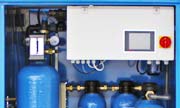
SCM 24
|
|
Cleans 24.000 liters per day
|
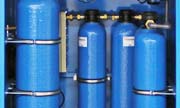
SCM 60
|
|
Cleans 60.000 liters per day
|
Video: How it works
The SCG Advantage
Our market-leading, water cleaning solutions have many advantages. To read more click the items below:
No Chemicals
Our machines and technology does not use any chemicals, at all.
Read more...
No Waste Water
Our machines do not waste any water. Yield = 100%.
Read more...
Low energy use
Uses 50 times less energy than a Reverse Osmosis Machine.
Read more...
Low ownership cost
Lower maintenance and operation costs due to our technology.
Read more...
Easy to install
Simple "plug and play" installation makes for easy deployment.
Read more...
Extremely compact
A compact system, contained in an easy to transport cabinet.
Read more...
Outperforms R.O.
SCG technologies outperform Reverse Osmosis systems.
Read more...
Faster ROI
Get a faster Return on Investment with our systems.
Read more...
Latest News
Latest Blog Posts
| Chemicals in water treatment? |
| Water storage - Whats best for keeping water clean and drinkable? |
| Case: Disaster Management Water Treatment |
Contact SCG
891 Showroom Place
Suite 101
Chula Vista, CA, 91914
Phone: +1 619-878-2730
Contact us by email