







Managing Seasonal Source Water Quality Without Chemicals
Source water rarely stays constant throughout the year. Rainfall, snowmelt, drought, agricultural activity, temperature changes, and groundwater movement can all alter the quality of water entering a treatment system. A process that performs well in a dry season may need different protection when turbidity, bacteria, or dissolved contaminants rise after heavy rain.
Chemical-free treatment does not mean ignoring these changes. It means designing a system that responds through monitoring, physical separation, selective filtration, adsorption, membranes, disinfection alternatives, and sensible operating controls rather than routine chemical dosing. The right solution depends on the source, the contaminants, the required flow, and the intended use of the treated water.
For municipalities, farms, livestock facilities, industrial sites, buildings, swimming pools, and mobile applications, seasonal planning can improve reliability while reducing chemical storage, residual waste, and unnecessary energy consumption. It also helps operators identify when source protection or pretreatment is more effective than simply increasing treatment intensity.
Seasonal Changes Begin At The Source
Surface water commonly experiences its largest quality swings during storms and snowmelt. Runoff can carry soil, organic matter, pesticides, animal waste, and microorganisms into rivers, reservoirs, and intake zones. Turbidity may increase quickly, while dissolved contaminants can continue moving through the system after the water appears clear.
Groundwater is generally more stable, but it is not immune to seasonal variation. Extended rainfall can change recharge patterns and mobilize nitrates, manganese, arsenic, or uranium. Drought can lower the water table and increase the concentration of naturally occurring minerals. In agricultural areas, irrigation cycles and fertilizer application may also influence nitrate levels.
A useful assessment begins with a source-water profile rather than a standard equipment selection. Operators should document seasonal rainfall, nearby land use, well depth, intake conditions, historical laboratory results, and changes in temperature and flow. Sampling during both normal and adverse conditions provides a much more realistic design basis.
Monitor Before Conditions Become Critical
Routine monitoring should combine simple field observations with laboratory analysis. Turbidity, conductivity, temperature, pH, oxidation-reduction conditions, and flow can reveal that source water is changing before a full contaminant result is available. These measurements do not replace laboratory testing, but they help operators identify when additional sampling or a different operating mode is needed.
The testing schedule should reflect the risks of the site. A shallow well near farmland may require more frequent nitrate and pesticide analysis, while a surface-water intake may need closer attention to turbidity, bacteria, and organic matter after storms. Seasonal sampling can also reveal whether a contaminant is persistent or linked to a specific weather event.
Trigger values make monitoring actionable. For example, a rise in turbidity can initiate additional prefiltration, a conductivity change can prompt a dissolved-solids check, and a bacterial warning can activate a validated disinfection or membrane protocol. These decisions should be established before an event occurs, with clear responsibilities for operators.
Match The Process To The Contaminant
No single treatment step handles every seasonal problem. Coarse screening, sediment removal, and ultrafiltration can reduce suspended solids and microorganisms, while activated or specialty media may target specific dissolved contaminants. Membrane systems can provide a physical barrier, but they require careful pretreatment and management of concentrate or backwash streams.
Nitrate deserves particular attention because it is dissolved, stable, and not removed by ordinary sediment filters. Seasonal increases may require ion-selective processes, biological treatment, membranes, or another technology selected for the site’s chemistry and discharge requirements. An overview of nitrate removal options can help frame the alternatives when avoiding conventional ion-exchange resin systems.
Arsenic, manganese, and uranium also behave differently depending on pH, oxidation state, alkalinity, and competing minerals. A treatment process should therefore be verified with representative water, including samples from the season when contaminant levels are highest. Testing only average-quality water can produce an optimistic result and leave the system underprepared.
| Seasonal condition | Likely water-quality change | Useful response without routine chemicals | Operating point to verify |
|---|---|---|---|
| Heavy rainfall or snowmelt | Higher turbidity, bacteria, organic matter, and runoff-related contaminants | Add or intensify screening, sediment separation, ultrafiltration, or other physical barriers | Filter loading, transmembrane pressure, and microbial performance |
| Prolonged drought | Increased concentration of dissolved minerals and naturally occurring contaminants | Use selective filtration, adsorption, membranes, or source blending where appropriate | Recovery rate, concentrate handling, and contaminant breakthrough |
| Agricultural application period | Potential rise in nitrates, pesticides, and suspended solids | Apply contaminant-specific treatment supported by laboratory testing | Seasonal concentration peaks and media or membrane capacity |
| Warm weather | Greater microbial growth potential and biological activity | Use validated membrane, ultraviolet, or other chemical-free disinfection approaches | UV dose or barrier integrity, temperature, and storage hygiene |
| Falling groundwater levels | Changed chemistry, conductivity, manganese, arsenic, or uranium levels | Reassess the well profile and adjust selective treatment or pretreatment | Pumping rate, water level, pH, and oxidation-reduction conditions |
| Storm-driven source disturbance | Rapid changes in flow and contaminant load | Use automatic diversion, holding, staged filtration, or temporary operating limits | Sensor alarms, bypass prevention, and restart criteria |
| Cold-weather operation | Slower biological processes, freezing risk, and altered viscosity | Insulate equipment, maintain controlled flow, and select suitable physical treatment | Pressure loss, freeze protection, and startup quality |
Design For Flexible Operation
A resilient system can change its operating mode without requiring a complete redesign. Modular pretreatment allows operators to add sediment removal during storm events while keeping the normal process efficient during stable conditions. Automatic valves, bypass protection, turbidity alarms, and flow controls can prevent poor-quality water from reaching storage or distribution.
Equalization tanks can also reduce the effect of short-term peaks. Instead of treating the highest instantaneous contaminant load, the system can hold water temporarily and process it at a controlled rate. This approach is especially useful for campgrounds, remote sites, farms, and buildings where source quality and demand can change at the same time.
Chemical-free operation still requires maintenance. Filters need inspection, membranes need cleaning according to the supplier’s validated procedure, ultraviolet equipment needs lamp and sensor checks, and tanks must be protected from stagnation. Avoiding chemical dosing does not eliminate the need for sanitation, monitoring, or disciplined system management.
Protect Water During Storage And Distribution
Treatment is only part of seasonal water safety. A clean output can be compromised by poorly protected tanks, dead legs, leaking covers, warm storage conditions, or low-demand periods. These risks are often greater in seasonal facilities, where equipment may operate intermittently or remain unused between peak periods.
Campgrounds and temporary sites need a coordinated approach that covers intake, treatment, storage, filling points, and distribution. Guidance on chlorine-free campground water illustrates why treatment performance must be considered alongside handling practices and operational control.
For drinking-water applications, the final barrier should be validated for the organisms and flow conditions at the site. Ultraviolet treatment, membrane filtration, protected storage, and frequent quality checks can be part of a chemical-free strategy, but the selected combination must meet applicable health regulations. Water intended for livestock, irrigation, industrial processes, or pools may have different quality targets and monitoring requirements.
Practical Measures For Year-Round Reliability
A seasonal water plan is most effective when it is simple enough for operators to follow during a storm, drought, or unexpected alarm. It should identify normal operating ranges, warning levels, shutdown conditions, sampling locations, and the person responsible for each action. Records should connect source conditions with treatment performance so that future decisions are based on evidence.
Use these recommendations when developing or reviewing a chemical-free treatment program:
- Sample during representative dry, wet, hot, and high-demand periods instead of relying on one annual result.
- Install monitoring points before treatment, after critical barriers, and at the point of use or distribution.
- Separate turbidity and microbial controls from dissolved-contaminant treatment so each process can be evaluated properly.
- Include automatic alarms, diversion, or controlled shutdown for rapid changes in source quality.
- Verify performance using the most challenging seasonal water and document maintenance, cleaning, and restart procedures.
Turn Seasonal Data Into Better Treatment
Seasonal variation should be treated as a design condition, not an unexpected failure. When source monitoring, contaminant-specific treatment, flexible pretreatment, and protected distribution work together, operators can maintain safer water with fewer consumables and less waste. The process can also be scaled for municipal systems, agricultural operations, industrial facilities, buildings, and mobile applications.
Swiss Cleanwater Group provides water-treatment technologies and project support for contaminants including manganese, arsenic, bacteria, pesticides, and uranium. Contact the company to assess your source-water profile, compare chemical-free treatment approaches, and develop a system prepared for the conditions your site experiences throughout the year.
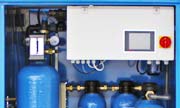
SCM 24
|
|
Cleans 24.000 liters per day
|
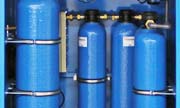
SCM 60
|
|
Cleans 60.000 liters per day
|
Video: How it works
The SCG Advantage
Our market-leading, water cleaning solutions have many advantages. To read more click the items below:
No Chemicals
Our machines and technology does not use any chemicals, at all.
Read more...
No Waste Water
Our machines do not waste any water. Yield = 100%.
Read more...
Low energy use
Uses 50 times less energy than a Reverse Osmosis Machine.
Read more...
Low ownership cost
Lower maintenance and operation costs due to our technology.
Read more...
Easy to install
Simple "plug and play" installation makes for easy deployment.
Read more...
Extremely compact
A compact system, contained in an easy to transport cabinet.
Read more...
Outperforms R.O.
SCG technologies outperform Reverse Osmosis systems.
Read more...
Faster ROI
Get a faster Return on Investment with our systems.
Read more...
Latest News
Latest Blog Posts
| Chemicals in water treatment? |
| Water storage - Whats best for keeping water clean and drinkable? |
| Case: Disaster Management Water Treatment |
Contact SCG
891 Showroom Place
Suite 101
Chula Vista, CA, 91914
Phone: +1 619-878-2730
Contact us by email