







Chemical-Free Well Water Treatment for Private Homes
A private well gives a household independence, but it also places responsibility for water quality on the property owner. Groundwater can contain naturally occurring minerals, agricultural residues, microorganisms, and metals that are not visible, detectable by taste, or removed by a standard sediment filter.
A chemical-free water treatment system can provide a practical solution when it is selected for the actual chemistry of the well. “Chemical-free” generally means the process avoids routine chlorine, coagulants, or other dosing chemicals. It does not mean the installation requires no planning, maintenance, testing, or wastewater management.
The most dependable approach combines laboratory analysis, correctly sized equipment, safe plumbing, and regular verification. A private well homeowner should treat installation as a complete water-quality project rather than simply fitting a filter onto the main pipe.
Start With Water Testing
Begin with a certified laboratory test before purchasing treatment equipment. A basic panel should usually include bacteria such as total coliform and E. coli, pH, turbidity, hardness, alkalinity, iron, manganese, nitrate, and conductivity. Depending on local geology and land use, the analysis may also need arsenic, uranium, lead, fluoride, pesticides, volatile organic compounds, and other regionally relevant contaminants.
Collect the sample according to the laboratory’s instructions. Samples taken from an untreated outdoor tap can be affected by the hose, while samples from a dirty or poorly maintained faucet may produce misleading results. If the well has recently flooded, undergone repair, or developed a change in taste, odor, or color, test it promptly and consider temporary precautions for drinking water.
Testing should establish more than whether a contaminant is present. Concentration, flow rate, daily demand, pH, temperature, hardness, and seasonal variation all affect treatment selection. A system designed for a single kitchen tap may be unsuitable for a whole-house supply, irrigation connection, livestock area, or fire-protection reserve.
Match Technology To The Contaminant
Different pollutants require different treatment mechanisms. Sediment filtration protects downstream equipment from sand, rust, and suspended particles, but it does not reliably remove dissolved arsenic or uranium. Ultraviolet disinfection can inactivate bacteria and viruses, yet it does not reduce hardness, metals, salts, or pesticides. Reverse osmosis can address many dissolved substances, while aeration and specialized media may be appropriate for iron and manganese under suitable water conditions.
A chemical-free installation may combine several stages: a prefilter, an oxidation or aeration step, a catalytic or adsorption medium, membrane treatment, and ultraviolet disinfection. The order matters. For example, excessive turbidity can shield microorganisms from UV exposure, and iron fouling can shorten the life of a membrane. A treatment specialist should calculate contact time, pressure loss, media volume, membrane capacity, and peak flow rather than choosing equipment by pipe size alone.
Heavy metals deserve particular care because their behavior varies with pH, oxidation state, competing minerals, and concentration. Read this guidance on heavy-metal limits before assuming that a general-purpose filter is sufficient. The laboratory result and the selected technology should be checked against applicable drinking-water limits.
| Water-quality concern | Common chemical-free approach | Important installation consideration |
|---|---|---|
| Sand, silt, and turbidity | Sediment filter, screen, or multimedia filter | Provide a pressure gauge and an accessible drain or backwash route |
| Bacteria and viruses | UV disinfection, often after fine filtration | Maintain clear water, adequate flow control, and lamp monitoring |
| Iron and manganese | Aeration, oxidation, catalytic media, or membrane treatment | Confirm pH and oxidation conditions; plan for backwashing or cleaning |
| Arsenic or uranium | Specialized adsorption, ion exchange, or reverse osmosis | Verify capacity, breakthrough monitoring, and reject-water handling |
| Pesticides and organic compounds | Activated carbon or dedicated membrane treatment | Replace media on schedule and test for breakthrough |
| Hardness and dissolved salts | Reverse osmosis or an appropriate membrane process | Allow for pressure requirements and concentrate disposal |
Map The Plumbing Before Installation
A whole-house system is normally installed on the incoming line after the pressure tank and before water enters the domestic distribution network. The exact position depends on the well pump, pressure tank, softening equipment, storage tank, booster pump, and any separate irrigation or fire-suppression lines. Plumbing plans should identify which outlets need treated water and which can remain on untreated water.
Use a bypass arrangement so the home can receive water during servicing, while isolation valves allow individual components to be removed safely. Include pressure gauges before and after restrictive filters, sampling taps at key stages, a drain connection for backwashing or flushing, and a non-return device where required by local plumbing rules. Keep untreated and treated lines clearly identified to prevent accidental cross-connection.
The installation area should be dry, frost-protected, ventilated, and large enough for filter changes and membrane service. Equipment needs a stable base, suitable electrical protection, and a nearby drain where applicable. UV units require a grounded electrical supply, and control panels should be protected from splashing water. If reject or backwash water contains concentrated contaminants, it must be discharged according to local regulations rather than released casually onto soil or into a septic system.
Install And Commission The System
Follow the manufacturer’s flow direction, media-loading instructions, and minimum operating pressure. Flush new pipework and filter housings before connecting them to the household supply. Media tanks may require an extended initial rinse to remove fine particles. Membranes should be started gradually, and the first production water should be discarded for the period specified by the manufacturer.
A UV chamber should be installed after filtration that produces water clear enough for reliable light transmission. The lamp, quartz sleeve, sensor, and alarm must be accessible. A UV device is a final barrier, not a substitute for controlling contamination at the wellhead. If the well is vulnerable to surface intrusion, the sanitary seal, casing, cap, drainage, and surrounding ground should be inspected as part of commissioning.
After the system is running, measure pressure and flow at normal household demand. Check every joint for leaks, confirm that automatic valves and alarms operate correctly, and verify that the treatment train can supply peak use without excessive pressure loss. Take samples from the raw well water and treated point of use. Results should demonstrate that the system addresses the original contaminants, not merely that the equipment is operating.
Plan Maintenance Around Performance
Chemical-free equipment still consumes components and produces service needs. Sediment cartridges must be replaced when pressure loss becomes excessive or according to the manufacturer’s interval. Backwashing media need sufficient flow and a functioning valve. UV lamps gradually lose output even when they remain illuminated, so annual replacement is common unless the manufacturer specifies another schedule. Quartz sleeves must be cleaned when scaling or deposits reduce transmission.
Membranes and adsorption media require performance tracking. Compare treated-water results with baseline testing, and use pressure, flow, conductivity, or contaminant-specific measurements to identify deterioration. A sudden change in taste, odor, color, pressure, or water production should trigger investigation rather than a simple cartridge replacement.
Waste handling should be included in the maintenance plan. Backwash water can contain captured iron, manganese, arsenic, or other contaminants, while reverse-osmosis concentrate contains elevated dissolved solids. The right disposal method depends on the contaminant and local requirements. Commercial experience also shows that chemical reduction can be managed at meaningful scale; this bottler case study illustrates how treatment design can support process-water goals.
Keep Household Use Safe
A treatment system protects the home only when the entire well installation is sanitary. Keep fertilizers, fuel, pesticides, animal waste, and stored chemicals away from the wellhead. Maintain positive drainage away from the casing, repair damaged caps, and avoid driving or parking heavy equipment close to the well. Flooding, construction, and changes in groundwater conditions justify additional testing.
Use treated water for drinking, cooking, bathing, and other household purposes only after commissioning confirms performance. If an untreated branch supplies irrigation or livestock, label it clearly and prevent hose connections from reaching indoor plumbing. A licensed plumber or water-treatment professional can also verify backflow protection and compliance with local codes.
For a dependable installation, prioritize these actions:
- Test raw and treated water through a qualified laboratory.
- Select treatment stages for specific contaminants and peak household flow.
- Install isolation valves, bypass plumbing, sampling points, and safe drainage.
- Protect UV equipment, pumps, controls, and media tanks from unsuitable conditions.
- Record pressure, flow, maintenance, and laboratory results throughout ownership.
A private well system should be treated as an ongoing water-quality program. Swiss Cleanwater Group can help translate laboratory data into a chemical-free treatment configuration suited to the property, intended water uses, and local operating conditions. Contact the company for a professional assessment, equipment specifications, and a practical installation path from well testing through commissioning.
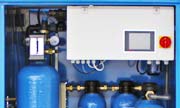
SCM 24
|
|
Cleans 24.000 liters per day
|
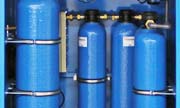
SCM 60
|
|
Cleans 60.000 liters per day
|
Video: How it works
The SCG Advantage
Our market-leading, water cleaning solutions have many advantages. To read more click the items below:
No Chemicals
Our machines and technology does not use any chemicals, at all.
Read more...
No Waste Water
Our machines do not waste any water. Yield = 100%.
Read more...
Low energy use
Uses 50 times less energy than a Reverse Osmosis Machine.
Read more...
Low ownership cost
Lower maintenance and operation costs due to our technology.
Read more...
Easy to install
Simple "plug and play" installation makes for easy deployment.
Read more...
Extremely compact
A compact system, contained in an easy to transport cabinet.
Read more...
Outperforms R.O.
SCG technologies outperform Reverse Osmosis systems.
Read more...
Faster ROI
Get a faster Return on Investment with our systems.
Read more...
Latest News
Latest Blog Posts
| Chemicals in water treatment? |
| Water storage - Whats best for keeping water clean and drinkable? |
| Case: Disaster Management Water Treatment |
Contact SCG
891 Showroom Place
Suite 101
Chula Vista, CA, 91914
Phone: +1 619-878-2730
Contact us by email