


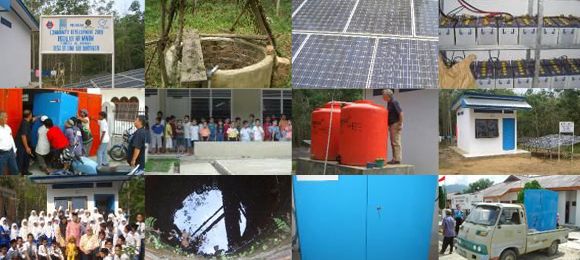







Integrating Chemical-Free Filtration With Solar Pumps Off Grid
Reliable drinking water is a practical necessity at remote Australian properties, field stations, small communities and temporary worksites. Where grid power is unavailable or unreliable, solar pumping can move raw water into storage while a chemical-free treatment system removes contaminants before the water reaches taps, troughs or process equipment.
The strongest designs treat the pump, filtration plant, solar array and storage tanks as one system. A solar bore pump may deliver plenty of water at midday but little at dawn or during several cloudy days. Filtration equipment must therefore tolerate changing flow rates, while the site needs enough treated-water storage to cover demand when the sun is down.
Swiss Cleanwater Group develops water treatment technologies for applications ranging from municipalities and farming to livestock, buildings and mobile operations. Its approach can suit off-grid installations where operators want low chemical handling, limited waste and modest energy consumption, provided the system is matched carefully to the source water and Australian operating conditions.
Start With The Water Source And Treatment Goal
Every project should begin with a raw-water assessment rather than a pump purchase. Bore water in inland Queensland may contain iron, manganese, salinity or arsenic, while rainwater tanks around regional New South Wales can collect sediment, bird matter and microbial contamination. Surface water near a mining or agricultural area may require testing for pesticides, hydrocarbons or heavy metals.
Laboratory results should include pH, turbidity, conductivity, hardness, iron, manganese, arsenic, lead and microbiological indicators. Seasonal sampling matters too. A bore that appears stable during the dry season can change after heavy rain, and floodwater can introduce contaminants that were absent during commissioning.
The treatment objective must also be clear. Water for a cattle station, handwashing, showers and drinking has a different risk profile from water used for irrigation or dust suppression. For potable applications, the design should be checked against the Australian Drinking Water Guidelines and validated for the actual contaminants, flow rate and maintenance conditions.
Match Solar Pumping To Daily Water Demand
Solar pumps are most efficient when water storage acts as the battery. Instead of using a large electrical battery bank to run filtration overnight, the array can pump during daylight into a raw-water or treated-water tank. A float switch, level sensor and variable-speed drive can adjust pumping as the sun changes.
This arrangement is particularly useful on a Western Australian station or a Northern Territory outpost, where sunlight is abundant but service visits are expensive. The system should be sized around daily demand, solar resource, bore depth, pipe friction and the required filtration pressure. A pump that produces high flow at low head may fail once the bore lift, filters and elevated tank are included.
Flow control is central to treatment performance. Media filters generally need a defined contact time and hydraulic loading rate. If the solar pump surges at midday, water may pass through too quickly for effective contaminant removal. A flow-control valve, break tank, pressure vessel or programmed variable-speed pump can keep filtration within its designed range.
Build A Chemical-Free Treatment Train
A typical arrangement may include a screened bore intake, sediment prefilter, aeration or oxidation stage, catalytic media bed, fine filtration and ultraviolet treatment where microbial control is required. The exact sequence depends on the raw-water chemistry. Chemical-free does not mean that one universal cartridge removes every contaminant.
Iron and manganese can often be reduced through oxidation followed by media filtration. Arsenic treatment is more dependent on water chemistry, oxidation state, competing ions and media selection. Bacteria require a validated barrier such as UV, membrane treatment or another approved disinfection method; a sediment filter alone should never be treated as a reliable pathogen barrier.
Lead needs a particularly careful assessment because it may originate from source water, old plumbing, brass fittings or roof catchment components. A useful technical reference on catalytic lead removal explains how specialised media can be incorporated into a broader treatment strategy. Sampling at the point of use remains important when plumbing is a possible source.
Size Media Beds And Water Storage Correctly
Media depth affects the available contact zone, contaminant capacity and risk of breakthrough. A shallow vessel may look attractive because it uses less material and has a smaller footprint, but it can provide inadequate treatment when the flow rate rises. The relationship between vessel diameter, bed depth, empty bed contact time and backwash rate should be established during design.
The guidance on media bed depth is relevant when selecting a compact plant for a remote site. The vessel needs enough freeboard for media expansion during backwashing, and the pump must be capable of delivering that backwash flow. If the bore cannot supply it, a clean-water backwash tank may be required.
Storage capacity should cover normal use, low-sun periods and maintenance downtime. A practical design may separate raw-water storage from treated-water storage, allowing the solar pump to operate when sunlight is available while the treatment stage runs at a controlled rate. For a remote livestock property, storage also provides resilience during pump servicing or a short run of cloudy weather.
Design For Australian Heat Dust And Distance
Outdoor equipment in the Australian bush faces dust, insects, intense ultraviolet exposure, heat and large temperature changes. Control cabinets need suitable weather protection, ventilation and surge protection. Cable runs should be protected from livestock, rodents and grading machinery, while tanks and pipework should be secured against wind and accidental impact.
In cyclone-prone coastal Queensland and the Top End, anchoring, drainage and access for storm preparation deserve attention. In arid South Australia or the Pilbara, evaporation and high water temperature can influence storage sizing and microbial management. A shaded tank, insulated pipework and sensible equipment placement can reduce thermal stress and improve operating stability.
Remote operation should be simple enough for a station manager, ranger or council technician to understand. Useful features include high- and low-level alarms, pump-dry-run protection, pressure gauges before and after filters, flow indication and data logging. Communications can use a cellular modem where coverage exists, while a local visual panel remains essential when a site is beyond reliable mobile service.
Maintenance plans should reflect the way the Australian market works. A regional contractor may be available in a larger centre such as Alice Springs, Dubbo or Townsville, but not every week at a remote community. Standardised fittings, locally available prefilters and clear replacement intervals can prevent a minor blockage from becoming a water outage.
Commission Monitor And Compare Configurations
Commissioning should establish a baseline for flow, pressure, turbidity and treated-water quality. Operators need to know the normal pressure drop across each stage and the level at which a backwash or cartridge change is required. Early samples should be tested more frequently until the system demonstrates stable performance across different solar conditions.
The most suitable configuration depends on the water source, user demand and tolerance for operator involvement. The following comparison gives a practical starting point, though final specifications should come from site testing and treatment validation.
| Configuration | Best suited to | Main strengths | Key limitations |
|---|---|---|---|
| Solar pump to raw-water tank, then controlled filtration | Stations and small remote communities | Stable filter flow and simple solar control | Requires two tanks and adequate land |
| Direct solar pumping through filters | Small systems with steady daylight demand | Fewer tanks and a compact footprint | Flow varies with sunlight and needs careful regulation |
| Solar pump, pressure vessel and UV barrier | Potable water with microbial risk | Provides a final pathogen-control stage without dosing chemicals | UV needs clean water, power and lamp maintenance |
| Solar pump with battery-backed controls | Sites needing overnight automation | Keeps sensors, valves and communications active after dark | Battery replacement and energy budgeting add cost |
| Modular mobile treatment skid | Temporary camps, emergency works and defence use | Rapid deployment and transportability | Storage, protection and operator training remain necessary |
A staged rollout is often sensible: test the source, install pilot media, verify removal performance, then expand to the full solar and storage capacity. This approach limits capital risk and provides evidence for council, government or project procurement teams. It also makes it easier to demonstrate compliance and plan service intervals.
For a new off-grid installation, Swiss Cleanwater Group can assess the source-water results, treatment objective, available solar resource and required output before equipment is selected. A properly integrated system can provide dependable clean water with low chemical use, manageable energy demand and a maintenance routine suited to life far from the nearest service centre. Contact the company to discuss a site-specific filtration and solar pumping solution.
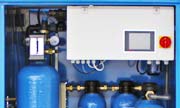
SCM 24
|
|
Cleans 24.000 liters per day
|
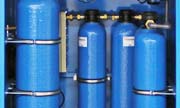
SCM 60
|
|
Cleans 60.000 liters per day
|
Video: How it works
The SCG Advantage
Our market-leading, water cleaning solutions have many advantages. To read more click the items below:
No Chemicals
Our machines and technology does not use any chemicals, at all.
Read more...
No Waste Water
Our machines do not waste any water. Yield = 100%.
Read more...
Low energy use
Uses 50 times less energy than a Reverse Osmosis Machine.
Read more...
Low ownership cost
Lower maintenance and operation costs due to our technology.
Read more...
Easy to install
Simple "plug and play" installation makes for easy deployment.
Read more...
Extremely compact
A compact system, contained in an easy to transport cabinet.
Read more...
Outperforms R.O.
SCG technologies outperform Reverse Osmosis systems.
Read more...
Faster ROI
Get a faster Return on Investment with our systems.
Read more...
Latest News
Latest Blog Posts
| Chemicals in water treatment? |
| Water storage - Whats best for keeping water clean and drinkable? |
| Case: Disaster Management Water Treatment |
Contact SCG
891 Showroom Place
Suite 101
Chula Vista, CA, 91914
Phone: +1 619-878-2730
Contact us by email