









Why media bed depth matters in chemical-free filtration
Chemical-free water treatment depends on carefully controlled contact between raw water and a reactive or adsorptive filter medium. While media quality, flow rate, and water chemistry all influence performance, bed depth determines how much opportunity the water has to interact with the medium before reaching the outlet.
A deeper filter bed can provide longer contact time, greater contaminant capacity, and more space for several treatment mechanisms to take place. However, depth alone does not guarantee clean water. If the bed is too deep for the available pressure or backwash system, it may create excessive resistance, compact unevenly, or become difficult to maintain.
Effective design therefore treats bed depth as part of a complete hydraulic and chemical balance. The right configuration must match the target contaminants, peak flow, raw-water conditions, media characteristics, and required water quality.
How bed depth supports filtration
Water travels through a granular bed along a complex path rather than moving in a straight line. The spaces between the particles create opportunities for suspended solids to be trapped, dissolved substances to be adsorbed, and catalytic surfaces to transform certain contaminants. A deeper bed increases the distance available for these processes.
This distance is especially valuable when contaminant removal depends on gradual reactions. Manganese, iron, arsenic, and some organic compounds may require sufficient contact with a specialized medium before the concentration falls below the desired limit. If the bed is too shallow, water can leave the filter while treatment is still incomplete.
Depth also provides a safety margin during changing operating conditions. Variations in turbidity, temperature, pH, and flow can reduce treatment efficiency temporarily. A properly selected bed gives the system additional capacity to manage these fluctuations without relying on chemical dosing.
Contact time and contaminant removal
Empty bed contact time is a useful design concept for understanding how long water remains inside the media volume. It is calculated from the volume occupied by the bed and the water flow rate. Increasing bed depth generally increases this contact time, provided the filter diameter and operating flow remain unchanged.
The required contact time varies by contaminant and treatment method. Adsorptive media need enough exposure to capture dissolved pollutants. Catalytic media may need time to promote oxidation and retain the resulting particles. Biological filtration can require stable conditions that allow beneficial microorganisms to develop and remain active within the bed.
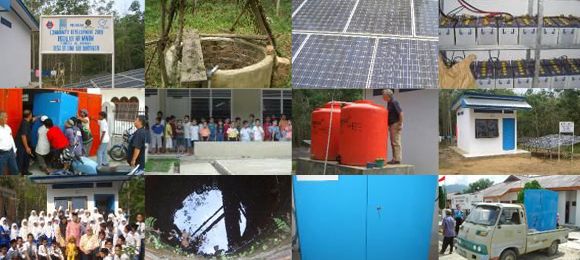
The chemistry of the source water is equally important. Arsenic species, for example, can behave differently depending on oxidation state and competing ions. A case study on arsenic treatment in Bangladesh illustrates why technology selection and site-specific water analysis must accompany decisions about filter depth.
Balancing depth with hydraulic performance
A deeper bed increases the available treatment zone, but it also increases pressure loss. As water passes through more media, friction rises. Fine particles, trapped solids, and biological growth can raise resistance further during a filter run. If pressure becomes excessive, the system may deliver less water or require more pumping energy.
The media grain size affects this balance. Fine media provide greater surface area and can improve capture, yet they usually create higher head loss and may be harder to backwash. Coarser media allow easier water movement but may require greater depth or a carefully designed graded structure to achieve comparable removal.
Uniform distribution is essential. A well-designed inlet prevents water from concentrating in a few pathways, while a suitable underdrain collects treated water evenly. Without good distribution, extra depth may provide little practical benefit because channeling allows some water to bypass much of the active media.
| Design factor | Effect of increasing bed depth | Main consideration |
|---|---|---|
| Contact time | Usually increases | Confirm that the target contaminant needs additional exposure |
| Removal capacity | Provides more active media volume | Check loading rate and media exhaustion |
| Pressure loss | Usually increases | Size pumps and piping for the full operating range |
| Solids storage | Creates more space before breakthrough | Prevent excessive compaction and clogging |
| Backwashing demand | May require more expansion and water | Verify the available flow and drainage |
| Treatment stability | Can improve resilience to flow variation | Maintain even distribution through the bed |
Choosing depth for chemical-free processes
Chemical-free does not mean process-free. Systems that avoid added oxidants, coagulants, or disinfectants still depend on carefully selected media and operating conditions. Some media work through adsorption, others through catalytic oxidation, ion exchange, biological activity, or a combination of mechanisms.
For iron and manganese removal, the bed may need to support oxidation at the media surface and retain the particles that form. A sufficient depth helps separate the reaction zone from the final polishing zone, reducing the chance that untreated dissolved metal reaches the outlet. The correct approach depends on pH, dissolved oxygen, alkalinity, competing contaminants, and the chosen medium. Guidance on removing iron and manganese together shows why combined treatment should be evaluated as a complete process rather than by depth alone.
For arsenic, uranium, pesticides, or other dissolved pollutants, capacity and selectivity may be more important than particle retention. A deeper bed can delay breakthrough by offering more active sites, but it cannot correct unsuitable water chemistry or an incompatible media selection. Laboratory testing and pilot operation help establish whether additional depth improves real removal or simply adds hydraulic burden.
Flow rate, loading, and breakthrough
The same filter depth can perform differently at different flow rates. Higher velocity reduces contact time and may increase the risk of contaminant breakthrough. It can also disturb the media surface, carry particles into the outlet, or exceed the design loading rate. Peak demand should therefore be considered, not just the average daily flow.
Breakthrough occurs when the contaminant concentration at the outlet begins to rise beyond the acceptable target. In an adsorptive bed, the active zone gradually moves through the media as available sites are used. In a catalytic or biological filter, performance may decline when the surface becomes coated with solids or operating conditions change.
Monitoring helps reveal whether the selected depth is doing its job. Operators can track inlet and outlet contaminant concentrations, pressure differential, flow, turbidity, and backwash frequency. Trends over time are more informative than a single sample because they show whether the bed is losing capacity, clogging, or experiencing hydraulic short-circuiting.
Backwashing and the usable filter bed
Backwashing is necessary when captured solids and biological material increase resistance. During the cycle, upward water flow expands and agitates the media, releasing accumulated particles for removal. The backwash rate must be strong enough to clean the bed but controlled enough to prevent excessive media loss.
Greater depth may require more water, longer cycles, or a stronger backwash system. Media density, particle size, temperature, and bed expansion all influence the required conditions. If the filter cannot be cleaned effectively, the theoretical treatment volume is less useful because fouling reduces the active area and encourages channeling.
A layered bed can improve performance by assigning different functions to different zones. Larger support media may protect the underdrain, while upper layers capture solids and deeper layers provide chemical polishing. The layers must remain stable during normal operation and backwashing; otherwise, mixing can reduce the intended treatment sequence.
Designing a practical filtration system
A sound design begins with a complete raw-water profile. Testing should cover the target contaminants as well as pH, turbidity, hardness, alkalinity, temperature, dissolved oxygen, and substances that may compete for media capacity. Seasonal changes and variation between wells should be included wherever relevant.
Equipment layout also affects how effectively the available depth is used. Even a technically suitable vessel can perform poorly if the inlet distribution, underdrain, valves, or drainage arrangements are undersized. Modular equipment and straightforward controls can simplify installation and maintenance, particularly for decentralized sites. Information about easy installation options can be useful when planning systems for buildings, farms, remote communities, or mobile applications.
Practical sizing should allow room for operating variation rather than designing only for ideal laboratory conditions. Engineers typically assess service flow, peak flow, bed volume, pressure limits, backwash capability, media replacement intervals, and the consequences of a temporary reduction in performance. This approach helps ensure that the chosen depth remains effective throughout the system’s operating life.
Recommendations for reliable operation
The most dependable systems connect media depth with monitoring and maintenance rather than treating depth as an isolated specification. The following practices help preserve chemical-free filtration efficiency:
- Test raw water before selecting media type, bed depth, or vessel size.
- Calculate contact time at average and peak flow conditions.
- Confirm that pumps, valves, drains, and backwash equipment can handle the full bed.
- Monitor pressure differential and outlet quality to identify clogging or breakthrough early.
- Reassess performance when source-water chemistry, demand, or seasonal conditions change.
A deeper bed is valuable when it creates the contact time and active capacity that a treatment process requires. It is counterproductive when it produces excessive pressure loss, cannot be backwashed properly, or masks poor hydraulic distribution. The best result comes from matching depth to media properties, contaminant behavior, flow conditions, and maintenance resources.
For municipalities, farms, industrial facilities, livestock operations, buildings, and mobile installations, this evaluation can turn a basic filter into a stable treatment system. Review the water analysis, define the required outlet quality, and work with a qualified water-treatment specialist to specify a media bed that delivers dependable contaminant removal without unnecessary chemicals, waste, or energy use.
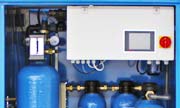
SCM 24
|
|
Cleans 24.000 liters per day
|
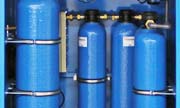
SCM 60
|
|
Cleans 60.000 liters per day
|
Video: How it works
The SCG Advantage
Our market-leading, water cleaning solutions have many advantages. To read more click the items below:
No Chemicals
Our machines and technology does not use any chemicals, at all.
Read more...
No Waste Water
Our machines do not waste any water. Yield = 100%.
Read more...
Low energy use
Uses 50 times less energy than a Reverse Osmosis Machine.
Read more...
Low ownership cost
Lower maintenance and operation costs due to our technology.
Read more...
Easy to install
Simple "plug and play" installation makes for easy deployment.
Read more...
Extremely compact
A compact system, contained in an easy to transport cabinet.
Read more...
Outperforms R.O.
SCG technologies outperform Reverse Osmosis systems.
Read more...
Faster ROI
Get a faster Return on Investment with our systems.
Read more...
Latest News
Latest Blog Posts
| Chemicals in water treatment? |
| Water storage - Whats best for keeping water clean and drinkable? |
| Case: Disaster Management Water Treatment |
Contact SCG
891 Showroom Place
Suite 101
Chula Vista, CA, 91914
Phone: +1 619-878-2730
Contact us by email