







Using catalytic media in surface water virus control
Surface water is an important resource for Australian communities, farms, food processors and regional industries. Rivers, reservoirs, irrigation channels and farm dams can carry viruses alongside bacteria, protozoa, suspended solids, pesticides, algae and dissolved metals. Rainfall, flooding, wildlife, wastewater inflows and disturbed catchments can all change raw-water quality within hours.
Catalytic media can improve the performance of a treatment train by promoting oxidation, adsorption and filtration. It is commonly selected for manganese, iron, arsenic, hydrogen sulphide and some organic contaminants. However, a media bed should not be treated as a guaranteed virus barrier. Viruses are often much smaller than the spaces between filter grains, so dependable pathogen control requires a validated disinfection stage.
The practical aim is to combine several protective barriers. Coagulation and clarification reduce particles, catalytic media removes target chemicals and improves water quality, and ultraviolet light, chlorination, ozonation or another validated process inactivates viruses. The correct arrangement depends on the source water, required flow, contaminant profile and the standard applying to the final water.
For an Australian installation, the design should reflect seasonal extremes. A Sydney catchment after heavy rain, a Murray–Darling irrigation supply during drought, and a rural rainwater tank can present very different risks. Operators should assess the complete treatment chain against the Australian Drinking Water Guidelines and any requirements set by the relevant state or territory health authority.
What catalytic media can and cannot do
Catalytic media contains mineral, coated or engineered surfaces that accelerate reactions at the water–media interface. Depending on its formulation, the bed may convert soluble manganese and iron into filterable particles, bind dissolved contaminants or support the removal of oxidised compounds. Some products also provide a high-surface-area environment for reducing turbidity and selected organic substances.
Virus removal is less predictable. A virus may attach to a media surface through charge interactions, become trapped in flocculated particles or be carried through the bed with the treated water. Changes in pH, ionic strength, temperature, flow rate and organic loading can alter that behaviour. A performance claim based on bacterial reduction or general filtration should not be interpreted as proof of virus inactivation.
This distinction matters when treating water for drinking, food production or a public facility. Catalytic media can make downstream UV or chlorine more reliable by lowering colour, turbidity, iron and manganese. It can also protect ultraviolet lamps from fouling and reduce the chlorine demand caused by reactive impurities. Its strongest role is usually as a conditioning and contaminant-removal step within a multi-barrier system.
Assess the source water before choosing media
A representative testing programme should cover raw-water turbidity, colour, pH, alkalinity, conductivity, temperature, dissolved oxygen, iron, manganese, arsenic, organic matter and microbiological indicators. Where contamination is plausible, testing may include enteric viruses, protozoa and faecal indicators. Samples should reflect dry-weather conditions as well as periods following intense rainfall.
Surface water can change quickly in Australia. A storm may wash animal waste, soil and decaying vegetation into a reservoir, while a prolonged dry period can concentrate salts and organic material. Algal blooms may release compounds that affect taste, odour and treatment performance. A single laboratory result is therefore insufficient for sizing a permanent system; seasonal and event-based data provide a more useful design basis.
Pre-treatment is often essential. Screens remove leaves and large debris, while coagulation, flocculation and clarification reduce suspended particles that would otherwise block the catalytic bed. Where manganese or iron is the primary concern, oxidation may be used before filtration. A case involving high manganese treatment illustrates why contaminant-specific testing and process selection are important before a media vessel is specified.
Build a treatment train with a validated barrier
A practical arrangement may include intake screening, chemical or physical clarification, catalytic media filtration and final disinfection. Depending on the water quality, a cartridge or polishing filter can follow the media vessel. UV systems are effective when water is sufficiently clear and the equipment receives the required dose. Chlorine provides a measurable residual through storage tanks and distribution pipework, which is valuable for many community and commercial systems.
The disinfection method should be selected around the organisms of concern. UV can inactivate many viruses without adding chemicals, but it does not leave a residual and performance depends on transmittance, lamp output, flow and sensor control. Chlorination is widely used because it continues protecting water after treatment, although operators must manage contact time, pH, taste and disinfection by-products. Ozone can provide strong oxidation but generally requires more complex equipment and monitoring.
Compact systems can be useful for remote properties, emergency response, construction sites and defence applications, provided the process is properly validated. An extremely compact system may help where plant room space is limited, but a small footprint does not remove the need for adequate contact time, hydraulic control, alarms, sampling points and safe access for maintenance.
Operate the media bed under controlled conditions
Hydraulic loading and empty bed contact time are central to performance. Excessive flow can reduce contaminant removal and carry particles through the vessel. The design should account for peak demand, not just average daily use, especially where water serves a town, abattoir, food plant or livestock operation. Parallel vessels can provide redundancy and allow one unit to remain online while another is serviced.
Backwashing removes accumulated solids and restores bed permeability. The interval depends on turbidity, iron and manganese loading, media depth and pressure loss. Backwash water must be contained and disposed of lawfully, because it may concentrate contaminants removed from the raw water. Regular checks should include inlet and outlet pressure, flow, turbidity, pH, disinfectant residual and any target contaminant specific to the site.
Media may require activation, chemical regeneration or replacement, depending on its composition and the reactions it supports. Operators should follow the manufacturer’s limits for pH, oxidant concentration and temperature. Uncontrolled dosing can damage the media, create unwanted by-products or interfere with later UV treatment. Automatic controls should include high-turbidity diversion, low-disinfectant alarms and protection against untreated water reaching the finished-water tank.
Verify virus protection and Australian compliance
A virus-control claim should be supported by evidence relevant to the complete system, not simply a general statement about catalytic filtration. Validation may include challenge testing, certified UV dose delivery, chlorine contact calculations, online turbidity monitoring and documented operating limits. Indicator organisms can support routine verification, but they do not prove that every virus has been removed or inactivated.
For drinking water, operators should work with the Australian Drinking Water Guidelines, state or territory requirements, and local water authority expectations. In New South Wales, Queensland, Victoria, Western Australia and other jurisdictions, approval, reporting and operator obligations can differ according to the source, scale and end use. Food businesses must also consider food-safety plans, hygienic water contact and the consequences of a treatment failure.
Agricultural projects need a separate assessment where treated water is used for irrigation or livestock. Dissolved metals can affect soil, crops and animals even when pathogens are controlled. For example, guidance on uranium removal for irrigation shows why chemical quality should be assessed alongside microbiological safety. Water intended for produce washing or processing may require a higher level of control than water used for general irrigation.
Routine verification should combine online and laboratory data. Turbidity and disinfectant residual can often be measured continuously, while metals, pesticides and microbiological parameters require scheduled sampling. Records should link each result to flow, weather, backwash events and maintenance. This creates an operating history that helps identify gradual media exhaustion or sudden raw-water changes before they become a public-health incident.
Catalytic media is most effective when its role is clearly defined: remove the contaminants that the media is designed to target, improve the reliability of downstream disinfection and support a robust multi-barrier process. It should not be marketed or operated as a stand-alone guarantee against viruses in untreated surface water.
Swiss Cleanwater Group can assess raw-water results, treatment objectives and site constraints to develop a suitable purification sequence for Australian applications. Share laboratory data, expected flow rates and the intended end use to begin a technically grounded assessment of media selection, pre-treatment, disinfection and monitoring requirements.
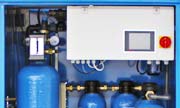
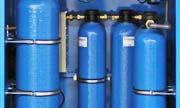
SCM 24
|
|
Cleans 24.000 liters per day
|
SCM 60
|
|
Cleans 60.000 liters per day
|
Video: How it works
The SCG Advantage
Our market-leading, water cleaning solutions have many advantages. To read more click the items below:
No Chemicals
Our machines and technology does not use any chemicals, at all.
Read more...
No Waste Water
Our machines do not waste any water. Yield = 100%.
Read more...
Low energy use
Uses 50 times less energy than a Reverse Osmosis Machine.
Read more...
Low ownership cost
Lower maintenance and operation costs due to our technology.
Read more...
Easy to install
Simple "plug and play" installation makes for easy deployment.
Read more...
Extremely compact
A compact system, contained in an easy to transport cabinet.
Read more...
Outperforms R.O.
SCG technologies outperform Reverse Osmosis systems.
Read more...
Faster ROI
Get a faster Return on Investment with our systems.
Read more...
Latest News
Latest Blog Posts
| Chemicals in water treatment? |
| Water storage - Whats best for keeping water clean and drinkable? |
| Case: Disaster Management Water Treatment |
Contact SCG
891 Showroom Place
Suite 101
Chula Vista, CA, 91914
Phone: +1 619-878-2730
Contact us by email