







Arsenic Removal for Remote Alaskan Drinking Water
Remote Alaskan communities face a demanding drinking-water problem when groundwater contains arsenic. Safe supply depends on much more than selecting a filter. The system must work through freezing temperatures, seasonal transport interruptions, limited technical support and fluctuating electricity availability while producing water that meets public-health requirements.
Arsenic can occur naturally in groundwater as minerals dissolve into aquifers. Its concentration and chemical form may vary between boreholes, seasons and pumping rates. Arsenic(III), or arsenite, is generally more difficult to remove than arsenic(V), or arsenate, so laboratory testing should identify both the total concentration and the species present before equipment is specified.
For an Australian audience, the logistical comparison is familiar. A small Alaskan settlement can face access constraints resembling remote Western Australia, the Northern Territory or far north Queensland, although its freezing conditions create a different engineering burden. A treatment plant may need containerised construction, remote monitoring, spare parts held locally and enough resilience to operate when flights, barges or winter roads are unavailable.
The strongest approach combines source protection, accurate water analysis, a suitable treatment process and simple operating routines. Chemical-free adsorption and catalytic media can be attractive where chemical deliveries and sludge disposal are difficult, but every installation still needs validation, maintenance and independent compliance testing.
Why Arsenic Requires A Site-Specific Response
Arsenic is tasteless, odourless and invisible at concentrations that can present a long-term health risk. Boiling water does not remove it. In fact, evaporation can slightly concentrate dissolved arsenic, making ordinary household practices unsuitable as a treatment method. A community therefore needs a properly designed process rather than a temporary disinfection response.
The United States Environmental Protection Agency limit for arsenic in public drinking water is 10 micrograms per litre. Alaska’s regulatory requirements, source conditions and monitoring obligations should be confirmed with the Alaska Department of Environmental Conservation before procurement. The treatment target may need to be lower than the legal maximum to allow for process variation and sampling uncertainty.
Raw-water testing should include arsenic speciation, iron, manganese, pH, alkalinity, silica, phosphate, turbidity, hardness, salinity and competing organic matter. These characteristics affect adsorption capacity and can explain why a medium performs well in one bore but poorly in another. Testing should also be repeated when a new bore is commissioned or seasonal changes alter groundwater chemistry.
Match The Process To The Water
Adsorption is often suitable for small and medium community supplies. Specialised iron-based or catalytic media bind arsenic as water passes through a pressure vessel. The equipment can operate without continuous chemical dosing, and a properly selected medium may require less operator attention than a conventional coagulation system. Its actual capacity depends on water chemistry, flow rate, contact time and the arsenic species.
Oxidation may be needed when arsenite is present. This can be achieved through aeration or another approved oxidation stage before adsorption, although the design must avoid introducing unnecessary complexity. Iron and manganese removal may be integrated into the same treatment train when they occur alongside arsenic, which can improve water quality and protect downstream media.
Granular activated carbon is widely recognised for taste, odour and many organic contaminants, but it is not automatically the right medium for dissolved arsenic. Its role should be determined by testing rather than by product familiarity. A useful comparison of activated carbon media shows why media selection must reflect the contaminant and the chemistry of the source water.
Reverse osmosis can reduce arsenic effectively, particularly where several dissolved contaminants must be treated at once. However, it creates a reject stream, needs more energy and usually requires pre-treatment to control fouling. For an isolated Alaskan settlement, that concentrate stream may be difficult to manage, especially where discharge permits, frozen ground or limited wastewater infrastructure constrain disposal options.
Build For Cold, Isolation And Simplicity
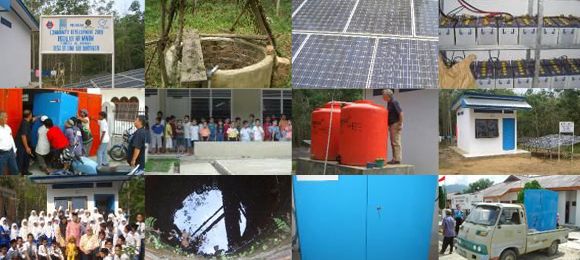
Low temperatures affect pipes, valves, membranes, sensors and chemical-free media vessels. Treatment rooms should be insulated and heated sufficiently to prevent freezing during outages. Outdoor pipework should be minimised, drained where appropriate and protected against ice expansion. Equipment layouts need enough working space for filter changes while wearing cold-weather clothing and gloves.
A skid-mounted or containerised plant can shorten installation time and allow factory testing before shipment. It may also suit the Australian market, where remote mining camps, pastoral stations and Indigenous communities often value modular equipment that can be transported by road and commissioned with limited site construction. Any imported system should be checked for local electrical, plumbing and drinking-water material requirements, including relevant Australian approvals when used in Australia.
Power planning deserves equal attention. A village may depend on diesel generation, a microgrid or a hybrid solar-battery system. Pumps, heaters, controls and backwash cycles should be assessed together rather than treated as separate loads. Where practical, variable-speed pumping, insulated storage and automatic shutdown protection can reduce energy demand without compromising water production.
Operators should receive clear instructions for start-up, alarm response, sampling, media replacement and winter shutdown. Remote telemetry can report pressure loss, flow, conductivity, tank level and temperature, but it should support local operators rather than replace them. A practical design still needs manual bypasses, visible gauges and spare components stored at the site.
Reduce Waste And Maintenance Burden
A chemical-free arsenic treatment system can reduce the need to transport coagulants, oxidants or regenerants into an isolated community. That has benefits for freight planning, worker safety and storage. It does not mean the process produces no residual material: exhausted media, backwash water or pre-filter sediment must be handled under an approved waste-management plan.
Media life should be calculated from measured arsenic loading, expected flow and operating hours. A small population may have low average demand but large seasonal peaks, such as during construction, festivals, emergency accommodation or firefighting. The plant should be sized for peak flow while maintaining adequate contact time at low demand.
Pre-treatment is often the difference between stable operation and premature failure. Removing suspended solids, iron and manganese can protect adsorption beds and reduce pressure loss. Automatic backwashing may be useful, but the community needs a legal and environmentally acceptable destination for the backwash water. Where water is scarce, designs that minimise waste may be preferable to frequent high-volume cleaning cycles.
Evidence from other groundwater projects can guide decisions without replacing local testing. The Bangladesh arsenic case study illustrates how a chemical-free approach can be adapted to a difficult groundwater setting. Alaska’s temperature, water chemistry and operating conditions remain distinct, so pilot trials should confirm removal performance before full-scale installation.
Verify Performance From Source To Tap
Commissioning should include a baseline sample from the untreated bore, samples after each treatment stage and a final sample at the distribution point. Testing should cover total arsenic and, when relevant, arsenic species. Sampling locations must represent actual consumer water, since storage tanks, blending lines and stagnant sections can change results after treatment.
A monitoring plan can combine routine field checks with accredited laboratory analysis. Operators may track flow, pressure, turbidity, pH and media-bed performance locally, while periodic laboratory testing confirms arsenic removal. Trigger levels should define when to investigate, reduce production, change media or switch to a reserve bore.
Procurement should compare the full operating cost rather than the purchase price alone. Freight, heated enclosures, power consumption, laboratory sampling, operator training, media replacement, remote support and waste handling can dominate lifecycle costs. Australian buyers will recognise this from remote water-cart contracts and mining-camp infrastructure, where reliability and service access often matter more than a low initial quotation.
| Treatment approach | Main strength | Key limitation | Remote Alaskan suitability |
|---|---|---|---|
| Adsorptive or catalytic media | Low chemical demand and simple continuous operation | Capacity depends strongly on water chemistry | Strong when validated through pilot testing |
| Aeration plus adsorption | Helps convert arsenite into a more removable form | Adds equipment and possible maintenance points | Useful where arsenite is significant |
| Reverse osmosis | Broad removal of dissolved contaminants | Energy use and concentrate disposal | Suitable when reject management is practical |
| Coagulation and filtration | Can handle varied contaminant loads | Requires chemicals, sludge handling and skilled control | Better for larger staffed facilities |
| Household point-of-use filters | Quick interim protection for selected taps | Limited coverage and inconsistent maintenance | Emergency or supplementary option |
A reliable project therefore begins with a site survey and laboratory report, followed by pilot treatment, cold-weather design review and a documented service plan. The final system should protect public health while fitting the community’s power supply, workforce, transport network and environmental obligations.
Swiss Cleanwater Group can help assess arsenic, manganese and related groundwater conditions, compare treatment technologies and develop a modular solution for remote operation. Share the bore-water analysis, target flow rate and site constraints with its water-treatment specialists to begin planning a safe and durable drinking-water system.
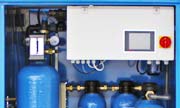
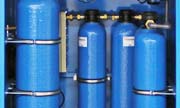
SCM 24
|
|
Cleans 24.000 liters per day
|
SCM 60
|
|
Cleans 60.000 liters per day
|
Video: How it works
The SCG Advantage
Our market-leading, water cleaning solutions have many advantages. To read more click the items below:
No Chemicals
Our machines and technology does not use any chemicals, at all.
Read more...
No Waste Water
Our machines do not waste any water. Yield = 100%.
Read more...
Low energy use
Uses 50 times less energy than a Reverse Osmosis Machine.
Read more...
Low ownership cost
Lower maintenance and operation costs due to our technology.
Read more...
Easy to install
Simple "plug and play" installation makes for easy deployment.
Read more...
Extremely compact
A compact system, contained in an easy to transport cabinet.
Read more...
Outperforms R.O.
SCG technologies outperform Reverse Osmosis systems.
Read more...
Faster ROI
Get a faster Return on Investment with our systems.
Read more...
Latest News
Latest Blog Posts
| Chemicals in water treatment? |
| Water storage - Whats best for keeping water clean and drinkable? |
| Case: Disaster Management Water Treatment |
Contact SCG
891 Showroom Place
Suite 101
Chula Vista, CA, 91914
Phone: +1 619-878-2730
Contact us by email