







Removing Bacteria and Viruses From Surface Water Without UV or Chlorine
Surface water from rivers, lakes, reservoirs, and streams can contain bacteria, viruses, parasites, sediment, pesticides, and naturally occurring minerals. Treating it for drinking requires more than making the water look clear. Microorganisms may remain after basic settling or conventional particle filtration, while seasonal changes can cause sudden increases in contamination.
UV disinfection and chlorine are widely used, but they are not the only options. Properly selected membrane filtration and physical separation processes can reduce microbial risks without adding disinfectant chemicals or relying on ultraviolet lamps. The right approach depends on raw-water quality, required flow, membrane performance, and the level of monitoring available.
Removing bacteria and viruses from surface water without UV or chlorine requires a barrier that physically retains microorganisms, supported by pretreatment and reliable operation. A complete system must also manage turbidity, organic matter, membrane fouling, maintenance, and verification of treated-water quality.
Why Surface Water Requires More Than Basic Filtration
Surface water changes continually. Heavy rainfall can wash soil, manure, wastewater, and organic material into a source, while warm weather may increase bacterial growth. Fine particles can protect microorganisms from treatment, and algae or natural organic matter can reduce the effectiveness of downstream processes.
Bacteria are generally larger than viruses, so many fine filters can retain them more readily. Viruses are much smaller and may pass through ordinary sand, cartridge, or microfiltration media. As a result, a treatment system designed only for visible particles cannot automatically be considered a complete microbiological barrier.
The objective is to create several controlled barriers. Coarse screening and sediment removal protect the main treatment stage, while a membrane with a suitable molecular or pore-size separation provides the critical microbial barrier. Monitoring pressure, flow, turbidity, and membrane integrity helps confirm that the barrier remains effective.
Membrane Processes That Create a Physical Barrier
Ultrafiltration is often considered for surface-water treatment because its membrane can retain suspended solids, colloids, bacteria, and many parasites. Its ability to remove viruses depends on membrane characteristics, operating conditions, virus size, and the system’s validated log-removal performance. It should never be assumed that every ultrafiltration unit offers the same virus protection.
Nanofiltration and reverse osmosis use tighter separation barriers. They can reduce viruses and bacteria while also removing dissolved contaminants such as salts, certain pesticides, and some metals. However, these processes typically require more pressure and produce a concentrate stream that must be managed responsibly.
Membrane selection should therefore reflect the full contaminant profile rather than a single organism. The company’s multi-stage filtration guidance explains why several treatment steps may be necessary when microbial contaminants occur alongside arsenic, manganese, pesticides, or other substances.
| Treatment approach | Main microbial role | Typical strengths | Important considerations |
|---|---|---|---|
| Screening and sedimentation | Removes larger particles and debris | Protects downstream equipment | Does not provide reliable virus removal |
| Sand or multimedia filtration | Reduces turbidity and suspended solids | Simple pretreatment for variable water | Bacteria and viruses may pass through |
| Ultrafiltration | Physical barrier for bacteria and many particles | Low chemical demand and compact operation | Virus performance must be verified |
| Nanofiltration | Stronger barrier for microorganisms and dissolved contaminants | Broad contaminant reduction | Higher pressure and concentrate management |
| Reverse osmosis | Very tight separation of microbes and dissolved substances | Suitable for demanding water quality targets | Energy, recovery, and remineralization require planning |
Pretreatment Protects Microbial Performance
A membrane cannot perform consistently if it is overloaded with silt, algae, oil, or organic deposits. Pretreatment may include intake screening, settling, flotation, multimedia filtration, or a washable prefilter. These stages reduce fouling and help maintain stable production without depending on high chemical doses.
For some sources, aeration or oxidation may be useful for iron and manganese, while activated carbon can address taste, odor, and certain organic compounds. These steps do not replace a microbial barrier, but they can improve overall water quality and reduce the stress placed on the final membrane.
Treatment trains should be designed from source-water testing. Turbidity, temperature, conductivity, microbial counts, dissolved organic carbon, and seasonal contamination patterns all influence the process. A system that works well for a clear reservoir may require substantially different pretreatment when supplied by a turbid river.
Operating Without Chlorine or Ultraviolet Light
Avoiding chlorine can be important where operators want to prevent disinfection by-products, eliminate chemical storage, or preserve the natural taste of treated water. It also removes the need to manage chlorine residuals in distribution. However, a chlorine-free system must maintain a dependable physical barrier and protect treated water from recontamination after filtration.
UV systems require adequate lamp intensity, clean sleeves, and sufficiently clear water. If turbidity or color blocks the light, microorganisms may not receive the intended dose. A membrane-based process avoids dependence on optical transmission, although it introduces other requirements such as integrity testing, pressure control, cleaning, and replacement planning.
Chemical-free operation does not mean maintenance-free operation. Membranes need routine inspection and, depending on the technology and local operating rules, periodic cleaning. Some installations can use physical flushing and carefully selected cleaning procedures, while others require a defined cleaning program to restore permeability and protect service life.
Verifying Bacteria and Virus Removal
A credible treatment design begins with performance targets. Operators should know the required reduction for indicator organisms, the expected challenge from pathogenic bacteria and viruses, and the quality standard governing the intended use. Laboratory testing, pilot trials, and validated manufacturer data can help establish whether the selected membrane is suitable.
Membrane integrity is equally important. A damaged fiber, seal, housing, or connection can create a bypass around an otherwise effective barrier. Pressure decay tests, turbidity monitoring, conductivity checks, flow comparison, and automated alarms can identify changes before a failure affects a large volume of water.
Post-treatment hygiene also matters. Storage tanks, pipes, filling points, and distribution lines should be enclosed, cleanable, and protected from backflow. Even when the filtration stage achieves a high microbial reduction, poor downstream design can reintroduce contamination before the water reaches users.
Applying the Approach to Different Water Uses
Municipal and community systems often need dependable production at changing flow rates, remote monitoring, and straightforward maintenance. Rural projects may place a higher priority on low energy consumption, limited operator intervention, and replacement parts that are locally available. A modular design can make it easier to expand capacity as demand grows.
Farms, livestock operations, industrial sites, and buildings may use treated surface water for different purposes. Drinking water requires the strictest microbial control, while process water may have separate quality targets. Clear separation of potable and non-potable networks prevents accidental cross-connection and makes compliance easier to manage.
A broader view of treatment is useful when microbial contamination occurs with dissolved pollutants. Swiss Cleanwater Group describes water treatment systems for applications that may involve bacteria, arsenic, manganese, pesticides, uranium, and other contaminants. Combining appropriate physical barriers can reduce the need to install unrelated equipment for each individual pollutant.
Designing a Reliable Chemical-Free Treatment Train
A practical system may begin with an intake screen, followed by equalization or settling, turbidity reduction, and a membrane stage selected for the required bacteria and virus removal. Depending on water chemistry, additional steps may be needed for dissolved minerals, organic compounds, or taste. The final arrangement should be based on measured water quality rather than a standard package applied to every source.
Hydraulic sizing is important. Oversizing can increase capital cost and create inefficient operation, while undersizing may cause excessive loading and frequent cleaning. Designers should account for peak demand, seasonal source changes, recovery rate, standby capacity, and safe shutdown procedures.
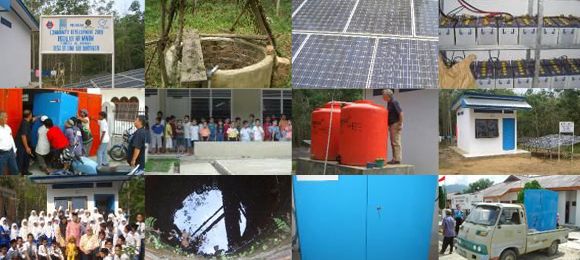
Case evidence can also inform technology choices. A rural arsenic case study demonstrates why local conditions and contaminant combinations matter when developing a water-treatment solution. Microbial safety should be considered alongside chemical quality, operating resources, and long-term reliability.
Practical Priorities for Project Teams
- Test the source during dry weather and after heavy rainfall to capture changing contamination levels.
- Select a validated membrane barrier based on the required bacteria and virus reduction, not on nominal pore size alone.
- Install pretreatment that controls turbidity, algae, suspended solids, and fouling compounds before the critical membrane stage.
- Add integrity monitoring, alarms, hygienic storage, and documented operating procedures to protect treated water.
- Compare energy use, concentrate handling, maintenance requirements, and local technical support before choosing the final configuration.
Removing microorganisms from surface water without chlorine or UV is achievable when treatment is designed as a verified physical-barrier system. The strongest results come from matching membrane technology to the source, protecting it with effective pretreatment, and monitoring every stage that can affect performance.
Swiss Cleanwater Group can help evaluate source-water conditions and identify a suitable treatment configuration for municipal, agricultural, industrial, building, mobile, or community use. Contact the company to discuss your water analysis, capacity requirements, and the performance standard your project must meet.
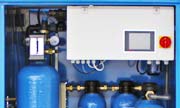
SCM 24
|
|
Cleans 24.000 liters per day
|
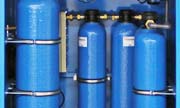
SCM 60
|
|
Cleans 60.000 liters per day
|
Video: How it works
The SCG Advantage
Our market-leading, water cleaning solutions have many advantages. To read more click the items below:
No Chemicals
Our machines and technology does not use any chemicals, at all.
Read more...
No Waste Water
Our machines do not waste any water. Yield = 100%.
Read more...
Low energy use
Uses 50 times less energy than a Reverse Osmosis Machine.
Read more...
Low ownership cost
Lower maintenance and operation costs due to our technology.
Read more...
Easy to install
Simple "plug and play" installation makes for easy deployment.
Read more...
Extremely compact
A compact system, contained in an easy to transport cabinet.
Read more...
Outperforms R.O.
SCG technologies outperform Reverse Osmosis systems.
Read more...
Faster ROI
Get a faster Return on Investment with our systems.
Read more...
Latest News
Latest Blog Posts
| Chemicals in water treatment? |
| Water storage - Whats best for keeping water clean and drinkable? |
| Case: Disaster Management Water Treatment |
Contact SCG
891 Showroom Place
Suite 101
Chula Vista, CA, 91914
Phone: +1 619-878-2730
Contact us by email