







Removing cyanobacteria toxins from drinking water without chemical algaecides
Cyanobacteria, often called blue-green algae, can multiply rapidly in reservoirs, lakes, and slow-moving rivers when sunlight, warm temperatures, and excess nutrients coincide. Some species release cyanotoxins that threaten drinking-water safety, livestock, irrigation operations, and recreational facilities. A clear-looking source can still contain dissolved toxins after a bloom has disappeared.
Chemical algaecides may suppress algae in a reservoir, but they are not a complete drinking-water strategy. They can damage aquatic ecosystems, create additional residues, and cause toxin release when cyanobacterial cells break apart. A safer approach focuses on preventing bloom conditions where possible, separating intact cells, capturing dissolved compounds, and verifying the treated water continuously.
Chemical-free treatment does not mean using a single universal filter. It means designing physical and adsorption barriers that address the specific toxin, concentration, flow rate, temperature, and water chemistry. The most suitable solution may combine screening, membrane filtration, activated carbon, ultraviolet protection, and frequent laboratory or online monitoring.
Why cyanobacterial toxins require a targeted response
Cyanobacteria can produce several toxin groups, including microcystins, cylindrospermopsin, anatoxin-a, and saxitoxins. Their behavior differs in water. Some remain associated with intact cells, while others dissolve into the water after cell aging, rupture, or treatment. Taste-and-odor compounds such as geosmin and MIB may also appear, although they are not necessarily toxic.
This distinction is important because removing algae cells is not the same as removing dissolved toxins. A coarse screen or conventional sediment filter may reduce visible particles while allowing dissolved microcystins or cylindrospermopsin to pass through. Conversely, aggressive treatment that damages cells before they are captured may increase the dissolved toxin load entering the next stage.
The objective is therefore a controlled barrier sequence. The process should keep cells intact until they are separated, provide a reliable mechanism for dissolved-toxin removal, and prevent breakthrough when the source changes quickly.
Control bloom risk before water reaches the plant
The most effective treatment improvement often begins in the catchment. Reducing phosphorus and nitrogen runoff from farms, wastewater discharges, and eroding land can lower the conditions that support recurring blooms. Reservoir operators can also review intake depth, circulation patterns, and seasonal withdrawal practices, since toxin concentrations may vary sharply between surface water and deeper layers.
Routine observation should include water color, surface scums, odor, turbidity, temperature, and weather conditions. Satellite imagery, remote sensors, and targeted sampling can provide early warning, but visual inspection alone cannot confirm whether toxins are present. Sampling should cover both the raw water and treated water during periods of elevated risk.
A chemical-free plant still benefits from intelligent operational control. If a bloom approaches an intake, operators may temporarily change the intake location, reduce production, increase sampling, or use stored water while treatment barriers are checked. This is safer than relying on an emergency dose of algaecide without knowing how much toxin may be released.
Match each treatment barrier to the contaminant
Coagulation and clarification can remove a substantial portion of intact cyanobacterial cells when carefully controlled. They are less dependable for dissolved toxins. Conventional media filtration can provide an additional solids barrier, but it should not be presented as a stand-alone solution for cyanotoxin removal.
Ultrafiltration and microfiltration are valuable for retaining intact cells and suspended particles. Their performance depends on pore size, membrane condition, hydraulic loading, and protection against fouling. They generally do not capture all low-molecular-weight dissolved toxins unless those compounds are attached to larger particles or combined with another removal mechanism.
Activated carbon can adsorb many dissolved cyanotoxins and taste-and-odor compounds. Granular activated carbon offers a continuous contact bed, while powdered activated carbon can be dosed for short-term events, although the latter introduces a consumable material into the process. Carbon capacity depends on organic matter, contact time, temperature, pH, and the particular toxin, so exhausted media can create a false sense of security.
Nanofiltration and reverse osmosis provide a stronger physical barrier for many dissolved contaminants, including a range of cyanotoxins. They require pressure, pretreatment, maintenance, and management of concentrate. A complete design must account for membrane integrity and the safe handling of the rejected stream rather than simply transferring the problem elsewhere.
Comparing chemical-free and low-chemical treatment routes
The right process depends on whether the priority is intact-cell removal, dissolved-toxin reduction, low energy use, mobile deployment, or maximum contaminant separation. No technology should be selected from a product label alone. Pilot testing with representative raw water is especially valuable because organic matter and seasonal temperature can change adsorption and membrane performance.
| Treatment route | Main strength | Important limitation | Suitable role |
|---|---|---|---|
| Coagulation and clarification | Removes intact cells and suspended solids | Limited removal of dissolved toxins; may require chemicals | Front-end solids reduction |
| Microfiltration or ultrafiltration | Physical retention of cyanobacterial cells | Usually insufficient for dissolved toxins | Cell barrier and pretreatment |
| Granular activated carbon | Adsorbs many dissolved toxins and odor compounds | Media eventually saturates; performance varies with organic load | Dissolved-toxin polishing |
| Nanofiltration or reverse osmosis | Broad removal of dissolved contaminants | Higher pressure, fouling control, and concentrate management | High-assurance dissolved contaminant barrier |
| Ultraviolet treatment | Disinfection and some advanced oxidation applications | UV alone is not a universal cyanotoxin barrier and may affect cells unpredictably | Microbial control within a validated train |
| Chemical algaecides | Can suppress algae in a source body | May lyse cells and release toxins; ecological and regulatory concerns | Generally unsuitable as the primary drinking-water safeguard |
Chemical-free filtration solutions can be configured around physical separation, adsorption, and membrane processes rather than routine algaecide addition. The engineering choice should reflect the source water and the required output, whether the application serves a municipality, an industrial site, a farm, or a temporary installation.
Verify performance through monitoring and validation
A treatment system should be validated against the toxins that are actually plausible in the source. Testing only for microcystin may overlook cylindrospermopsin or anatoxin-a. Sampling plans should define locations, frequency, preservation methods, laboratory techniques, and action levels before a bloom occurs.
Online turbidity, conductivity, pressure, flow, temperature, and membrane integrity data can reveal process changes, but these measurements do not replace toxin analysis. Activated-carbon systems require particular attention to empty-bed contact time and breakthrough. Membrane systems need pressure and rejection checks, while any cell-removal stage should be examined for damage or bypass.
Temperature deserves special consideration because it affects viscosity, membrane flux, biological activity, and adsorption kinetics. Operators planning a seasonal or mobile installation can review this analysis of temperature and filtration performance when assessing how a process may behave during warm bloom conditions.
Emergency procedures should specify when to isolate raw-water intakes, switch sources, increase sampling, replace carbon, or stop delivery. Records of raw-water conditions and treated-water results help demonstrate that the system remains effective as the source changes.
Design for municipalities, industry, and mobile sites
A municipal plant may have space for several treatment stages, laboratory support, standby capacity, and a managed concentrate route. A farm or livestock operation may need a compact unit that protects animals from contaminated surface water. Industrial facilities may need separate treatment for process water and potable supplies, while swimming pools require a different control strategy because their water chemistry and exposure pathways differ.
Mobile and military applications add constraints involving transport, rapid commissioning, variable source quality, and limited operator time. Skid-mounted or containerized systems can provide a practical platform, but they still need appropriate pretreatment, sampling points, spare media, energy supply, and clear operating limits.
Construction projects also need dependable potable water when workers cannot rely on a local network. Guidance on clean water for construction sites is relevant where temporary sources may be exposed to runoff, sediment, microbial contamination, or seasonal bloom impacts. A temporary system should be designed for the actual source rather than treated as a smaller version of a permanent plant.
A chemical-free approach can reduce chemical storage, transport, and handling, but it does not eliminate maintenance. Filters must be cleaned or replaced, membranes must be protected from fouling, carbon must be monitored for exhaustion, and rejected water must be managed responsibly.
Practical recommendations for a reliable treatment strategy
- Identify likely cyanobacteria species and toxin groups through seasonal source-water testing.
- Separate intact-cell removal from dissolved-toxin removal when selecting membranes, carbon, or other barriers.
- Use pilot testing to measure performance under realistic temperature, organic-matter, flow, and bloom conditions.
- Install sampling points before and after each critical barrier, with defined responses to breakthrough or membrane-integrity failure.
- Prepare an operating plan covering intake changes, media replacement, laboratory turnaround, emergency storage, and safe disposal of concentrated contaminants.
A well-designed system can protect drinking water without routinely applying chemical algaecides to the source. The essential principles are early warning, careful cell handling, validated removal of dissolved toxins, and monitoring that turns changing water quality into timely operational decisions.
Swiss Cleanwater Group can help assess the source, application, and treatment objectives before equipment is specified. Contact the company to discuss a chemical-free water-treatment configuration for municipal, agricultural, industrial, mobile, or temporary drinking-water needs.
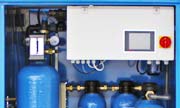
SCM 24
|
|
Cleans 24.000 liters per day
|
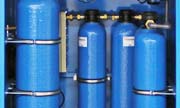
SCM 60
|
|
Cleans 60.000 liters per day
|
Video: How it works
The SCG Advantage
Our market-leading, water cleaning solutions have many advantages. To read more click the items below:
No Chemicals
Our machines and technology does not use any chemicals, at all.
Read more...
No Waste Water
Our machines do not waste any water. Yield = 100%.
Read more...
Low energy use
Uses 50 times less energy than a Reverse Osmosis Machine.
Read more...
Low ownership cost
Lower maintenance and operation costs due to our technology.
Read more...
Easy to install
Simple "plug and play" installation makes for easy deployment.
Read more...
Extremely compact
A compact system, contained in an easy to transport cabinet.
Read more...
Outperforms R.O.
SCG technologies outperform Reverse Osmosis systems.
Read more...
Faster ROI
Get a faster Return on Investment with our systems.
Read more...
Latest News
Latest Blog Posts
| Chemicals in water treatment? |
| Water storage - Whats best for keeping water clean and drinkable? |
| Case: Disaster Management Water Treatment |
Contact SCG
891 Showroom Place
Suite 101
Chula Vista, CA, 91914
Phone: +1 619-878-2730
Contact us by email