







Removing pesticides and herbicides from surface water
Surface water from rivers, lakes, reservoirs, and irrigation channels can provide a valuable source for drinking water, agriculture, livestock, and industrial use. It can also collect residues from crop protection products, soil erosion, stormwater runoff, and poorly controlled discharge. Pesticides and herbicides may be present at very low concentrations, yet repeated exposure and mixtures of compounds make reliable treatment essential.
A practical purification strategy begins with understanding the source rather than selecting equipment from a contaminant list alone. The season, catchment area, rainfall pattern, agricultural activity, and water chemistry all influence the type and concentration of pollutants entering a treatment plant.
Effective removal usually depends on several stages working together. Source protection, monitoring, prefiltration, adsorption, membrane treatment, and disinfection each address different risks. The right combination can reduce chemical consumption, limit waste, and deliver consistent water quality under changing conditions.
Why surface water carries agricultural chemicals
Pesticides and herbicides reach surface water through several pathways. Rain can wash residues from fields into streams, while irrigation return flows transport dissolved compounds and contaminated sediment. Wind drift, accidental spills, drainage systems, and erosion can add further loads. Some substances attach strongly to suspended particles, whereas others remain dissolved and travel farther through the watershed.
Concentration is rarely constant. A dry period may allow residues to accumulate on soil and vegetation, followed by a sharp contamination pulse during the first heavy rainfall. Agricultural calendars also matter: application periods, planting, harvesting, and seasonal weed control can each create different risks. A treatment system designed around a single laboratory sample may therefore perform poorly when source water changes.
The health significance depends on the active ingredient, concentration, exposure duration, and presence of transformation products. Regulatory limits differ by jurisdiction, but a responsible operator should monitor both individual compounds and broader indicators such as total pesticide concentration, turbidity, dissolved organic carbon, and conductivity.
Assessing contamination before treatment
A useful assessment combines catchment knowledge with laboratory testing. Map agricultural land, drainage routes, storage areas, wastewater discharges, and upstream treatment facilities. Identify products commonly used in the area and request analyses for likely active ingredients, including herbicides, insecticides, fungicides, and their relevant metabolites.
Sampling should cover different weather and operating conditions. Collecting water during routine flow, after rainfall, during low-flow periods, and around known application seasons provides a more realistic picture than taking one sample. If source quality changes quickly, automated or event-triggered sampling may be appropriate.
Treatment performance is also affected by changes unrelated to pesticides. Seasonal shifts in turbidity, organic matter, algae, iron, manganese, and microbial activity can interfere with adsorption or foul membranes. Guidance on seasonal source changes can help operators connect monitoring data with practical treatment decisions.
Choosing suitable removal technologies
Granular activated carbon is widely used for dissolved organic micropollutants. Its porous structure adsorbs many herbicides and pesticides, but performance depends on the carbon type, empty-bed contact time, flow rate, temperature, and competing organic matter. Carbon eventually becomes saturated, so the installation needs a replacement or regeneration plan and a method for identifying breakthrough.
Powdered activated carbon can be dosed for short-term contamination events, although it requires downstream separation and careful handling. Biochar may be useful in selected applications, but its performance must be validated for the actual compounds in the source water. Coagulation and sedimentation can remove pesticide molecules attached to particles, yet they are generally less dependable for compounds that remain dissolved.
Membrane processes provide a physical barrier. Nanofiltration and reverse osmosis can remove a broad range of dissolved contaminants, but they require pressure, pretreatment, cleaning, and management of the concentrated reject stream. Ultrafiltration is valuable for suspended solids, microorganisms, and larger organic matter, but it should not be assumed to remove dissolved pesticides by itself.
Advanced oxidation can break down resistant compounds through highly reactive species. Ozone, ultraviolet treatment combined with suitable oxidants, and other oxidation systems may be effective, but they must be engineered carefully. Partial oxidation can create transformation products, and water chemistry can consume oxidant before the target compounds are treated. Catalytic filtration is a different process category; information about its filtration science is useful when evaluating related water-treatment mechanisms, though pesticide removal must still be demonstrated for the specific contaminants.
| Treatment approach | Main strength | Important limitation | Typical role |
|---|---|---|---|
| Granular activated carbon | Strong adsorption of many organic compounds | Media saturation and breakthrough | Primary micropollutant barrier |
| Powdered activated carbon | Flexible response to temporary peaks | Requires dosing and separation | Seasonal or emergency treatment |
| Coagulation and filtration | Removes particles and attached residues | Limited effect on dissolved compounds | Pretreatment |
| Nanofiltration | Broad dissolved-contaminant removal | Energy use and concentrate management | High-quality final treatment |
| Reverse osmosis | Very strong physical separation | Higher pressure and mineral removal | Critical or advanced purification |
| Advanced oxidation | Can destroy selected persistent molecules | By-products and chemistry control | Targeted polishing stage |
Designing a treatment train that remains stable
No single process should be selected solely because it removes one pesticide in a controlled test. A treatment train should account for turbidity, natural organic matter, algae, hardness, pH, temperature, and the expected contaminant mixture. Removing suspended solids first can protect activated carbon and membranes, while stable flow control improves contact time and treatment consistency.
A common configuration may include screening, coarse filtration, clarification or ultrafiltration, activated carbon, and final disinfection. Where contamination is severe or highly variable, nanofiltration, reverse osmosis, or advanced oxidation can be added after a detailed pilot study. The final arrangement should reflect the required water quality, available energy, operator capacity, and disposal requirements.
Chemical-free or low-chemical systems can be attractive where transport, storage, and dosing infrastructure are limited. However, “chemical-free” does not mean maintenance-free. Media must be inspected, filters backwashed or replaced, sensors calibrated, and any concentrate or spent adsorbent handled responsibly. A design that reduces one environmental burden should not create an unmanaged waste problem elsewhere.
For municipalities, farms, industrial sites, and mobile applications, modular equipment can simplify expansion and deployment. The system should allow bypass protection, isolation of individual vessels, safe sampling points, and a controlled response when monitoring detects a rise in pesticide concentration. Information about clean drinking water solutions can help frame treatment requirements across different operating environments.
Monitoring performance from source to outlet
Routine testing should include raw water, treated water, and, where relevant, intermediate stages. The parameters selected must match the local risk profile. A basic program may include turbidity, pH, conductivity, dissolved organic carbon, and microbiological indicators, supplemented by laboratory analysis for specific pesticides and herbicides.
Activated carbon systems need a clear breakthrough strategy. Operators should not wait for a treated-water exceedance before changing media. Track loading, flow, contact time, pressure loss, and laboratory results. A gradual increase in target compounds or related organic indicators can signal that the adsorption bed is approaching exhaustion.
Membrane systems require monitoring of differential pressure, permeate flow, conductivity, recovery, and cleaning frequency. A sudden performance change can indicate fouling, scaling, seal failure, or damage. For oxidation processes, verify dose, ultraviolet intensity or ozone concentration, contact time, and by-products. Independent laboratory confirmation remains important when public health or regulatory compliance is involved.
Emergency planning is equally important. Establish thresholds for increasing sampling, changing treatment settings, switching to an alternative source, or temporarily holding treated water. Keep records of weather, agricultural activity, maintenance, media replacement, and analytical results so that recurring contamination patterns become easier to predict.
Practical recommendations for implementation
A reliable pesticide-removal program should be built around evidence and operational discipline:
- Create a catchment risk map covering farms, drainage pathways, storage sites, and vulnerable waterways.
- Sample during normal flow, low flow, and after significant rainfall or agricultural application periods.
- Test representative active ingredients and metabolites instead of relying only on broad water-quality indicators.
- Pilot activated carbon, membrane, or oxidation processes using local water and realistic concentration ranges.
- Install monitoring points before and after each major treatment barrier, with defined response limits.
- Plan in advance for spent carbon, membrane concentrate, filter backwash, and other treatment residuals.
The most economical design is often the one that prevents sudden loading and protects its main treatment stage. Source protection, early warning, equalization storage, and effective pretreatment can extend media life and reduce downtime. Operators should also document maintenance procedures so performance does not depend on one experienced technician.
For smaller facilities, livestock operations, farms, and remote projects, simplicity may be more valuable than maximum process complexity. A robust filtration and adsorption system with clear maintenance intervals can be preferable to an advanced installation that requires specialist intervention unavailable on site. Larger utilities may justify multiple barriers, online analyzers, and automated process control.
Removing pesticides and herbicides from surface water requires a clear understanding of the source, validated treatment, and continuous verification. Swiss Cleanwater Group can help assess purification requirements and match treatment technologies to municipal, agricultural, industrial, building, or mobile applications. Review the available water-treatment solutions and contact the company to develop a practical path toward safer, more sustainable water.
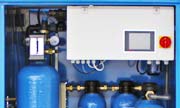
SCM 24
|
|
Cleans 24.000 liters per day
|
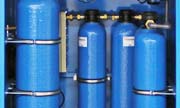
SCM 60
|
|
Cleans 60.000 liters per day
|
Video: How it works
The SCG Advantage
Our market-leading, water cleaning solutions have many advantages. To read more click the items below:
No Chemicals
Our machines and technology does not use any chemicals, at all.
Read more...
No Waste Water
Our machines do not waste any water. Yield = 100%.
Read more...
Low energy use
Uses 50 times less energy than a Reverse Osmosis Machine.
Read more...
Low ownership cost
Lower maintenance and operation costs due to our technology.
Read more...
Easy to install
Simple "plug and play" installation makes for easy deployment.
Read more...
Extremely compact
A compact system, contained in an easy to transport cabinet.
Read more...
Outperforms R.O.
SCG technologies outperform Reverse Osmosis systems.
Read more...
Faster ROI
Get a faster Return on Investment with our systems.
Read more...
Latest News
Latest Blog Posts
| Chemicals in water treatment? |
| Water storage - Whats best for keeping water clean and drinkable? |
| Case: Disaster Management Water Treatment |
Contact SCG
891 Showroom Place
Suite 101
Chula Vista, CA, 91914
Phone: +1 619-878-2730
Contact us by email