







Removing Pesticides From Rainwater For Australian Homes
Rainwater tanks are a practical part of life across Australia. In regional New South Wales, Queensland farming districts and semi-rural areas outside Perth or Adelaide, households often depend on roof-collected water for drinking, cooking, bathing and laundry. A well-designed tank can provide a valuable supply, but clear water is not automatically safe water.
Pesticides can reach a rainwater harvesting system through spray drift, contaminated dust, roof deposits and rainfall washing residues from nearby surfaces. The risk is more significant for homes near orchards, vineyards, market gardens, cotton fields, sugarcane country or properties where insecticides and herbicides are routinely applied.
Removing these compounds requires more than a mesh screen or a standard ultraviolet lamp. Effective protection combines source control, sensible tank management, laboratory testing and a treatment process selected for the particular chemicals found in the water.
How Pesticides Enter A Rainwater Tank
Rain usually appears clean, but the first runoff from a roof can carry accumulated dust, ash, bird matter, industrial particles and agricultural residues. During spraying season, fine droplets may drift onto roofs, gutters and outdoor tanks. Wind can transport contaminated dust over considerable distances, especially across open farmland.
The catchment material also matters. Old roof coatings, treated timber, metal corrosion and deteriorating gutter components may add unwanted substances to collected water. A tank positioned beside a shed, orchard or paddock can receive more contamination than one located away from spray areas and prevailing winds.
A first-flush diverter helps by directing the initial roof runoff away from the tank. It should be sized for the roof area, emptied regularly and checked after dry periods. Leaf screens and gutter guards reduce organic debris, but they do not remove dissolved pesticides. Keeping overhanging branches trimmed and preventing chemical storage near the tank are equally important.
During application periods, households near intensive agriculture may need to disconnect or bypass the catchment temporarily. Liaising with nearby growers about spray timing can reduce exposure. In places such as the Riverina or the Lockyer Valley, practical communication between neighbours may be as useful as an additional filter.
Why Testing Should Come Before Treatment
“Pesticides” describes a large group of chemicals with different properties. Herbicides, insecticides and fungicides vary in size, solubility, polarity and resistance to treatment. A filter that performs well for one compound may be unsuitable for another, so a generic cartridge labelled for taste and odour is not proof of safe removal.
Use a laboratory accredited for environmental or drinking-water analysis and request a target list based on local land use. The laboratory may recommend testing for commonly used products in the district, such as glyphosate, atrazine, simazine, 2,4-D or specific fungicides. Results should be interpreted against the Australian Drinking Water Guidelines and advice from the relevant state health or water authority.
Collect samples carefully. A sample taken after several dry months may show a different result from one taken during an active spray period. Testing the tank, the untreated roof runoff where possible and the treated drinking-water outlet can reveal where contamination enters and whether the treatment unit is performing.
Rainwater can contain other hazards at the same time. Bacteria, metals, nitrates and algal compounds require different controls, and cyanobacteria toxins are a separate concern from pesticide residues. A broader water-quality assessment prevents a household from solving one problem while overlooking another.
Treatment Options For Household Use
Granular activated carbon is commonly used to adsorb many organic chemicals, including a range of pesticide residues. It can be installed as a point-of-use cartridge beneath a kitchen sink or as a larger point-of-entry unit serving the whole house. Performance depends on carbon quality, contact time, flow rate, temperature and the concentration of competing organic matter.
Carbon is not a set-and-forget solution. Once its adsorption sites become exhausted, contaminants may pass through without any visible change in taste, colour or odour. Cartridges need replacement according to measured usage and test results, rather than appearance alone. A bypass valve, pressure gauge and sampling point make inspection and maintenance easier.
Reverse osmosis can remove a broad range of dissolved contaminants when correctly designed. It normally includes sediment prefiltration, carbon protection and a membrane followed by a treated-water storage vessel. The system produces a reject stream and needs adequate pressure, periodic sanitation and replacement of membranes and prefilters. It is often most practical at a drinking-water tap rather than for every household outlet.
Ultrafiltration and ultraviolet disinfection have useful roles, but they should not be misrepresented as universal pesticide barriers. Ultrafiltration can reduce particles and microorganisms while UV inactivates many pathogens; neither is generally designed to remove dissolved pesticide molecules. Advanced oxidation, nanofiltration and combined treatment trains may be appropriate for difficult contaminants, but they require specialist design and verification.
Designing A Reliable Rainwater Treatment System
A sound household arrangement usually begins with catchment protection, a first-flush device and screened tank inlets. The tank should be covered, sealed against insects and sunlight, fitted with an accessible inspection opening and protected from flooding. Sludge and sediment should be assessed during maintenance because accumulated material can affect water quality and shorten filter life.
Treatment should be matched to the intended use. Water for toilet flushing, irrigation and washing may need a different level of treatment from water used for drinking or preparing infant formula. Many Australian households choose a dedicated, treated kitchen line so that high-performance filtration is concentrated where exposure is greatest.
A typical potable-water train may include sediment filtration, activated carbon and, where testing supports it, reverse osmosis or another membrane process. Disinfection may be added after filtration to control bacteria introduced within plumbing or storage. The sequence, flow rate and contact time must be designed together; installing several unrelated cartridges in series does not guarantee reliable removal.
Electrical and plumbing work should comply with applicable Australian requirements, and components in contact with drinking water should be suitable for that purpose. Ask for independent test data showing the reduction achieved for the actual pesticide or chemical family of concern. Claims such as “chemical-free” or “natural filtration” are insufficient without test conditions, capacity figures and replacement schedules.
Maintenance, Emergencies And Professional Support
A treatment system can lose effectiveness through blocked prefilters, exhausted carbon, membrane fouling, microbial growth or incorrect flow. Keep a service record with installation dates, tank cleaning, cartridge changes, pressure readings and laboratory results. Periodically test the treated outlet, especially after heavy rain, nearby spraying, bushfire smoke events, long vacancies or changes to the property.
Bushfires and floods create special problems in Australian catchments. Ash, soot, sediment and damaged roofing can enter tanks after a fire, while floodwater may introduce sewage, fuel and agricultural chemicals. Do not rely on boiling to remove pesticides; boiling can reduce microorganisms but will not reliably destroy dissolved chemical contaminants and may concentrate some substances as water evaporates.
Remote communities, emergency services and rural properties may need portable equipment when fixed infrastructure is damaged. The engineering considerations are different from those of a household unit, including rapid deployment, power supply, storage and changing raw-water quality. Guidance on a mobile treatment trailer illustrates why capacity and field conditions must be considered alongside the treatment technology.
Professional assessment is particularly valuable when a tank supplies the whole home, when pesticide results are elevated or when several contaminants are present. A qualified provider can assess the roof and tank arrangement, calculate daily demand, select compatible components and establish a monitoring plan. Swiss Cleanwater Group works across household, municipal, agricultural and mobile applications; its water treatment systems can be reviewed alongside site-specific testing and performance requirements.
Arrange a laboratory analysis before choosing a filter, then have the catchment, tank, plumbing and proposed treatment train assessed as one system. With sensible source protection, verified contaminant removal and scheduled maintenance, rainwater can remain a dependable household resource without treating every clear-looking tank as automatically safe.
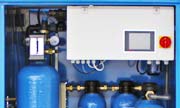
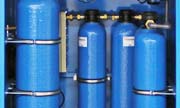
SCM 24
|
|
Cleans 24.000 liters per day
|
SCM 60
|
|
Cleans 60.000 liters per day
|
Video: How it works
The SCG Advantage
Our market-leading, water cleaning solutions have many advantages. To read more click the items below:
No Chemicals
Our machines and technology does not use any chemicals, at all.
Read more...
No Waste Water
Our machines do not waste any water. Yield = 100%.
Read more...
Low energy use
Uses 50 times less energy than a Reverse Osmosis Machine.
Read more...
Low ownership cost
Lower maintenance and operation costs due to our technology.
Read more...
Easy to install
Simple "plug and play" installation makes for easy deployment.
Read more...
Extremely compact
A compact system, contained in an easy to transport cabinet.
Read more...
Outperforms R.O.
SCG technologies outperform Reverse Osmosis systems.
Read more...
Faster ROI
Get a faster Return on Investment with our systems.
Read more...
Latest News
Latest Blog Posts
| Chemicals in water treatment? |
| Water storage - Whats best for keeping water clean and drinkable? |
| Case: Disaster Management Water Treatment |
Contact SCG
891 Showroom Place
Suite 101
Chula Vista, CA, 91914
Phone: +1 619-878-2730
Contact us by email