








Comparing Carbon Footprints In Chemical-Free Water Treatment
Producing safe drinking water has an environmental cost that extends beyond the treatment plant. Electricity, construction materials, chemical manufacturing, transport, backwashing, sludge handling, and equipment replacement all contribute to greenhouse gas emissions. A fair comparison must therefore examine the entire treatment chain rather than focus on a single operating stage.
Chemical-free water treatment can reduce several of these burdens by using pressure-driven filtration, catalytic media, adsorption, oxidation, or other physical and biological processes without continuous chemical dosing. Swiss Cleanwater Group develops systems aimed at removing contaminants such as arsenic, manganese, bacteria, pesticides, and uranium while limiting waste and energy demand.
The environmental advantage is not automatic. A high-pressure membrane system powered by carbon-intensive electricity may have a larger footprint than a low-energy conventional plant. The best outcome depends on the raw water, treatment target, flow rate, energy source, equipment lifetime, and management of concentrated residues.
Why Treatment Footprint Starts Before The Plant
Conventional water treatment often relies on chemicals such as coagulants, disinfectants, pH adjusters, and oxidants. Their carbon footprint includes extraction of raw materials, industrial production, packaging, storage, and delivery. Some substances require energy-intensive manufacturing, while long-distance transport adds emissions before the treatment process even begins.
Chemical use also creates downstream impacts. Coagulation and precipitation produce sludge that must be thickened, dewatered, transported, and disposed of or reused. Chemical regeneration can create spent solutions requiring controlled handling. These activities may represent a significant portion of total emissions, particularly for plants treating water with high concentrations of metals or organic contaminants.
Chemical-free systems shift the balance toward equipment, filter media, pumps, and maintenance. Their embodied carbon is concentrated in manufacturing and installation rather than recurring chemical supply. If the system operates for many years, avoids frequent media replacement, and uses modest electricity, the initial footprint can be spread across a large volume of treated water.
Where Chemical-Free Systems Change The Balance
A chemical-free process may use gravity filtration, low-pressure membranes, specialized adsorption media, catalytic filtration, ultraviolet treatment, or biological action. The right technology depends on the contaminant and water chemistry. A manganese removal system, for example, may have very different energy and maintenance requirements from a reverse osmosis plant designed to reduce uranium or dissolved salts.
The absence of chemical dosing can simplify operation in remote facilities, farms, livestock operations, and mobile applications. It can reduce deliveries, chemical storage infrastructure, spill risks, and operator exposure. For small communities, these practical benefits can also lower emissions associated with repeated transport of drums, tanks, or bulk chemical shipments.
However, “chemical-free” does not mean impact-free. Pumps consume electricity, filter vessels require steel or composite materials, and media eventually need replacement. Some membrane systems generate a reject stream, while adsorption media may require careful disposal after becoming saturated. Life-cycle performance depends on how these outputs are managed and whether the process achieves a high recovery rate.
When Conventional Treatment Still Performs Well
Conventional methods can have a favorable carbon profile when they treat large volumes efficiently with existing infrastructure. A well-designed coagulation and filtration plant may operate at low energy intensity, especially where gravity flow is available and chemicals are produced locally. Established systems also benefit from predictable maintenance routines, trained personnel, and long equipment lifetimes.
Chemical treatment can be especially effective for variable raw water. Coagulants may remove suspended solids and natural organic matter across changing conditions, while disinfectants provide a measurable microbial barrier. Replacing such a process without accounting for reliability could require additional treatment stages, increasing both capital emissions and electricity use.
The comparison should therefore focus on equivalent water quality and public health protection. A chemical-free process that needs extensive pretreatment, high pressure, or frequent backwashing may not outperform a conventional alternative. Conversely, a targeted filtration system can be highly efficient when the main problem is a specific contaminant and the incoming water has already been clarified.
A Practical Carbon Accounting Framework
A useful assessment begins with a functional unit, such as kilograms of carbon dioxide equivalent per cubic metre of compliant drinking water. The calculation should include construction, transport, installation, electricity, chemicals, consumables, waste, maintenance, replacement parts, and end-of-life treatment. Results should be based on the same flow rate, operating hours, water quality, and required removal levels.
Electricity is often the largest operational variable. A low-pressure system supplied by renewable power may have a substantially smaller footprint than a high-pressure process connected to a coal-heavy grid. Pump efficiency, hydraulic design, standby operation, and pressure losses deserve close attention. Treating water only when required, rather than running oversized equipment continuously, can also reduce emissions.
Water recovery matters as well. If a process sends a large share of feed water to drain, additional abstraction, pretreatment, and disposal impacts must be counted. Chemical-free treatment can perform well when it produces little residual waste, but the result depends on the selected media and operating conditions. The filtration media guide offers useful context for matching media to multiple contaminants instead of adding unnecessary treatment stages.
| Factor | Chemical-Free Treatment | Conventional Chemical Treatment |
|---|---|---|
| Recurring inputs | Electricity, media, membranes, replacement parts | Electricity, coagulants, disinfectants, pH agents, consumables |
| Main emissions sources | Equipment manufacture, pumping, media production and disposal | Chemical manufacture, transport, dosing, sludge handling and energy |
| Waste profile | Backwash water, concentrate, exhausted media | Chemical sludge, spent solutions, packaging and backwash water |
| Remote-site suitability | Often favorable where deliveries are difficult | Can be demanding when chemicals require regular transport |
| Key performance variable | Pressure, media life, recovery and contaminant loading | Dose control, raw-water variability and sludge production |
| Potential carbon advantage | Lower recurring supply-chain emissions in suitable applications | Efficient at large scale with established, gravity-based infrastructure |
Design Choices That Lower Emissions
The lowest-carbon system is usually the simplest process that reliably meets the water-quality target. Removing contaminants in stages can prevent over-treatment. For example, a dedicated manganese or arsenic removal unit may be preferable to applying a broad, energy-intensive process to the entire water stream. Pilot testing helps establish contact time, pressure, flow, media life, and backwash frequency before full-scale construction.
Long service life is another major factor. Durable vessels, accessible components, locally available spare parts, and replaceable media can reduce the need for premature equipment renewal. Monitoring pressure drop, treated-water quality, and breakthrough also allows operators to service equipment at the right time rather than replacing media or running pumps unnecessarily.
Water-treatment companies can reduce embodied emissions through compact designs, efficient motors, repairable systems, and responsible sourcing. Renewable electricity, solar-assisted pumping, and gravity-fed layouts can further improve performance where local conditions permit. These measures matter for municipal plants, industrial facilities, buildings, swimming pools, and agricultural installations alike.
Matching Technology To The Site
A carbon comparison should begin with a complete water analysis. Arsenic, manganese, uranium, pesticides, bacteria, hardness, iron, turbidity, organic matter, and pH each influence technology selection. The treatment objective should also distinguish between source-water protection, potable water production, process water, livestock supply, and emergency use.
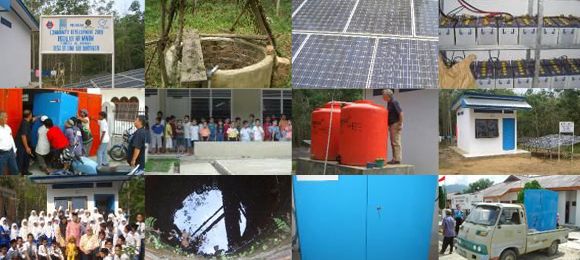
Site conditions can alter the result significantly. A remote military or mobile unit may gain more from eliminating chemical logistics than a large urban plant with established bulk deliveries. A rural community may value low maintenance and minimal waste, while an industrial facility may prioritize water recovery and continuous operation. In one example, a rural arsenic case study illustrates how contaminant-specific treatment can support safe supply without routine chemical dosing.
Scale also matters. Small systems can avoid the embodied emissions of oversized infrastructure, but they may lack economies of scale for equipment manufacturing and maintenance. Large systems can spread construction impacts across millions of litres, yet their chemical and sludge flows may be substantial. A site-specific life-cycle assessment is more reliable than assuming one treatment category is always greener.
Steps For A Lower-Carbon Water Strategy
Operators and project developers can make the comparison more transparent by evaluating both environmental and operational data:
- Measure electricity use per cubic metre under real operating conditions, including pumps, controls, ultraviolet units, and standby loads.
- Include chemical manufacture, transport, storage, dosing, sludge treatment, and disposal in conventional-treatment calculations.
- Record media, membrane, vessel, and replacement-part lifetimes rather than relying only on equipment purchase data.
- Compare water recovery, backwash volumes, concentrate streams, and the final destination of every residual.
- Test the proposed process against seasonal changes in contaminant concentration, flow, temperature, and pressure.
These steps help prevent a narrow assessment based only on chemical consumption or nameplate energy ratings. They also reveal opportunities to combine methods intelligently, such as using low-energy pretreatment before a membrane stage or applying targeted adsorption after clarification.
For organizations seeking a durable supply of clean water, carbon performance should be considered alongside contaminant removal, regulatory compliance, resilience, and total cost of ownership. Swiss Cleanwater Group can support the evaluation of chemical-free purification options for communities, agriculture, industry, buildings, and specialized applications.
A carefully selected treatment system can reduce recurring supply-chain emissions while protecting water quality and limiting waste. Contact Swiss Cleanwater Group to discuss the water analysis, operating conditions, and treatment objectives needed to identify an efficient, sustainable solution.
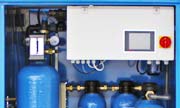
SCM 24
|
|
Cleans 24.000 liters per day
|
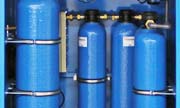
SCM 60
|
|
Cleans 60.000 liters per day
|
Video: How it works
The SCG Advantage
Our market-leading, water cleaning solutions have many advantages. To read more click the items below:
No Chemicals
Our machines and technology does not use any chemicals, at all.
Read more...
No Waste Water
Our machines do not waste any water. Yield = 100%.
Read more...
Low energy use
Uses 50 times less energy than a Reverse Osmosis Machine.
Read more...
Low ownership cost
Lower maintenance and operation costs due to our technology.
Read more...
Easy to install
Simple "plug and play" installation makes for easy deployment.
Read more...
Extremely compact
A compact system, contained in an easy to transport cabinet.
Read more...
Outperforms R.O.
SCG technologies outperform Reverse Osmosis systems.
Read more...
Faster ROI
Get a faster Return on Investment with our systems.
Read more...
Latest News
Latest Blog Posts
| Chemicals in water treatment? |
| Water storage - Whats best for keeping water clean and drinkable? |
| Case: Disaster Management Water Treatment |
Contact SCG
891 Showroom Place
Suite 101
Chula Vista, CA, 91914
Phone: +1 619-878-2730
Contact us by email