


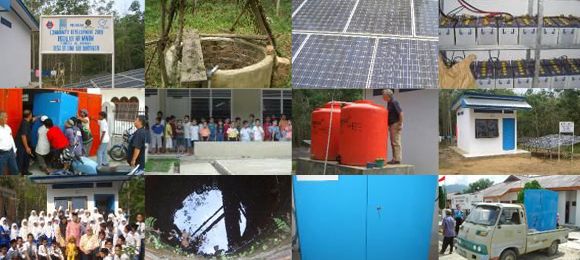







How Contact Time Shapes Catalytic Media Arsenic Removal
Arsenic in groundwater is a serious treatment concern because it can occur naturally in aquifers and may remain invisible, odourless and tasteless. Bore supplies in parts of Australia can contain arsenic alongside iron, manganese, salinity or hardness, so a reliable treatment design must consider the complete water chemistry rather than a single laboratory result.
Catalytic media can reduce arsenic concentrations without continuous chemical dosing when the media, flow rate and pre-treatment are correctly matched. Contact time is central to that performance. It determines how long water remains in contact with the active surface, allowing oxidation, adsorption and filtration mechanisms to remove dissolved arsenic before treated water reaches a tank, process line or tap.
What contact time means in an arsenic filter
In water treatment, contact time is commonly expressed as empty bed contact time, or EBCT. It is calculated by dividing the volume of media in a vessel by the flow rate passing through it. A larger bed or slower flow produces a longer EBCT, while peak demand and undersized equipment shorten it.
For arsenic removal, EBCT gives the media time to interact with dissolved contaminants. Iron-based catalytic materials may promote the conversion of arsenite, known as As(III), into arsenate, or As(V), which is generally easier to capture through adsorption and filtration. The media surface can then retain arsenic-bearing particles and dissolved species as water passes through the bed.
The required contact period is not identical for every installation. It depends on influent arsenic concentration, the proportion of As(III), pH, temperature, dissolved oxygen, phosphate, silica, organic matter and competing metals. A design based only on an average flow rate may perform adequately during quiet periods and fail during morning peaks, irrigation cycles or simultaneous use across a large property.
Why longer residence time can improve removal
A longer residence time generally increases the opportunity for oxidation and adsorption. This is particularly important where arsenite is present, since As(III) is often more mobile and less readily adsorbed than arsenate. Catalytic media can help create a reactive surface, but the process still needs sufficient time for water and media to interact.
Contact time also affects the movement of arsenic through the filter bed. If water travels too quickly, breakthrough can occur before the media has used its available adsorption capacity. Breakthrough may appear gradually, making routine sampling essential. A treated result taken during low demand may look satisfactory even though the outlet concentration rises under a higher flow condition.
Longer EBCT does not automatically solve every treatment problem. Excessive loading of iron or manganese can coat active sites, while suspended solids can block the bed and create preferential channels. Phosphate and silicate may compete with arsenate for adsorption sites. Good design therefore combines suitable contact time with pre-filtration, appropriate backwashing and a media replacement or regeneration strategy.
Balancing flow, vessel size and media behaviour
System sizing involves more than selecting a vessel with a nominal capacity. Engineers need to examine service flow, peak flow, backwash expansion, media depth and the required hydraulic loading rate. A domestic bore serving a rural property may have a modest average demand but a sharp peak when several bathrooms, a kitchen and irrigation equipment operate together.
The following indicative comparison shows how hydraulic conditions can influence treatment performance. Actual values must be confirmed through water analysis, pilot testing and the media supplier’s operating data.
| Operating condition | Approximate EBCT | Likely effect on arsenic treatment | Design response |
|---|---|---|---|
| High flow through a shallow bed | 1–2 minutes | Greater risk of incomplete oxidation, adsorption and early breakthrough | Reduce flow or increase media volume |
| Moderate flow with a properly deep bed | 3–5 minutes | More stable contact and improved contaminant capture | Verify pH, competing ions and loading |
| Low flow with adequate bed depth | 5–10 minutes | Stronger contact, though capacity can still be exhausted | Track outlet arsenic and schedule backwash |
| Intermittent operation with long idle periods | Variable | Possible changes in water quality and biofilm conditions | Assess start-up performance and flush protocols |
A vessel that provides the target EBCT at average demand may not maintain it during peak conditions. Flow control valves, multiple parallel vessels or a treated-water storage tank can help keep the media within its design range. In municipal or commercial settings, duty-and-standby arrangements also allow one vessel to remain online while another is serviced.
Temperature matters in Australian applications. Cold groundwater in southern regions may react more slowly than warmer source water, while high ambient temperatures around Darwin or inland Queensland can change biological activity and water chemistry. The design should use realistic seasonal conditions instead of relying on a single test performed in mild weather.
Water chemistry determines how useful time becomes
Arsenic treatment should begin with a representative sampling programme. Samples should cover raw water and treated water, with testing for total arsenic and, where possible, arsenic speciation. Iron, manganese, pH, alkalinity, phosphate, silica, turbidity, total dissolved solids and organic carbon can reveal why a particular media may lose efficiency.
Oxidation state is especially important. If the source contains mainly arsenate, adsorption may proceed efficiently at a suitable pH. If arsenite dominates, the system may require stronger catalytic oxidation conditions or a media configuration that supports conversion before capture. Dissolved iron can assist removal after oxidation, yet excess iron can also increase solids loading and backwash frequency.
Australian operators also need to account for the Australian Drinking Water Guidelines, which set a health-based arsenic value of 0.01 milligrams per litre, or 10 micrograms per litre, for drinking water. Regional councils, water utilities and private scheme operators may impose additional monitoring or reporting requirements. A bore in Western Australia, a community supply near Alice Springs and a farm in the Murray–Darling Basin can present very different source-water conditions.
Chemical-free operation should be understood accurately. A catalytic filter may avoid routine chemical addition and reduce waste streams, but it still needs hydraulic control, maintenance and safe disposal of spent media where required. If arsenic is concentrated in backwash solids, that waste must be managed in line with local environmental and regulatory obligations.
Applying contact-time design in Australian projects
For a winery, arsenic control may form part of a broader well-field protection programme. Production demand can fluctuate during vintage, cleaning and bottling, so the treatment plant must handle changing flow and water quality. A useful example is this winery well-field case, where source protection and chemical-free water management are considered together rather than treating filtration as an isolated step.
Remote properties and livestock operations face a different operating pattern. A cattle station may draw water intermittently into storage, while a farm near Toowoomba may combine bore water with rainwater and mains supply. In these situations, contact time can be controlled through batch treatment or a storage tank, provided the treated water is protected from recontamination and the filter is not forced to process sudden high-flow pulses.
Buildings, hotels and mobile systems need compact equipment without sacrificing residence time. A smaller footprint can be achieved with staged vessels, controlled flow and appropriate media depth, but reducing vessel size simply to meet a transport or plant-room constraint may cause premature breakthrough. Experience from decentralised projects, including this hotel water treatment, shows why source quality, operating conditions and local maintenance capability must be considered together.
Monitoring performance beyond the initial installation
A commissioning test should measure arsenic at the inlet and outlet under several flow rates. Sampling during low demand, normal operation and peak demand helps confirm whether the selected EBCT remains adequate in real conditions. The operator should also record pressure drop, turbidity, backwash frequency and any changes in raw-water chemistry.
Routine monitoring can identify a gradual loss of adsorption capacity before the treated water exceeds the target. A sensible programme may include frequent early-stage testing, followed by an interval based on results and media life. If outlet arsenic rises unexpectedly, possible causes include excessive flow, channel formation, depleted media, changes in pH or a new source-water contaminant.
Contact time should be reviewed whenever the system changes. Adding another bore, increasing pump capacity, connecting irrigation, altering storage arrangements or expanding a hospitality facility can all change hydraulic loading. Professional assessment helps determine whether a larger vessel, parallel treatment train, flow restrictor or additional pre-treatment is the most practical response.
For an Australian site requiring a tailored assessment, request a meeting with a water-treatment specialist and provide recent laboratory results, flow requirements and the intended use of the treated water. A properly designed catalytic media system can then be evaluated for arsenic removal, operating cost, maintenance and compliance as one complete solution.
Contact time is a measurable design variable, not a fixed promise attached to a particular filter. Matching EBCT to arsenic speciation, competing contaminants, seasonal temperature and peak demand gives catalytic media the conditions needed to work effectively. With representative testing and ongoing monitoring, Australian farms, communities, industrial sites and buildings can pursue dependable arsenic reduction while limiting chemical use and unnecessary waste.
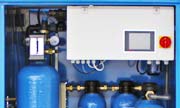
SCM 24
|
|
Cleans 24.000 liters per day
|
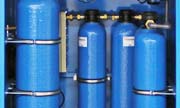
SCM 60
|
|
Cleans 60.000 liters per day
|
Video: How it works
The SCG Advantage
Our market-leading, water cleaning solutions have many advantages. To read more click the items below:
No Chemicals
Our machines and technology does not use any chemicals, at all.
Read more...
No Waste Water
Our machines do not waste any water. Yield = 100%.
Read more...
Low energy use
Uses 50 times less energy than a Reverse Osmosis Machine.
Read more...
Low ownership cost
Lower maintenance and operation costs due to our technology.
Read more...
Easy to install
Simple "plug and play" installation makes for easy deployment.
Read more...
Extremely compact
A compact system, contained in an easy to transport cabinet.
Read more...
Outperforms R.O.
SCG technologies outperform Reverse Osmosis systems.
Read more...
Faster ROI
Get a faster Return on Investment with our systems.
Read more...
Latest News
Latest Blog Posts
| Chemicals in water treatment? |
| Water storage - Whats best for keeping water clean and drinkable? |
| Case: Disaster Management Water Treatment |
Contact SCG
891 Showroom Place
Suite 101
Chula Vista, CA, 91914
Phone: +1 619-878-2730
Contact us by email