







How pH Shapes Catalytic Media Performance In Iron Removal
Iron is one of the most common groundwater problems in Australia. Bore water may look clear when pumped, then develop orange staining, metallic taste and sediment after standing. These effects can damage laundry, plumbing fixtures, irrigation equipment and treatment systems, even when iron is not considered a direct health hazard at typical concentrations.
Catalytic media provide a practical method for removing dissolved ferrous iron without continuous chemical dosing. Their coated surfaces accelerate oxidation and encourage iron hydroxide particles to form, after which the solids are trapped and removed during backwashing. pH is central to this process because it affects oxidation speed, precipitation, surface charge and the usable life of the filter bed.
A system that performs well in one bore may underperform in another with the same iron concentration. Alkalinity, dissolved oxygen, manganese, tannins, ammonia, salinity and water temperature all influence the result. The correct operating range therefore has to be established from water analysis and pilot testing rather than selected from iron concentration alone.
For Australian households, farms and small utilities, this matters because groundwater chemistry can change substantially between regions. A rural bore in Queensland, a supply near Perth or a production well in regional Victoria may require different media depth, flow rate and pH control. The treatment objective should also align with the Australian Drinking Water Guidelines and any applicable state requirements.
| Operating condition | Typical effect on catalytic iron removal | Design implication |
|---|---|---|
| Low pH | Slower iron oxidation and weaker precipitation | Consider aeration, alkalinity adjustment or longer contact time |
| Near-neutral pH | Often favourable for coated catalytic media | Confirm performance with site-specific testing |
| Moderately alkaline pH | Faster oxidation and stronger floc formation | Check manganese, scaling and media compatibility |
| Excessively high pH | Greater scaling risk and possible fouling | Control alkalinity and monitor backwash quality |
| Low dissolved oxygen | Limits conversion of ferrous iron | Add aeration or another oxygen-transfer stage |
| High organic matter | Can coat media and interfere with oxidation | Include pretreatment or more frequent cleaning |
How Catalytic Iron Removal Works
Groundwater iron usually enters a treatment plant as soluble ferrous iron, Fe²⁺. In this form it can pass through ordinary sediment filters because the particles are too small to capture. When oxygen is available, ferrous iron is converted into ferric iron, Fe³⁺, which hydrolyses and forms insoluble iron hydroxide. The resulting floc can be retained by a properly sized media bed.
Catalytic media speed up this reaction by offering an active surface for oxidation and precipitation. Manganese dioxide-coated products are common, while other media use mineral, ceramic or proprietary catalytic coatings. The media does not simply act as a passive sieve; its surface chemistry helps transform dissolved contaminants into filterable solids.
Backwashing is essential. Accumulated iron hydroxide increases head loss, reduces available surface area and can eventually cement particles together. A correctly designed backwash expands the bed enough to release trapped solids without carrying valuable media to drain. In sites where water recovery is important, the backwash stream should be managed in line with local discharge conditions.
Why pH Changes Media Performance
At low pH, the oxidation of ferrous iron by dissolved oxygen is relatively slow. Iron may remain soluble for longer, allowing it to move deeper into the bed or pass through the outlet. Acidic conditions can also alter the charge and activity of the catalytic coating, reducing the rate at which iron hydroxide nuclei form.
As pH approaches neutral and rises moderately above it, iron oxidation and precipitation generally become easier. The exact optimum depends on the media formulation and the presence of manganese or other contaminants. A small pH increase can therefore improve treated-water quality, but automatically raising pH is not always the best answer.
High pH introduces different risks. Calcium carbonate scale may form on valves, pipework and media grains, while manganese behaviour may require a higher operating range than iron alone. Excess alkalinity can also increase cleaning requirements. The useful target is the lowest stable pH that gives reliable iron conversion, acceptable manganese performance and manageable scaling.
Choosing A Practical Operating Range
Many iron filters operate effectively in a near-neutral to mildly alkaline range, but a generic target should never replace testing. A water sample should be analysed at the borehead for pH, total iron, ferrous iron, manganese, alkalinity, hardness, turbidity, dissolved oxygen, conductivity and organic colour. Testing after aeration can reveal whether the chemistry changes before the water reaches the media.
Where pH is too low, aeration may provide a better correction than chemical addition. Aeration strips carbon dioxide, increases dissolved oxygen and can raise pH modestly. It may be achieved with an air-injection system, cascade, venturi, tray aerator or contact tank. The best option depends on flow, available space, pressure requirements and the level of carbon dioxide in the raw water.
If additional adjustment is necessary, treatment designers may use calcite, soda ash or caustic dosing. Chemical systems add complexity and require safe storage, calibration and monitoring, so they should be used only when passive correction cannot provide a stable result. In some Australian rural applications, a properly sized aeration and contact stage can avoid regular chemical handling.
Testing Water Before Selecting Media
Bench tests and pilot columns are valuable because iron removal depends on reaction kinetics as well as concentration. A test can compare media types at different pH values, empty-bed contact times and filtration rates. It can also show whether the bed needs an oxidising stage, whether manganese competes with iron, and how often backwashing will be required.
Testing should include both fresh and stored samples where possible. Groundwater can lose carbon dioxide, absorb oxygen and change pH after collection, producing a misleading result. Sampling from the actual bore discharge and recording temperature, pumping conditions and storage time gives a more realistic basis for design.
Catalytic media should also be distinguished from technologies designed for other contaminants. For example, chromium treatment guidance may involve different oxidation-reduction requirements and contact conditions. Iron removal cannot be used as a substitute for treatment validation when hexavalent chromium, arsenic or other regulated contaminants are present.
Managing Alkalinity And Contact Time
pH is closely linked with alkalinity, which determines how strongly water resists change. Two bores can show the same pH at sampling but behave differently during aeration or chemical dosing because their alkalinity levels differ. A low-alkalinity supply may experience rapid pH movement, while a highly buffered supply may need more intensive correction.
Empty-bed contact time gives the iron oxidation and precipitation reactions enough opportunity to occur. High service velocities reduce contact time and can cause iron breakthrough, especially when water is cold or dissolved oxygen is limited. The media depth, vessel diameter and flow control should therefore be selected together rather than treating flow rate as a secondary detail.
Backwash water quality is another operating indicator. Iron-coloured discharge is expected, but persistent black deposits, mud balls or poor bed expansion may point to manganese accumulation, organic fouling or inadequate backwash. Operators should record inlet and outlet iron, pressure loss, pH and backwash intervals so gradual performance changes can be identified.
Australian Conditions And Compliance
Bore water is widely used for stock, irrigation, household supply and industrial processes across Australia. In Perth and parts of Western Australia, groundwater chemistry can be influenced by sandy aquifers and seasonal recharge. In Queensland and New South Wales, rural bores may encounter iron together with manganese, hardness or naturally acidic water. These differences make imported settings and unverified “standard” flow rates unreliable.
For drinking-water projects, the treated supply should be assessed against the Australian Drinking Water Guidelines, including aesthetic values for iron, manganese, taste, colour and turbidity. A guideline is not automatically a state law, but public supplies, regulated schemes and building projects may have additional obligations. Equipment, plumbing components and installation practices may also need to meet relevant Australian standards and WaterMark requirements.
Local habits affect design as well. Many Australian households use rainwater tanks alongside bore or mains water, while farms may operate treatment intermittently during dry periods. A system that sits idle for weeks needs a recommissioning and flushing procedure. In remote or mining locations, limited service access makes automatic monitoring, robust valves and conservative loading rates especially valuable.
Iron treatment should also be separated from nitrate treatment because the mechanisms differ. Nitrate is dissolved and cannot simply be captured by an iron filter; nitrate removal options may involve biological treatment, reverse osmosis or another dedicated process. A complete water analysis prevents one contaminant from being mistaken for another.
Designing Reliable Full-Scale Treatment
A dependable installation often combines screening, aeration, a contact vessel, catalytic media filtration and automatic backwashing. Where turbidity or organic matter is high, pretreatment may protect the catalytic surface. Where manganese is present, the selected pH and oxidation conditions should be verified separately because manganese removal can require more demanding conditions than iron removal.
Instrumentation improves control. A pH probe before the media, pressure gauges across the vessel and periodic iron testing at the outlet provide useful operating information. Larger sites may add flow meters, dissolved oxygen measurement and remote alarms. These controls are relevant for municipal systems, livestock operations, food processing, swimming pools and mobile treatment units, where a missed fault can affect many users.
The final design should specify raw-water limits, service flow, contact time, media depth, backwash rate, pH range and sampling frequency. It should also state what happens when the bore chemistry changes. With those parameters documented, pH becomes a manageable operating variable rather than an unexplained source of iron breakthrough.
For a site-specific assessment, Swiss Cleanwater Group can help interpret water analysis, compare catalytic media and define a treatment train suited to Australian operating conditions. Arrange a raw-water review and request a practical design basis before purchasing equipment, so the selected system delivers clear, stable water over its expected service life.
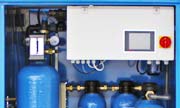
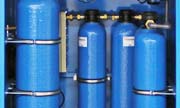
SCM 24
|
|
Cleans 24.000 liters per day
|
SCM 60
|
|
Cleans 60.000 liters per day
|
Video: How it works
The SCG Advantage
Our market-leading, water cleaning solutions have many advantages. To read more click the items below:
No Chemicals
Our machines and technology does not use any chemicals, at all.
Read more...
No Waste Water
Our machines do not waste any water. Yield = 100%.
Read more...
Low energy use
Uses 50 times less energy than a Reverse Osmosis Machine.
Read more...
Low ownership cost
Lower maintenance and operation costs due to our technology.
Read more...
Easy to install
Simple "plug and play" installation makes for easy deployment.
Read more...
Extremely compact
A compact system, contained in an easy to transport cabinet.
Read more...
Outperforms R.O.
SCG technologies outperform Reverse Osmosis systems.
Read more...
Faster ROI
Get a faster Return on Investment with our systems.
Read more...
Latest News
Latest Blog Posts
| Chemicals in water treatment? |
| Water storage - Whats best for keeping water clean and drinkable? |
| Case: Disaster Management Water Treatment |
Contact SCG
891 Showroom Place
Suite 101
Chula Vista, CA, 91914
Phone: +1 619-878-2730
Contact us by email