








How Filtration Velocity Prevents Media Channeling
Filtration velocity is one of the most important hydraulic variables in a granular water-treatment system. It describes how quickly water moves through the available filter area, usually expressed as a flow rate per unit of surface area. When this rate is well matched to the media, water spreads evenly through the bed and contaminants encounter sufficient contact time and surface area for removal.
When velocity becomes excessive, water may seek the path of least resistance. Instead of passing uniformly through the full depth of the media, it can form narrow, high-flow pathways known as channels. These pathways reduce effective treatment volume, allow contaminants to pass through prematurely, and can make a filter appear functional while its actual performance is deteriorating.
Channeling is especially important in chemical-free filtration, where treatment depends on carefully selected media, biological activity, adsorption, oxidation, or mechanical retention. Stable hydraulic conditions help preserve these processes without adding unnecessary chemicals, producing waste, or consuming excessive energy.
What Filtration Velocity Means In Practice
The basic relationship is simple: filtration velocity equals flow divided by the filter’s effective surface area. A larger filter receiving the same flow will operate at a lower velocity, while a smaller filter will experience a higher hydraulic loading rate. This calculation is only a starting point because media depth, grain size, bed porosity, water temperature, and contaminant concentration also influence performance.
A filter can have an acceptable average velocity while still developing local high-flow zones. Uneven distribution at the inlet, poor leveling, cracks in the media, settled sections, or an underdrain defect can concentrate flow in one area. For this reason, design assessments should examine both the calculated average velocity and the distribution of water across the entire bed.
Low velocity is not automatically ideal. If the rate is too low, suspended solids may settle near the surface, biological activity may change, and the system may require a larger footprint than necessary. The objective is a stable operating range that supports uniform flow, sufficient contact time, and practical throughput.
Why High Velocity Promotes Channeling
High filtration velocity increases the pressure drop through the bed and raises the chance that water will exploit small differences in resistance. A slightly coarser patch, a void caused by media movement, or an incompletely filled section can become a preferred route. As more water uses that route, the pathway becomes even more hydraulically attractive, creating a self-reinforcing cycle.
Channeling can also develop during rapid start-up, sudden flow increases, or poorly controlled backwash transitions. A disturbed bed may contain uneven layers or open spaces that are not visible from the outside. If the filter is returned to service before the media settles evenly, water can bypass large portions of the treatment depth.
The consequences vary by application. A drinking-water plant may see elevated arsenic, manganese, uranium, pesticide, or microbial breakthrough. An agricultural installation may deliver inconsistent water quality to livestock or irrigation systems. In industrial or swimming-pool applications, channeling can increase operating costs and shorten the interval between maintenance events.
Media Characteristics And Hydraulic Resistance
Media size and shape directly affect resistance to flow. Fine media generally provide more surface area and smaller passages, which can improve removal of certain contaminants but may produce a greater pressure drop. Coarser media allow water to pass more easily, yet they may offer less mechanical filtration and can be more vulnerable to localized bypass when distribution is poor.
Layered beds require particular care. Each layer should remain in its intended position during normal operation and backwashing. Excessive velocity can disturb the interface between layers, while insufficient backwash expansion can leave deposits and compacted zones behind. Either condition can create nonuniform resistance and encourage channels.
The media must also be compatible with the target contaminant and water chemistry. A system designed for manganese or arsenic removal may rely on a specialized catalytic or reactive surface, while another installation may focus on bacteria, pesticides, or uranium. Hydraulic design should therefore be evaluated alongside the treatment mechanism rather than treated as a separate calculation.
Flow Distribution From Inlet To Underdrain
Uniform distribution begins before water reaches the media surface. Inlet pipes, spray systems, weirs, diffusers, and distribution chambers should introduce water without creating concentrated jets. A high-energy inlet can scour the surface, shift media, and establish a channel before filtration has properly begun.
The underdrain is equally important. It must collect treated water evenly while retaining the media and avoiding areas of excessive suction. A damaged screen, blocked nozzle, or poorly designed collection system can draw more flow through one region than another. Inspection of the underdrain should therefore be part of troubleshooting whenever water quality changes without an obvious increase in total flow.
Gravity-fed installations illustrate how controlled hydraulic loading can support simple, resilient treatment. The advantages of gravity-fed filtration include reduced dependence on pumps and a more gradual flow profile in suitable off-grid settings. However, gravity does not guarantee even distribution; elevation changes, pipe restrictions, and fluctuating source levels still need to be accounted for.
Operating Conditions That Change Velocity
Flow demand rarely stays constant. A municipality may experience morning and evening peaks, a farm may draw water according to livestock needs, and an industrial facility may alter production schedules. If the filter is sized for an average rather than a peak flow, its actual velocity may rise beyond the stable operating range during short but consequential periods.
Temperature also changes water viscosity. Cold water flows with greater resistance, increasing pressure loss through the bed at the same nominal flow rate. Seasonal changes can therefore alter the relationship between pump output, pressure drop, and effective filtration conditions. The impact of temperature is particularly relevant for systems that depend on biological or surface reactions as well as hydraulic contact.
Water quality can shift the bed over time. Suspended solids may accumulate near the top, biological growth may increase resistance, and precipitated metals may fill pore spaces. As resistance rises, the system may require cleaning or backwashing even if the flow setting has not changed. Monitoring pressure loss alongside treated-water quality provides a clearer picture than either measurement alone.
| Operating condition | Likely effect on the bed | Channeling risk | Useful control |
|---|---|---|---|
| Excessive design velocity | High pressure drop and preferential flow paths | High | Increase area, reduce flow, or use staged filtration |
| Stable moderate velocity | Even contact with the media | Low | Maintain distribution and monitor pressure loss |
| Sudden flow increase | Bed disturbance and localized bypass | High | Use ramped start-up and flow control |
| Very low velocity | Surface settling and uneven loading | Moderate | Confirm residence-time needs and prevent dead zones |
| Uneven inlet distribution | Jets, scour, and overloaded sections | High | Inspect diffusers, weirs, and inlet geometry |
| Cold water with unchanged flow | Greater hydraulic resistance | Moderate to high | Recheck seasonal operating limits |
| Fouled or compacted media | Reduced permeability and diverted flow | High | Backwash, clean, or replace media as required |
Monitoring Signals Before Breakthrough
A reliable monitoring program combines flow, pressure, and water-quality data. Flow meters show whether the filter is operating within its intended hydraulic range. Pressure gauges before and after the bed reveal rising resistance, while differential pressure indicates how much energy is required to move water through the media.
Turbidity or contaminant measurements at the outlet provide the most direct evidence of treatment performance. A gradual increase may indicate media exhaustion or widespread fouling, whereas a sudden change can point to channeling, a damaged component, or a distribution failure. Sampling at different points, when practical, can help identify whether the issue is occurring near the inlet, within the bed, or at the outlet.
Operators should record trends rather than relying on isolated readings. A filter that delivers acceptable water today may still be developing a structural problem if pressure loss and flow irregularity are increasing. Trend records also help distinguish a velocity problem from changes in raw-water quality, temperature, or media condition.
Design And Operating Practices That Reduce Risk
Preventing channeling begins with sizing the filter for realistic peak conditions and allowing adequate media depth. The design should account for future changes in demand, expected fouling, backwash requirements, and the specific removal objective. A system intended to remove manganese, arsenic, bacteria, pesticides, or uranium may need different hydraulic limits depending on the media and reaction pathway.
The following practices support uniform flow and longer media service life:
- Keep normal and peak filtration velocities within the limits established for the selected media.
- Use inlet and underdrain components that distribute water across the full filter area.
- Increase flow gradually after start-up, backwashing, maintenance, or extended shutdown.
- Track differential pressure, flow rate, temperature, turbidity, and treated-water quality together.
- Inspect for media loss, surface cracks, compaction, fouling, and damaged distribution components.
Backwashing must be matched to the media rather than applied as a generic routine. Too little expansion may leave compacted regions and accumulated solids, while excessive expansion can cause media loss or layer mixing. After backwash, a settling or ripening period may be appropriate before the water is returned to sensitive uses.
A properly controlled velocity protects both treatment quality and resource efficiency. It reduces bypass, avoids unnecessary pumping demand, and helps a chemical-free system use its media capacity more effectively. For installations serving buildings, farms, municipalities, mobile units, or industrial facilities, that consistency can be as important as the contaminant-removal specification itself.
Evaluate the filter’s hydraulic loading, distribution equipment, pressure trends, and seasonal flow conditions as a single system. Swiss Cleanwater Group provides water-treatment technologies and application information for projects ranging from drinking-water supply to livestock, industry, government, and mobile operations. Contact the company to discuss a filtration configuration that keeps water moving evenly through the media and supports dependable clean-water production.
SCM 24

|
|
Cleans 24.000 liters per day
|
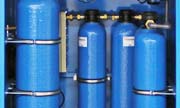
SCM 60
|
|
Cleans 60.000 liters per day
|
Video: How it works

The SCG Advantage
Our market-leading, water cleaning solutions have many advantages. To read more click the items below:
No Chemicals
Our machines and technology does not use any chemicals, at all.
Read more...
No Waste Water
Our machines do not waste any water. Yield = 100%.
Read more...
Low energy use
Uses 50 times less energy than a Reverse Osmosis Machine.
Read more...
Low ownership cost
Lower maintenance and operation costs due to our technology.
Read more...
Easy to install
Simple "plug and play" installation makes for easy deployment.
Read more...
Extremely compact
A compact system, contained in an easy to transport cabinet.
Read more...
Outperforms R.O.
SCG technologies outperform Reverse Osmosis systems.
Read more...
Faster ROI
Get a faster Return on Investment with our systems.
Read more...
Latest News
Latest Blog Posts
| Chemicals in water treatment? |
| Water storage - Whats best for keeping water clean and drinkable? |
| Case: Disaster Management Water Treatment |
Contact SCG
891 Showroom Place
Suite 101
Chula Vista, CA, 91914
Phone: +1 619-878-2730
Contact us by email