








The Role of Pre-Oxidation in Enhancing Catalytic Filtration for Organic Contaminants
Organic contaminants can be difficult to remove because they vary widely in size, charge, solubility, and chemical stability. Pesticides, hydrocarbons, taste and odour compounds, natural organic matter, and industrial residues may pass through a conventional sand filter or compete for the active sites of an adsorptive medium. A well-designed treatment train therefore needs to prepare the water before it reaches the main filtration stage.
Pre-oxidation is one way to change that feedwater. Air, oxygen, ozone, ultraviolet processes, or carefully controlled oxidants can break down selected compounds, alter their surface chemistry, and reduce the load placed on catalytic or adsorptive media. The purpose is not to oxidise everything indiscriminately. It is to make the following filtration step more stable, efficient, and predictable.
For Australian operators, this matters across very different settings: Murray–Darling Basin irrigation schemes, Queensland farming districts, Western Australian borefields, remote communities, mines, livestock properties, and municipal supplies. Each location brings its own water chemistry, energy constraints, approval requirements, and practical realities, so pre-oxidation must be matched to the source rather than treated as a universal add-on.
How Pre-Oxidation Changes Organic Contaminants
Oxidation can attack the chemical bonds within an organic molecule or add oxygen-containing functional groups to its surface. This may convert a large, hydrophobic compound into smaller or more polar products that are easier to capture through catalytic carbon, activated carbon, biological filtration, or another downstream process. In some cases, the reaction also reduces colour, taste, odour, and dissolved organic carbon.
The result depends on the contaminant and the oxidant. Ozone is effective against many reactive organic compounds, while ultraviolet light works best when the target absorbs the correct wavelength and the water has low turbidity. Air or oxygen injection can support oxidation of particular compounds and improve the performance of catalytic media without creating a chemical storage burden. A treatment specialist must assess contact time, pH, alkalinity, temperature, and oxidant demand before selecting a process.
Pre-oxidation can also transform a contaminant into an intermediate that is more difficult to remove. Partial oxidation may create aldehydes, ketones, organic acids, or other biodegradable compounds. This is why oxidation and filtration should be designed as connected stages. A process that looks effective in a jar test may perform differently when seasonal water quality, changing flow rates, or higher natural organic matter are introduced.
Supporting Catalytic Media And Filter Life
Catalytic filtration relies on a reactive surface rather than simple straining. Catalytic carbon, modified mineral media, manganese dioxide-coated materials, and other specialised media can promote oxidation, adsorption, or surface reactions. When pre-oxidation changes the structure of an organic contaminant, the filter may capture it more readily or break it down more consistently.
This preparation can reduce fouling and extend the useful life of the media. Natural organic matter often occupies adsorption sites and forms a coating that limits contact between the target contaminant and the catalytic surface. If pre-treatment reduces that interference, the filter can maintain its capacity for longer. It may also improve the removal of pesticides and taste-and-odour compounds in water affected by agricultural runoff or decaying vegetation.
The improvement is never automatic. Excessive oxidation can consume energy and oxidant without improving removal, while some by-products may compete with the original contaminant for active sites. Backwashing requirements, hydraulic loading, dissolved oxygen, and media regeneration must be included in the design. The broader clean water solutions offered for different applications illustrate why source testing and application-specific equipment selection are central to reliable treatment.
Designing For Australian Water Conditions
Australian source waters can change sharply between wet and dry seasons. A bore near Geraldton may have a different mineral balance from a surface-water intake serving a town along the Murray, while a Queensland cane-growing area may experience pulses of pesticides and dissolved organic matter after intense rainfall. A process calibrated during a mild sampling period can struggle when a storm flushes contaminants from soil, drains, or catchments.
Operators should begin with a proper water profile: organic carbon, turbidity, colour, alkalinity, pH, iron, manganese, ammonia, bromide where relevant, and the specific contaminants of concern. Pilot testing should compare untreated and pre-oxidised water through the proposed catalytic media. It should measure removal over time, not just the first few litres, because early performance can hide rapid exhaustion or fouling.
The Australian Drinking Water Guidelines provide an important reference for potable supplies, but projects may also involve state-based approvals, local health requirements, environmental licences, or customer specifications. Councils and utilities generally need evidence that a process will remain safe during source-water variation. In remote Northern Territory or Far North Queensland locations, the practical design may need low chemical dependence, straightforward maintenance, robust monitoring, and spare parts that can be transported without a long wait.
Power availability also shapes the answer. A small livestock operation or outback community may value air-driven oxidation and gravity-assisted filtration, while a large industrial site may have the infrastructure for ozone generation, ultraviolet reactors, and automated controls. The best system balances contaminant destruction, filter performance, energy consumption, operator skill, and whole-of-life cost.
Managing By-Products And Competing Contaminants
Pre-oxidation should be assessed for its complete reaction pathway. Treating water with ozone in the presence of bromide can create bromate, a regulated concern in drinking-water applications. Oxidation of natural organic matter may form assimilable organic carbon or other biodegradable compounds that support regrowth if the downstream process is poorly controlled. Ultraviolet systems can also lose effectiveness when colour and turbidity shield the target compounds.
This is where monitoring becomes part of the treatment process. Oxidant residual, oxidation-reduction potential, ultraviolet transmittance, dissolved organic carbon, turbidity, and selected by-products can show whether the process is operating within its intended window. Online sensors may be appropriate for a municipal plant, while scheduled laboratory testing and simple field checks may suit a farm, building, or mobile unit.
Pre-oxidation can also improve the removal of inorganic contaminants, although the mechanism is different. Oxidising arsenic from arsenite to arsenate, for example, can make it easier for an iron-based or adsorption medium to capture. Similar principles apply to iron and manganese, which may be converted into filterable forms. A Bangladesh groundwater case study demonstrates the importance of matching treatment technology to the chemistry of a specific source rather than relying on a generic filtration claim.
Integrating The Process Into A Treatment Train
A practical arrangement may include screening, equalisation, pre-oxidation, contact time, catalytic filtration, polishing, and disinfection. The order matters. Removing suspended solids before an ultraviolet or ozone stage can improve transfer and penetration. Allowing enough reaction time before catalytic filtration can prevent the main filter from becoming an unintended reaction chamber with unstable performance.
Where pesticide or nitrate contamination occurs together, separate treatment functions may be required. Oxidation is not a universal solution for nitrate, and a catalytic filter should not be expected to remove every dissolved contaminant. Ion exchange, biological treatment, activated carbon, membrane systems, or blended approaches may be more suitable for particular compounds. Guidance on nitrate pollution shows why contaminant-specific selection is essential in farming communities.
Automation can help maintain consistent results as flow and water quality change. A variable-speed pump, flow meter, pressure sensors, and alarms for filter blockage can protect the media and reduce unnecessary backwashing. For a council plant, trend data supports compliance reporting and maintenance planning. For a station or small business, the same principle may be delivered through simpler controls, clear sampling points, and an operating routine that staff can follow without specialist chemistry training.
The strongest designs treat pre-oxidation as a controlled preparation step, not as a substitute for filtration. They define the target contaminant, verify the reaction products, protect the catalytic medium, and provide a safe response when feedwater quality shifts. This approach is particularly valuable in Australia, where long distances, seasonal extremes, and widely dispersed water users make dependable low-waste treatment a commercial and public-health priority.
Swiss Cleanwater Group can help assess the relationship between source-water chemistry, oxidation, catalytic filtration, and downstream polishing. Contact the company to discuss a site-specific treatment pathway for a council supply, farm, industrial plant, remote community, livestock operation, or mobile application, and move from laboratory assumptions to a practical clean-water system.
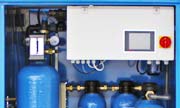
SCM 24
|
|
Cleans 24.000 liters per day
|
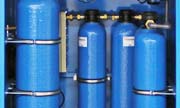
SCM 60
|
|
Cleans 60.000 liters per day
|
Video: How it works
The SCG Advantage
Our market-leading, water cleaning solutions have many advantages. To read more click the items below:
No Chemicals
Our machines and technology does not use any chemicals, at all.
Read more...
No Waste Water
Our machines do not waste any water. Yield = 100%.
Read more...
Low energy use
Uses 50 times less energy than a Reverse Osmosis Machine.
Read more...
Low ownership cost
Lower maintenance and operation costs due to our technology.
Read more...
Easy to install
Simple "plug and play" installation makes for easy deployment.
Read more...
Extremely compact
A compact system, contained in an easy to transport cabinet.
Read more...
Outperforms R.O.
SCG technologies outperform Reverse Osmosis systems.
Read more...
Faster ROI
Get a faster Return on Investment with our systems.
Read more...
Latest News
Latest Blog Posts
| Chemicals in water treatment? |
| Water storage - Whats best for keeping water clean and drinkable? |
| Case: Disaster Management Water Treatment |
Contact SCG
891 Showroom Place
Suite 101
Chula Vista, CA, 91914
Phone: +1 619-878-2730
Contact us by email