







Controlling Ammonia in Fish Hatchery Water Without Chemicals
Fish hatcheries depend on stable water quality from egg incubation through juvenile release. Ammonia is one of the most important risks because it is produced continuously by fish metabolism, uneaten feed and decomposing organic matter. At elevated levels, it can damage gill tissue, reduce growth and increase susceptibility to disease.
Chemical treatments may provide a rapid response, but they can create handling risks, alter water chemistry or leave unwanted residues. A better long-term approach is to prevent ammonia accumulation through biological filtration, oxygen management, solids removal and carefully selected water treatment equipment.
This approach suits Australian hatcheries operating in very different conditions, from cool Tasmanian facilities to warm Queensland farms and remote operations where chemical deliveries are expensive. It can also support recirculating aquaculture systems that need to reuse water efficiently.
The objective is not simply to detect ammonia after it becomes dangerous. Effective hatchery water management keeps the nitrogen cycle working, limits the creation of toxic ammonia and provides enough treatment capacity for seasonal changes in stock numbers and feeding rates.
Why Ammonia Is Dangerous for Hatchery Fish
Fish excrete nitrogen mainly through their gills as ammonia. Additional ammonia enters the water when feed is wasted, solids break down or dead organisms remain in tanks and filters. In water, total ammonia nitrogen consists of ionised ammonium and unionised ammonia. The unionised form is considerably more toxic to fish.
Toxicity depends on pH and temperature as well as the total ammonia reading. As pH or temperature rises, a greater proportion of total ammonia becomes unionised. This matters in warm Australian conditions, where a system that appears safe during a cool morning may become hazardous during an afternoon heat event.
Ammonia irritates gills and interferes with oxygen uptake. Fish may gather near inflows, gasp at the surface, lose appetite or show poor swimming performance. Eggs and larvae are particularly vulnerable because their tolerance is low and their small systems can change rapidly.
Build Around Biological Nitrification
A mature biofilter uses naturally occurring bacteria to convert ammonia into nitrite and then nitrate. This process, called nitrification, is the central method for controlling ammonia without chemical dosing. The bacteria need a large protected surface, continuous oxygen and a stable flow of water.
Moving-bed biofilters, submerged media filters and trickling filters can all support nitrifying communities. The correct choice depends on tank volume, stocking density, available space, water temperature and whether the hatchery operates as a flow-through or recirculating system.
A new filter cannot be treated as fully operational immediately. It needs a conditioning period, careful monitoring and a gradual increase in biological load. Adding too many fish before the bacterial population is established can cause an ammonia or nitrite spike. During commissioning, ammonia, nitrite, pH, alkalinity, temperature and dissolved oxygen should be tested frequently.
Nitrifying bacteria consume oxygen and alkalinity. If alkalinity becomes depleted, pH can fall and bacterial activity can slow sharply. Maintaining suitable buffering capacity is therefore part of ammonia management, even when the hatchery avoids chemical treatment.
Remove Solids Before They Become Ammonia
Mechanical filtration reduces the material that would otherwise decompose in tanks and pipework. Drum filters, settlement units, screens and properly designed sediment traps can remove faeces, uneaten feed and other suspended solids before they enter the biofilter.
This separation improves biological performance because the nitrifying media is less likely to become clogged with organic matter. It also lowers oxygen demand and makes backwashing or filter maintenance more predictable. Solids should be removed promptly rather than stored in warm, oxygen-poor water where ammonia generation accelerates.
Hydraulic design is just as important as filter selection. Dead zones, undersized pipework and uneven flow can leave parts of a hatchery untreated. Water should pass through mechanical and biological stages at a rate that supports adequate contact time without stripping beneficial bacteria from the media.
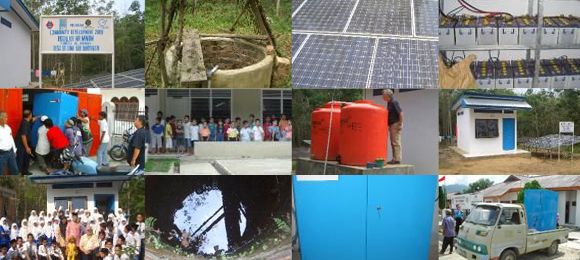
For hatcheries using groundwater or surface water, pre-treatment may also be needed to remove iron, manganese, sediment or other contaminants that interfere with pumps and filters. A chemical-free process example illustrates how carefully selected treatment can reduce reliance on additives in water-intensive operations.
Manage Oxygen, Flow and Temperature
Dissolved oxygen supports both fish and nitrifying bacteria. Aeration in culture tanks, oxygenation before the biofilter and good circulation through treatment units can prevent oxygen depletion. Monitoring should take place at several points because the reading in a tank may not represent the water leaving a heavily loaded filter.
Temperature affects metabolism and bacterial activity. Warm water usually increases fish feeding and ammonia production, while sudden temperature changes can stress the biofilter. In Queensland and northern New South Wales, shading, insulation and heat management may be essential during summer. In cooler Tasmanian facilities, the bacterial cycle may operate more slowly and require additional treatment capacity.
Flow should be sized for peak conditions rather than average production. A hatchery may stock more juveniles during a particular season or hold fish temporarily before transport. Designing only for normal daily load can produce failures during these short but critical periods.
Backup aeration and emergency circulation are also valuable. Power interruptions, pump faults and blocked screens can quickly turn a controlled nitrogen cycle into a serious fish-health event. Automatic alarms for dissolved oxygen, water level, pump status and ammonia provide an early warning before staff see visible distress.
Keep pH and Alkalinity Within Range
pH is closely connected to ammonia toxicity and biofilter performance. Higher pH increases the fraction of unionised ammonia, while lower pH can inhibit nitrifying bacteria when it falls outside their effective operating range. The right target depends on species, source water and the wider hatchery process.
Daily pH swings can be caused by photosynthesis, respiration, rainfall, groundwater characteristics or the acid-producing activity of nitrifying bacteria. Testing pH at consistent times helps identify these patterns. Alkalinity testing shows whether the water has enough buffering capacity to resist sudden changes.
The relationship between pH and contaminant behaviour is important in wider treatment design, as explained in this discussion of pH and contaminant removal. For a hatchery, pH data should be assessed alongside temperature and total ammonia rather than viewed as an isolated number.
Chemical-free operation does not mean ignoring water chemistry. It means designing treatment so that biological and physical processes do the main work, with source-water selection, aeration, dilution and controlled flow used wherever practical. If correction is required, it should be based on measured conditions and fish welfare requirements.
Choose Source Water Treatment Carefully
Source water can introduce contaminants that stress fish or reduce treatment efficiency. Surface water may carry pesticides, pathogens, organic matter and fine sediment, while groundwater can contain dissolved iron, manganese or, in some regions, naturally occurring arsenic or uranium. Treatment should begin with a source-water assessment rather than a standard equipment package.
Ultraviolet treatment can reduce viable microorganisms, but it does not remove ammonia. Membrane systems, oxidation, adsorption and other processes have different strengths and operating requirements. A hatchery may need a combination of pre-filtration, disinfection and biological treatment, with each stage protecting the next.
Australian operations should also consider seasonal changes. Heavy rain can alter turbidity and organic load in catchments, while drought can concentrate some dissolved contaminants. Hatcheries drawing from the Murray–Darling Basin, coastal aquifers or small regional supplies may face very different water chemistry from facilities using treated mains water.
Water reuse can reduce pressure on local supplies, which is valuable in drought-prone areas and remote communities. However, a recirculating system needs enough treatment capacity to control ammonia, nitrite, carbon dioxide, suspended solids and pathogens at the same time. Reuse without adequate monitoring simply concentrates risk.
Monitor Performance Before Fish Show Stress
A practical monitoring programme measures total ammonia nitrogen, nitrite, nitrate, pH, temperature, dissolved oxygen and alkalinity. Readings should be taken from culture tanks, biofilter outlets and incoming source water. Tracking trends is more useful than relying on occasional tests because gradual changes often reveal declining filter performance.
Ammonia results should be interpreted using temperature and pH. A total ammonia value that appears acceptable may represent a higher toxic fraction in warm, alkaline water. Hatchery staff need clear trigger points for reducing feed, increasing aeration, checking solids removal or diverting water through additional treatment.
Feed management is a direct control measure. Overfeeding increases waste and places unnecessary demand on the biofilter. Adjusting feed to biomass, water temperature and observed consumption can lower ammonia production without affecting growth. Regular grading and stocking reviews also prevent sudden increases in biological load.
Records help identify recurring problems, such as a pH decline after filter cleaning or ammonia peaks following a weekend feeding schedule. For commercial farms and government-supported projects, reliable records also support environmental reporting and demonstrate that discharge water is being managed responsibly under applicable state requirements.
Design for Australian Hatchery Conditions
A robust system should reflect local climate, power reliability, water availability and staffing. A small regional hatchery may need simple, low-maintenance filtration and remote alarms, while a large aquaculture business may require automated solids removal, oxygen control and detailed data logging. Mobile and emergency hatchery units need compact equipment that can be commissioned quickly.
In Australia, approvals and discharge expectations vary between states and territories. A facility in Western Australia may work with different local conditions from one near the Great Barrier Reef catchments in Queensland. Water treatment design should account for source protection, fish-health biosecurity, discharge limits and the requirements of the relevant environmental and aquaculture authorities.
The safest chemical-free strategy combines source-water treatment, rapid solids removal, a correctly sized biofilter, strong aeration and continuous observation. No single unit can replace the full nitrogen-management process. Equipment suppliers should be asked to assess actual flow, biomass, feed load, water temperature and expected expansion.
Swiss Cleanwater Group can help organisations evaluate water treatment options for hatcheries, farms, municipalities and industrial sites. Contact the team to discuss source-water testing, ammonia-control requirements and a treatment configuration suited to the site, species and operating conditions.
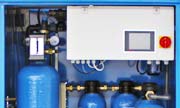
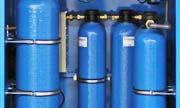
SCM 24
|
|
Cleans 24.000 liters per day
|
SCM 60
|
|
Cleans 60.000 liters per day
|
Video: How it works
The SCG Advantage
Our market-leading, water cleaning solutions have many advantages. To read more click the items below:
No Chemicals
Our machines and technology does not use any chemicals, at all.
Read more...
No Waste Water
Our machines do not waste any water. Yield = 100%.
Read more...
Low energy use
Uses 50 times less energy than a Reverse Osmosis Machine.
Read more...
Low ownership cost
Lower maintenance and operation costs due to our technology.
Read more...
Easy to install
Simple "plug and play" installation makes for easy deployment.
Read more...
Extremely compact
A compact system, contained in an easy to transport cabinet.
Read more...
Outperforms R.O.
SCG technologies outperform Reverse Osmosis systems.
Read more...
Faster ROI
Get a faster Return on Investment with our systems.
Read more...
Latest News
Latest Blog Posts
| Chemicals in water treatment? |
| Water storage - Whats best for keeping water clean and drinkable? |
| Case: Disaster Management Water Treatment |
Contact SCG
891 Showroom Place
Suite 101
Chula Vista, CA, 91914
Phone: +1 619-878-2730
Contact us by email