


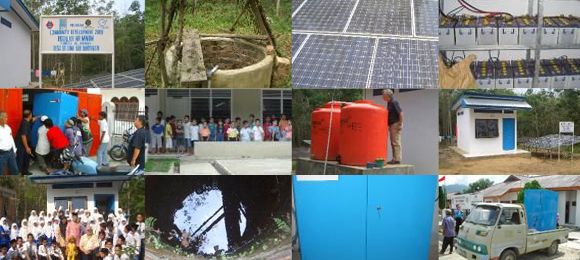







Chemical-free dialysis water filtration at a Swiss hospital
A hospital in Switzerland has successfully implemented chemical-free filtration for dialysis water. The requirement was unusually precise: every drop entering a dialysis machine had to support a reliable clinical process, while the hospital also wanted to reduce chemical handling and associated waste. Swiss Cleanwater Group treated it as an engineered water system, not a single filter beside the dialysis unit.
Dialysis machines pass large volumes of water through semipermeable membranes during treatment. A trace contaminant that would be unimportant in general drinking water can matter at the point of use. Hospitals need predictable quality, not simply water that meets a potable standard on the day it enters the building. Source analysis, barrier selection, monitoring, alarms and maintenance therefore form one continuous safety case.
Swiss Cleanwater Group’s systems target contaminants such as manganese, arsenic, bacteria, pesticides and uranium without adding treatment chemicals, producing chemical sludge or imposing excessive energy demand. “Chemical-free” describes the treatment stage; it does not mean the water is untested, sterile or suitable for dialysis without clinical validation.
For Australian readers, the case is relevant because dialysis care occurs in metropolitan hospitals, regional centres and remote services. Alice Springs, Broome and Mount Isa can deal with bore-derived supplies, variable salinity, long transport routes and demanding maintenance conditions. A local installation still needs the same rigorous commissioning, quality records and fallback planning found in a Swiss hospital.
Why dialysis water needs a higher standard
Dialysis water is judged by more than whether it is safe to drink. Treatment exposes patients to a large water volume through the dialyser, so trace metals, microorganisms and other contaminants require tightly controlled limits. The relevant risk can arise from the incoming supply, a treatment stage, storage, distribution pipes or the point where water enters the machine.
A compliant result also depends on consistency. One satisfactory sample does not show how a system behaves after a storm, a water-main works, a dry period or a demand increase. For a hospital, that means scheduled testing, defined alert and action limits, hygienic maintenance, trained operators and a plan for interruptions. Chemical-free filtration can support this process, but it cannot replace validation or routine surveillance.
The Swiss hospital treatment challenge
The hospital’s challenge combined clinical continuity with responsible use of resources. A treatment interruption can affect several machines at once, while routine chemicals create storage, dosing, worker-safety and disposal responsibilities. The Swiss Cleanwater Group approach was to configure filtration around the actual water profile and the hospital’s flow demand, with an energy-conscious design that avoids chemical dosing.
A suitable project starts by mapping contaminants and failure risks rather than applying a universal cartridge. Manganese and arsenic require different barriers; bacterial control also depends on the complete treatment and hygienic distribution system. The design should show which stage removes each target, how fouling will be detected and what happens when a quality or pressure reading falls outside its limit.
A useful parallel is greenhouse nutrient imbalance, where unwanted ions in irrigation water can upset crop nutrition even when the water looks clear. Both settings show why appearance is weak evidence: measured chemistry, predictable treatment and a controlled response to change matter more than a general promise of “clean” water.
Designing barriers around the real water profile
The treatment train should connect pretreatment, contaminant removal, any necessary polishing and the hospital loop. Each barrier needs a purpose, an expected pressure loss and a condition for maintenance or replacement. This clarity helps technicians distinguish normal filter ageing from an upstream water change or a failing barrier.
Extended sampling is especially important where source water varies. Tests should cover raw water, treated water at representative outlets and the point of use, while operational trends record flow, pressure and alarm history. Where a hospital requires reverse osmosis or another final dialysis-specific barrier, it should be included in the validated train rather than assumed to be unnecessary because the upstream filters are chemical-free.
Microbiological assurance remains a shared responsibility. A barrier selected for trace contaminants may not provide every control needed for the whole hospital loop, and physical treatment does not remove the need for hygienic design, sanitation or skilled operators. The Swiss case is strongest when its system boundary is defined clearly and acceptance testing confirms the intended water quality.
What the operating model changes
A chemical-free train moves much of the operator’s attention from reagent dosing to equipment condition and water quality. Flow trends, differential pressure, scheduled inspections and laboratory results become central. For hospital teams, that can mean less routine chemical procurement, fewer chemical-storage controls and no coagulant sludge generated by the chemical-free stages.
Savings and resilience should still be measured rather than assumed. Pumping, pressure, flow, membrane performance and maintenance all affect whole-of-life cost, while interruptions carry costs beyond the filter itself. The Swiss case provides a sound basis for comparison, but site power data, consumption records and acceptance results should support any quantitative business case in Australia.
Lessons for Australian hospitals
Australian conditions make source-specific design essential. Regional hospitals may receive water from a municipal scheme, a hospital bore or a mixed supply, and terms such as “water plant” and “bore” are common on operating sites. In northern and inland Australia, salinity, iron, manganese or arsenic can vary with rainfall and source cycles. A system accepted in one season needs testing across a representative operating year.
The market also shapes delivery. Public hospitals commonly sit within state or territory health services and major capital programs, while private operators may procure through approved supplier panels. Tender teams usually examine lifecycle cost, local service capability, spares, operator training and downtime exposure alongside purchase price. That makes maintainability and transparent performance data as important as the treatment claim itself.
Compliance work should align incoming and finished-water testing with the Australian Drinking Water Guidelines, the dialysis-water standard adopted by the service, manufacturer instructions, and state or territory healthcare and building requirements. TGA requirements may also apply to connected devices, but they do not replace the facility’s water-quality duties. The same whole-system discipline appears in industrial water reuse: a recovered stream is useful only when its chemistry, treatment, energy demand and end use are fully defined.
Weighing chemical-free and conventional options
Neither label is a complete plant design. Chemical-assisted clarification can be effective for variable turbidity or organic material, while reverse osmosis does not inherently require treatment chemicals and may form part of a hybrid train. Hospitals should compare each option by source-water fit, validated output, operator workload, waste, energy and failure response.
| Decision point | Chemical-free filtration | Chemical-assisted clarification |
|---|---|---|
| Treatment logic | Physically removes or captures targeted contaminants in validated barriers. | Uses coagulants, oxidants or other reagents to transfer contaminants into manageable fractions. |
| Operator workload | Little chemical dosing; monitoring centres on flow, pressure, differential pressure and water quality. | Adds pH, dose, turbidity, contact-time and residual-control duties. |
| Waste stream | Backwash or spent media depends on the design; chemical sludge is avoided. | Settled or precipitated solids normally require a managed disposal route. |
| Energy and footprint | Optimised flow can limit demand, although pumping and any reverse osmosis still use power. | Mixing, pumping, chemical production and sludge handling can increase the footprint. |
| Main failure risk | Incorrect barrier selection, fouling or unverified bacterial control. | Overdosing, underdosing, chemical carry-over or sludge-handling failure. |
| Hospital fit | Attractive where the water profile and treatment objectives suit the validated train. | Useful for difficult feed conditions, often as pretreatment or for a targeted control. |
The safest choice is the smallest validated system that meets the hospital’s water specification with suitable redundancy. The Swiss approach deserves serious consideration, but it should not be treated as a substitute for dialysis-specific polishing, clinical governance or whole-plant testing.
Build a compliant project from the water up
An Australian tender should begin with source sampling, seasonal risk assessment and a review of existing reverse osmosis, storage and loop controls. The design then needs measurable acceptance criteria, clear alarm actions, sanitation procedures, operator training, spares and a service agreement with realistic response times. A pilot can confirm performance before full installation.
Those steps connect commercial decisions with patient safety. They also let hospital engineers compare the Swiss chemical-free concept with locally proven processes using the same data, from contaminant removal and energy use to downtime and total cost. No supplier should be judged on “chemical-free” wording alone.
Contact Swiss Cleanwater Group for a site-specific water assessment and a treatment proposal aligned with dialysis-water requirements, Australian operating conditions and measurable commissioning criteria.
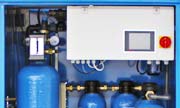
SCM 24
|
|
Cleans 24.000 liters per day
|
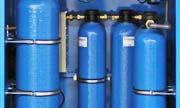
SCM 60
|
|
Cleans 60.000 liters per day
|
Video: How it works
The SCG Advantage
Our market-leading, water cleaning solutions have many advantages. To read more click the items below:
No Chemicals
Our machines and technology does not use any chemicals, at all.
Read more...
No Waste Water
Our machines do not waste any water. Yield = 100%.
Read more...
Low energy use
Uses 50 times less energy than a Reverse Osmosis Machine.
Read more...
Low ownership cost
Lower maintenance and operation costs due to our technology.
Read more...
Easy to install
Simple "plug and play" installation makes for easy deployment.
Read more...
Extremely compact
A compact system, contained in an easy to transport cabinet.
Read more...
Outperforms R.O.
SCG technologies outperform Reverse Osmosis systems.
Read more...
Faster ROI
Get a faster Return on Investment with our systems.
Read more...
Latest News
Latest Blog Posts
| Chemicals in water treatment? |
| Water storage - Whats best for keeping water clean and drinkable? |
| Case: Disaster Management Water Treatment |
Contact SCG
891 Showroom Place
Suite 101
Chula Vista, CA, 91914
Phone: +1 619-878-2730
Contact us by email