








Removing Chloramine From Australian Municipal Water Supplies
Chloramine is used by many water utilities as a long-lasting disinfectant. It can protect drinking water as it travels through extensive distribution networks, yet it may create operational issues for treatment plants, hospitals, aquatic centres, food processors, and households that need disinfectant-free water. Odour, taste, nitrification, corrosion and sensitive industrial processes can all be affected.
The practical goal is to eliminate chloramine from a selected water stream without dosing sodium metabisulphite, ammonia, sulphur dioxide or other neutralising chemicals. A properly designed physical treatment system can reduce combined chlorine while limiting chemical waste, energy consumption and the risks associated with chemical storage.
| Treatment approach | Chloramine reduction | Chemical dosing | Typical role |
|---|---|---|---|
| Catalytic activated carbon | High when correctly sized | None | Point-of-entry and process water |
| Ultraviolet treatment | Limited as a standalone process | None | Microbial control and supporting treatment |
| Aeration or stripping | Variable | None | Pre-treatment in selected conditions |
| Reverse osmosis | Partial to high, depending on membrane and conditions | None for removal | High-purity process water |
| Chemical dechlorination | High | Required | Conventional but creates handling and residuals |
Why Chloramine Requires Specific Treatment
Chloramine is formed when chlorine reacts with ammonia in treated water. Compared with free chlorine, it is more stable and persists for longer distances. That stability is useful for municipal distribution, especially in large Australian service areas, but it also makes chloramine harder to remove with ordinary carbon filters.
A standard granular activated carbon cartridge may reduce free chlorine effectively while leaving a significant chloramine residual. Catalytic activated carbon is generally better suited because its surface promotes the breakdown of monochloramine into chloride, nitrogen compounds and other reaction products. Contact time, pH, temperature, flow rate and the incoming chloramine concentration all affect performance.
Treatment objectives should be defined before equipment is selected. A hospital may need very low residual disinfectant for specialist water systems, while a commercial building may only require improved taste and odour. A municipal bypass, filling station or process-water line may require a different flow profile from a household drinking-water installation.
Designing A Chemical-Free Treatment Train
A chemical-free system commonly begins with screening and sediment filtration to protect the main media bed. Catalytic carbon then provides the primary chloramine reduction stage. Where microbiological control is essential, ultraviolet disinfection can be placed before or after carbon, depending on water quality, maintenance access and the required validation approach.
Carbon bed depth is especially important. A small cartridge with a short contact time can produce disappointing results, even when the media itself is suitable. Engineers should calculate empty bed contact time, peak rather than average flow, temperature variation and the expected service life of the media. Automatic backwashing may be appropriate for larger municipal or commercial installations.
Membrane technologies can support chloramine removal but should not automatically be treated as the first choice. Reverse osmosis produces high-quality water, yet it requires pressure, produces a concentrate stream and may need pre-treatment. For many Australian buildings, food facilities and public assets, catalytic carbon offers a simpler and lower-energy approach when the target is disinfectant reduction rather than complete demineralisation.
Protecting Networks, Buildings And Public Assets
Removing chloramine from an entire municipal network is rarely the most efficient solution. The more practical approach is often to treat only the outlets or processes that require low-chloramine water. This can reduce capital expenditure and preserve the disinfectant residual in the broader drinking-water system.
Local conditions matter. Warm weather in Queensland and northern Australia can accelerate biological activity in poorly managed filters, while drought, water restrictions and long supply routes can influence operating patterns in regional communities. Remote facilities may need robust systems with minimal chemical deliveries, simple monitoring and media that can be replaced without specialist infrastructure.
Swimming pools, aged-care facilities, laboratories and food-processing plants may each have separate requirements. Chloramine in pool water is also created when free chlorine combines with nitrogen-containing contaminants, so treating incoming mains water does not solve every indoor-air or pool-odour problem. Source-water treatment, ventilation, pool chemistry and bather-load management must be considered together.
Supporting Agriculture And Industrial Water Use
Water that has been treated for municipal distribution may still require additional conditioning before it is used for animals, irrigation equipment or sensitive production. Chloramine reduction can be relevant where water quality affects animal drinking systems, hatcheries, dairy operations or food preparation. Guidance on clean water for livestock is useful when assessing flow rates, hygiene controls and the needs of different stock categories.
Industrial users should also consider the interaction between chloramine, organic matter and downstream equipment. Carbon media can become fouled by suspended solids, iron, manganese or oil, which reduces available capacity. A suitable pre-treatment stage is therefore essential rather than optional. Sampling should include turbidity, pH, conductivity, free chlorine, total chlorine and microbiological indicators where relevant.
Cooling systems deserve particular care. Chloramine removal may be part of a wider strategy to reduce corrosion and protect heat exchangers, but it cannot replace all water-management controls. Cycles of concentration, scaling, biofilm formation and drift must be managed according to the system design. The discussion of cooling tower treatment provides further context for facilities seeking to reduce dependence on biocides.
Monitoring Performance And Managing Media
A chemical-free treatment system still needs disciplined monitoring. Operators should establish a baseline for total chlorine and monochloramine at the inlet and outlet, then track flow volume, pressure loss and changes in taste or odour. A sudden increase in outlet chloramine can indicate exhausted media, channeling, inadequate contact time or a change in incoming water chemistry.
Carbon replacement intervals should be based on measured performance rather than a fixed calendar date. Australian seasonal conditions can affect water temperature and demand, while changes in municipal treatment practices may alter the disinfectant concentration reaching a site. Remote sites should have clear inspection routines and spare media available before performance declines.
Iron and manganese are separate contaminants that can compete for treatment capacity and foul filtration equipment. If manganese is present, it should be addressed in the process design rather than treated as a minor nuisance. The guidance on manganese removal explains how treatment can be planned without creating hazardous waste streams.
Validation is particularly important for public or high-consequence applications. Water samples should be tested by an appropriately qualified laboratory, and the treatment plant should include accessible sampling points. Operators also need a documented response if chloramine rises above the internal target, including isolation, media inspection and confirmation testing before the water is released for its intended use.
Swiss Cleanwater Group can assess the incoming water analysis, required flow, treatment target and site constraints before recommending equipment. Municipalities, utilities, farms, industrial operators and building managers can request a project review for a low-chemical or chemical-free chloramine reduction system designed for Australian operating conditions. Contact the company to discuss sampling, pilot testing and a practical treatment configuration.
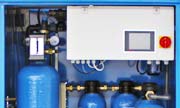
SCM 24
|
|
Cleans 24.000 liters per day
|
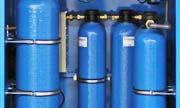
SCM 60
|
|
Cleans 60.000 liters per day
|
Video: How it works
The SCG Advantage
Our market-leading, water cleaning solutions have many advantages. To read more click the items below:
No Chemicals
Our machines and technology does not use any chemicals, at all.
Read more...
No Waste Water
Our machines do not waste any water. Yield = 100%.
Read more...
Low energy use
Uses 50 times less energy than a Reverse Osmosis Machine.
Read more...
Low ownership cost
Lower maintenance and operation costs due to our technology.
Read more...
Easy to install
Simple "plug and play" installation makes for easy deployment.
Read more...
Extremely compact
A compact system, contained in an easy to transport cabinet.
Read more...
Outperforms R.O.
SCG technologies outperform Reverse Osmosis systems.
Read more...
Faster ROI
Get a faster Return on Investment with our systems.
Read more...
Latest News
Latest Blog Posts
| Chemicals in water treatment? |
| Water storage - Whats best for keeping water clean and drinkable? |
| Case: Disaster Management Water Treatment |
Contact SCG
891 Showroom Place
Suite 101
Chula Vista, CA, 91914
Phone: +1 619-878-2730
Contact us by email