









Sizing a catalytic filtration system for a small municipality
Knowing how to size a catalytic filtration system for a small municipality starts with the water, not the equipment catalogue. Population provides a useful baseline, but peak demand, seasonal source-water changes and contaminant loading determine the capacity that must be installed. Swiss Cleanwater Group’s catalytic approach can reduce routine chemical use, waste and energy demand, but those benefits depend on correct sizing and source-specific design.
For an Australian council or shire, the process must also suit local budgets, weather events, operators and drinking-water obligations. The seven-stage approach below covers water analysis, flow calculations, media selection, hydraulic design, remote operation, validation and procurement. It provides a practical basis for developing a bid specification or comparing supplier proposals.
Start with source water and legal duties
Identify every source feeding the town water scheme. In country Australia, a “scheme” often combines a treated bore, a surface-water intake, or rainwater harvested into communal tanks. Groundwater may contain naturally occurring manganese, arsenic or uranium, while harvested rainwater can carry dust, bird waste or roof-metal runoff. Background on the history of water helps explain why modern systems use multiple barriers rather than relying on one treatment step.
Build a representative sampling programme rather than relying on a single laboratory result. Samples should cover wet and dry periods, after storms, following bushfires and during peak irrigation or spraying activity. In regional New South Wales and Queensland, testing both the raw source and the water entering storage can reveal whether contamination originates in the catchment or inside tanks and pipes.
The design must comply with the current Australian Drinking Water Guidelines and the relevant state regulator’s requirements. A water safety plan should define monitoring points, operator responsibilities and corrective actions. Removal of manganese or arsenic does not establish that the finished water is safe, so a validated treatment barrier, ongoing disinfection and an appropriate residual in the distribution network remain essential.
Turn population into a robust design flow
Estimate average demand from metered consumption where possible. A preliminary residential allowance of 180–250 litres per person per day is reasonable for scenario testing, but it should not replace council data. A community of 1,200 residents using 220 litres each would generate about 264,000 litres a day, or 3.1 litres per second, before schools, businesses, livestock, industry, firefighting or system leakage are included.
Convert that average into duty flow using credible peak factors. A peak day may be substantially higher than the annual average, while a short peak-hour event can exceed the peak daily rate. These factors should come from historical monitoring and network modelling. Fire demand should generally remain separate from the normal potable flow so that a filtration plant is not oversized for an event that occurs only rarely.
Account for source-pump capacity, storage equalisation and incoming pressure. A town with a large storage reservoir may smooth hourly demand, whereas a bore supplying directly into the reticulation network will expose the filters to the full pump curve. Check the minimum and maximum flow at each proposed treatment vessel under normal, peak and failed-unit conditions.
Match the treatment train to contaminant risks
Create a contaminant matrix showing each identified risk, its measured concentration and the required reduction. This prevents a media chosen for arsenic from being assumed to handle manganese, pesticides, uranium or bacteria equally well. Turbidity, pH, salinity, iron and competing dissolved substances can also change catalytic performance, so source chemistry belongs in the sizing calculation.
Media selection must follow validated test data for the actual contaminants. Oxidising filters may address manganese, while specialised catalytic or adsorptive media may be needed for arsenic, uranium or particular pesticides. A practical pesticide removal guide provides useful background on the variables that affect pesticide treatment, including compound type and competing organic matter.
Use pretreatment where the source data shows it is necessary. Coagulation, filtration or sediment exclusion may be required to protect the catalytic stage from suspended solids. For bacterial risk, specify the required log-reduction or validated treatment performance, then retain disinfection and residual control as separate barriers. Removing particles without maintaining a disinfectant can leave a distribution system vulnerable to contamination.
Size vessels, media and controls
Sizing involves two separate calculations. Hydraulic capacity determines how much water each vessel can pass at an acceptable velocity and pressure loss. Contaminant-loading capacity determines how long the media can treat the expected water quality before its performance declines. Using only one of these figures can produce a system that clogs under peak flow or exhausts its treatment capacity too quickly.
Ask the supplier to demonstrate both calculations for the selected media and cartridge dimensions. The daily contaminant load is the product of flow and concentration, while bed sizing should remain within validated limits for each material. Parallel vessels often provide a better operational balance than one oversized unit because demand can be shared during maintenance or peak periods.
Specify clear service limits for differential pressure, flow, turbidity and treated-water quality. Include an automatic or clearly documented cleaning procedure, along with waste-water handling where flushing is required. Catalytic media can avoid routine chemical dosing and disposable cartridge replacement, but the design must still address any sediment, wash water or sludge generated during cleaning.
Design for remote operation and resilience
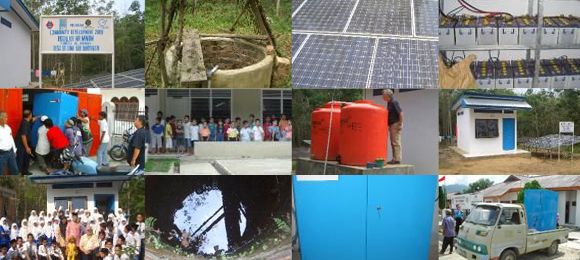
Remote communities in the Kimberley, Pilbara and northern New South Wales often face long travel distances, limited spare-part inventories and high costs for diesel or grid electricity. The same low-energy principles explored in zero-energy treatment design can also inform municipal systems where gravity head, solar power and simple controls are available.
Plan maintenance access into the initial design rather than treating it as an afterthought. Containerised modules can simplify transport, installation and replacement, but shipping weight, crane access and on-site service capability still affect the choice. Australian operators commonly talk about “duty” and “standby” capacity, so the specification should state exactly which unit handles normal flow and which remains available during maintenance or a source outage.
Provide resilience for floods, bushfires, blackouts and power-equipment failures. Raised equipment, flood-resistant controls, adequate tank turnover and manual operating instructions can prevent a short power interruption from becoming a water-supply failure. Solar systems should include battery sizing or backup generation where treatment interruption would create a public-health risk.
Validate performance before full-scale commitment
Run a pilot or side-stream trial using water from the intended source. Test it across the expected flow range and include at least one representative worst-quality sample. Accredited laboratory analysis should measure the contaminants of concern, and operators should record pressure loss, flow stability, cleaning frequency and any changes in treated-water quality over time.
Agree acceptance criteria before equipment is manufactured. These should include minimum contaminant reduction, maximum pressure loss, sustainable cleaning cycle and reliable operation when one parallel unit is offline. During commissioning, repeat performance testing, verify instruments and train operators before the system enters normal service.
Develop a whole-life cost that covers vessels, media, pumps, controls, building works, power, laboratory testing, cleaning, replacement parts and operator time. Councils and shires commonly assess tenders on more than purchase price, so lifecycle cost and handover requirements should be explicit. Confirm who owns the controls data, how software support is provided and where replacement cartridges will be stocked locally.
Choose a configuration and move to implementation
Three practical arrangements suit many small Australian water schemes. The correct choice depends on available head, source reliability, transport access and the council’s maintenance capability.
| Configuration | Best suited to | Main sizing checks | Typical trade-off |
|---|---|---|---|
| Gravity-fed pressure filtration | Elevated tanks or steep catchments with usable static head | Available pressure, head loss, cleaning flow and bypass | Limited turndown when demand varies |
| Pump-assisted parallel vessels | Town bores, flat sites and changing source flows | Pump duty, standby capacity, flow sharing and controls | Greater electrical and mechanical complexity |
| Containerised modular plant | Remote communities, mobile supply and emergency response | Transport envelope, site connections and local servicing | Shipping and spare-part logistics require planning |
Base the final selection on verified source data rather than nameplate flow alone. A configuration that meets the average daily requirement but cannot handle a peak event, a failed vessel or a contaminated source will create operational risk. Record the design assumptions, treatment guarantees and performance tests so suppliers compare against the same requirements.
Prepare a concise site brief containing source analyses, seasonal flow data, peak estimates, treatment targets, available pressure, power supply and council operating conditions. Send that brief to Swiss Cleanwater Group for a system sizing review, then request a formal technical proposal with vessel dimensions, media selection, performance guarantees, commissioning requirements and lifecycle costs. Secure that sizing review before releasing the tender specification or committing municipal funds.
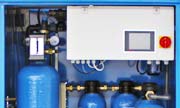
SCM 24
|
|
Cleans 24.000 liters per day
|
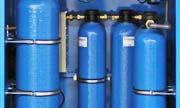
SCM 60
|
|
Cleans 60.000 liters per day
|
Video: How it works
The SCG Advantage
Our market-leading, water cleaning solutions have many advantages. To read more click the items below:
No Chemicals
Our machines and technology does not use any chemicals, at all.
Read more...
No Waste Water
Our machines do not waste any water. Yield = 100%.
Read more...
Low energy use
Uses 50 times less energy than a Reverse Osmosis Machine.
Read more...
Low ownership cost
Lower maintenance and operation costs due to our technology.
Read more...
Easy to install
Simple "plug and play" installation makes for easy deployment.
Read more...
Extremely compact
A compact system, contained in an easy to transport cabinet.
Read more...
Outperforms R.O.
SCG technologies outperform Reverse Osmosis systems.
Read more...
Faster ROI
Get a faster Return on Investment with our systems.
Read more...
Latest News
Latest Blog Posts
| Chemicals in water treatment? |
| Water storage - Whats best for keeping water clean and drinkable? |
| Case: Disaster Management Water Treatment |
Contact SCG
891 Showroom Place
Suite 101
Chula Vista, CA, 91914
Phone: +1 619-878-2730
Contact us by email