








How to Remove Silicon From Groundwater Without Chemical Dosing
Silicon in groundwater is usually reported as silica, with dissolved silicic acid being the most common form. It is different from calcium hardness, although both can affect scale. Chemistry changes sharply across Australia: Perth’s sandy coastal-plain supplies, Melbourne’s basalt aquifers and Brisbane’s alluvial sediments have distinct iron, manganese, salinity and silica profiles. Seasonal pumping and rainfall add further variation, so a single sample may not represent long-term production.
Catalytic oxidation without chemical dosing generally means passing aerated or oxygenated water through catalytic media and filtering the solids that form. It can oxidise soluble iron and manganese into filterable particles without chlorine, peroxide, coagulants or polymers. Silicon behaves differently: oxidation does not automatically convert dissolved silicic acid into a removable solid. Colloidal silica may be filtered after suitable pretreatment, while genuinely dissolved silica may require dedicated polishing.
For an Australian project, the safest route is to assess raw and finished water, identify co-contaminants and set measurable performance targets before selecting equipment. Councils, irrigation operators, livestock businesses and industrial plants have different water qualities, flow patterns and operating budgets. Swiss Cleanwater Group focuses on sustainable systems that remove contaminants without routine chemical addition, while matching each system to the intended application.
Why Groundwater Chemistry Decides the Outcome
First, define whether the objective is potable production, equipment protection, irrigation, livestock use or pool water. Silica can form deposits in membranes, heat exchangers and irrigation equipment, while colloidal particles may create haze. A result should be interpreted by form, concentration and use rather than treated as a stand-alone health number.
Sampling should cover the operating range of the bore, including different seasons, pump rates and post-rain conditions where relevant. Tests should include silica, pH, alkalinity, hardness, total dissolved solids, turbidity, dissolved oxygen, temperature, iron, manganese, arsenic and uranium. Particle testing may be needed to distinguish colloidal material from truly dissolved silica.
Hydrogeological context matters as much as the laboratory result. An aquifer change, nearby abstraction or pumping from a different depth can alter chemistry without any surface event. In arid inland areas, salinity and boron may accompany silica, while remote sites face difficult access for sampling and maintenance. Australian bore logs, council records and local operator knowledge should all feed the design.
What Catalytic Oxidation Removes
In a catalytic oxidation stage, dissolved iron and manganese react at a catalytic surface and are retained in the filter bed. Aeration or oxygen addition supplies the oxidising environment. Properly selected media and backwash controls can deliver stable results without routine chemical feed, while also reducing the handling and storage burden of chlorine or coagulant.
“No-dosing” needs a precise meaning. It describes the treatment process, not an absence of media, replacement schedules or responsible waste management. Some catalytic beds develop a manganese or iron coating, and incoming iron can reduce active surface area or cause early blockage. Feed chemistry, oxygen availability and backwash design therefore determine whether the approach remains effective.
Silicon removal must be specified carefully. If testing identifies mostly colloidal silica, controlled pretreatment and fine filtration may be enough. Persistent dissolved silica usually calls for silica-selective adsorption, reverse osmosis or another validated polishing method after oxidation. Those options have different energy, media life and waste profiles, so the project should avoid claiming catalytic oxidation alone removes every form of silicon.
Designing a No-Dosing Treatment Train
A practical no-dosing train commonly begins with sediment and cartridge filtration, followed by aeration, a catalytic oxidation vessel and multimedia polishing. Where dissolved silica remains, a dedicated silica stage follows. Isolation valves, sample taps and flow metering allow operators to challenge each unit and locate the source of a breach.
Sizing should reflect peak demand, not just average household use. Australian sites often combine domestic, livestock or irrigation demand, with peak draw during dry weather. Variable-speed pumps, low head-loss media and efficient aeration can control energy use, while automatic backwash prevents avoidable labour and water loss.
Water recovered during backwash should be reclaimed where the layout allows it, and media replacement intervals should be planned rather than treated as waste-free operation. For Australian remote and mobile deployments, containerised or skid-mounted equipment, prefabricated pipework and serviceable media cartridges can reduce specialist travel and downtime.
Applications Across Australian Water Infrastructure
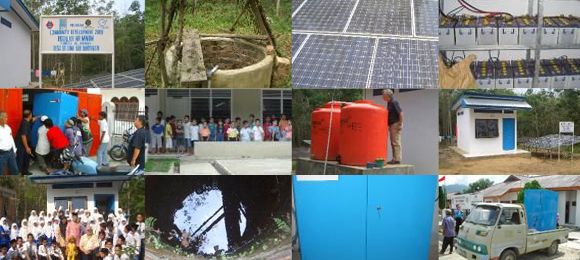
For municipal systems, oxidation can prevent iron and manganese from reaching distribution networks and customer taps. A municipal manganese case study demonstrates how catalytic oxidation can protect a town supply without routine chemical addition. The approach is particularly relevant where a council wants fewer chemical deliveries, simpler operator routines and a defensible operating cost.
Australian farms in the Murray-Darling Basin may manage silica in irrigation water to limit scaling on pivots and equipment, while dairy, poultry and livestock operations need stable water quality at troughs. Pools and high-rise buildings have different turnover and space constraints, so compact systems are useful. Mobile, construction, defence and emergency deployments need robust units that can move quickly and operate from prepared power and water connections.
Verification, Monitoring and Regulatory Confidence
Performance testing should combine online instruments for flow, pressure and turbidity with scheduled laboratory sampling. Silica, iron and manganese should be checked both upstream and downstream of oxidation, and filtered samples should be compared with raw samples to detect media breakthrough. Trend records are more valuable than isolated readings because they show changing ground conditions and operating response.
Broader water chemistry can influence both safety and media selection. The uranium filtration case study illustrates why contaminant-specific treatment, appropriate media and validated testing are central to a reliable system. Similar testing is needed for arsenic, pesticides, bacteria and any site-specific contaminants before treatment is specified.
For Australian drinking-water projects, results should be interpreted against the Australian Drinking Water Guidelines published by the National Health and Medical Research Council and the relevant state authority, while council tender schedules may impose additional design and documentation requirements. Typical handover packs should include drawings, certificates, operating procedures, training, spare parts and a defined sampling programme.
Long-Term Operation in Australian Conditions
Long-term reliability depends on controlling scaling, biological growth and media fouling before they affect flow or contaminant removal. Periodic inspection, calibrated analysers, scheduled backwash and clear trigger levels help operators act early. In coastal and tropical locations, access, corrosion and humidity require suitable materials and enclosure design; in arid areas, dust and variable bore quality deserve particular attention.
Life-cycle costing should compare media life, energy use, water loss, maintenance visits and disposal or reuse options rather than purchase price alone. Systems supplied for local conditions should also fit Australian operating practices: clear operator training, accessible replacement parts, documented service intervals and workable warranty support. That makes a treatment asset easier to own and easier to operate.
Start with representative samples and a clear statement of required water quality, then allow the treatment train to be sized around the source water rather than a generic specification. Swiss Cleanwater Group can assess the application, equipment requirements and operating constraints for an Australian site.
Request a site-specific treatment proposal from Swiss Cleanwater Group, including raw-water analysis requirements, equipment options, installation details and a schedule for verification and operator handover.
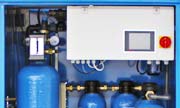
SCM 24
|
|
Cleans 24.000 liters per day
|
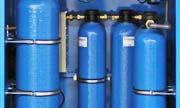
SCM 60
|
|
Cleans 60.000 liters per day
|
Video: How it works
The SCG Advantage
Our market-leading, water cleaning solutions have many advantages. To read more click the items below:
No Chemicals
Our machines and technology does not use any chemicals, at all.
Read more...
No Waste Water
Our machines do not waste any water. Yield = 100%.
Read more...
Low energy use
Uses 50 times less energy than a Reverse Osmosis Machine.
Read more...
Low ownership cost
Lower maintenance and operation costs due to our technology.
Read more...
Easy to install
Simple "plug and play" installation makes for easy deployment.
Read more...
Extremely compact
A compact system, contained in an easy to transport cabinet.
Read more...
Outperforms R.O.
SCG technologies outperform Reverse Osmosis systems.
Read more...
Faster ROI
Get a faster Return on Investment with our systems.
Read more...
Latest News
Latest Blog Posts
| Chemicals in water treatment? |
| Water storage - Whats best for keeping water clean and drinkable? |
| Case: Disaster Management Water Treatment |
Contact SCG
891 Showroom Place
Suite 101
Chula Vista, CA, 91914
Phone: +1 619-878-2730
Contact us by email