








Treating Water for Ornamental Ponds Without Chemicals
Treating water for ornamental ponds without chemicals is a practical way to protect fish, aquatic plants and the appearance of a garden feature. The right approach is to control the conditions that allow algae to multiply, rather than relying on repeated doses of algaecide.
Green water, string algae and surface scum usually indicate an imbalance between sunlight, nutrients, circulation and biological activity. A pond may look clear for a few days after treatment, then turn cloudy again when warm weather returns or organic matter continues to enter the water.
This matters across Australia, where intense summer sun can heat shallow ponds quickly. A water feature in Brisbane or regional Queensland may face long hot periods, while a pond in Perth can receive strong sunlight and dusty wind. In Melbourne, seasonal leaf fall and cooler winter conditions create a different pattern of organic loading.
A reliable solution begins with the source water and the pond’s design. Rainwater tanks, mains water, bore water and recycled supplies can each introduce different minerals or contaminants. A treatment specialist can help identify the cause before equipment is selected; the Swiss Cleanwater Group provides water-treatment technologies for domestic, commercial, municipal and specialist applications.
Why Algae Takes Over Ornamental Ponds
Algae needs light, water and nutrients. Phosphates and nitrates may enter through fertiliser runoff, bird droppings, fish waste, decaying leaves, soil and untreated top-up water. When these nutrients accumulate, microscopic algae can make the water green, while filamentous varieties form long strands around rocks, pumps and plant baskets.
Warm water accelerates the process. A shallow pond with dark paving around it can become considerably hotter than a shaded pond, particularly during a Queensland summer. In South Australia and Western Australia, evaporation also concentrates dissolved substances unless the pond is topped up and maintained carefully.
Poor circulation creates stagnant corners where algae settles and grows. A pump that is too small, a blocked intake or an incorrectly positioned return can leave dead zones behind ornaments and below floating plants. Excessive shade can create other problems, including low oxygen at night when plants and algae respire.
Testing helps separate appearance from cause. Water should be checked for pH, ammonia, nitrite, nitrate, phosphate, hardness and, where relevant, metals such as manganese or iron. A sudden change in colour may be an algae bloom, sediment, mineral staining or a combination of these issues.
Design The Pond For Natural Control
The simplest prevention method is to reduce direct sunlight without turning the pond into a dark, stagnant basin. Floating plants can provide shade, while marginal plants around the edge absorb nutrients and soften temperature changes. They should be managed carefully, since excessive plant growth can also consume oxygen after sunset.
A sensible planting zone, gravel bed or biological filter gives beneficial microorganisms somewhere to live. These organisms help process fish waste and other organic material before it becomes a food source for algae. Filter media must be sized for the pond volume and cleaned in a way that does not remove all useful biological activity.
Circulation should move water through the whole pond. A gentle surface return can improve oxygen exchange, while a bottom intake helps draw water away from stagnant areas. Waterfalls and aeration can be valuable, although splashing may increase evaporation during a hot Adelaide or Perth summer.
Avoid placing ponds beneath large deciduous trees where possible. Leaves, pollen and fine debris add nutrients and can block pumps. A skimmer, leaf net or easily removable pre-filter often prevents more algae than a stronger pump installed after the system is already overloaded.
Use Filtration And Physical Treatment
Mechanical filtration removes leaves, suspended particles and other material before it decomposes. Screens, brushes, vortex chambers and settlement zones can all play a role. The objective is to capture solids early and make routine cleaning straightforward, rather than allowing waste to remain in the pond.
Biological filtration supports the microbial processes that convert harmful fish waste into less problematic compounds. It works best when flow is steady and the media is not constantly sterilised or washed with chlorinated water. Regular maintenance is still necessary, especially after storms or heavy leaf fall.
Ultraviolet clarification can reduce free-floating algae by exposing water to UV light as it passes through a treatment chamber. It does not remove nutrients, settled sludge or algae attached to rocks, and the lamp requires correct flow, cleaning and periodic replacement. UV is therefore one part of an integrated system, not a substitute for filtration.
Where top-up water contains troublesome contaminants, source-water treatment may be appropriate. For example, activated carbon can help address some organic compounds and pesticide residues, while specialist catalytic media may target particular dissolved contaminants. The activated carbon guide explains why media selection should be matched to the contaminant rather than based on a generic filter rating.
Manage Nutrients Without Algaecides
Reducing nutrient input is usually more sustainable than repeatedly killing algae. Use fertilisers well away from the pond edge, prevent garden soil from washing into the water and remove dead leaves promptly. Fish should be fed sparingly, since uneaten food quickly becomes organic waste.
Rain can carry sediment and nutrients from lawns, paths and garden beds into a pond. A planted swale, gravel drain or small settling area can intercept this flow. During intense storms, common in parts of New South Wales and Queensland, checking overflow paths helps protect both water quality and nearby property.
Water replacement can dilute nutrients, but frequent large changes may stress fish and waste water. This is especially relevant in drought-affected regions and areas with local water restrictions. Make-up water should be introduced gradually and tested where the source is a bore, rainwater tank or rural supply.
Manganese and iron are not algae nutrients in the same sense as phosphate, but they can create dark, brown or black staining that is mistaken for biological growth. If staining is recurring, investigate the source rather than scrubbing indefinitely. Guidance on manganese staining outlines how catalytic media can be considered for suitable water-treatment applications.
Build A Practical Maintenance Routine
A pond needs a routine that suits its location, stocking level and equipment. Skimming leaves weekly, checking pump flow and rinsing mechanical screens can prevent small problems from becoming a full bloom. During a hot spell, inspect the pond more frequently because evaporation and warmer water can change conditions quickly.
Do not empty a pond simply because it turns green. Sudden drainage can remove beneficial organisms and disturb fish, frogs and aquatic plants. First remove heavy surface growth, restore circulation, clean the pre-filter, test the water and identify the nutrient source.
Fish health should guide any intervention. Gasping at the surface, unusual lethargy or fish gathering near an outlet may indicate low dissolved oxygen or toxic ammonia rather than an algae issue alone. Aeration can provide immediate support, but persistent symptoms require proper water testing and specialist advice.
For commercial properties, childcare centres, resorts, strata developments and council-managed gardens, maintenance records are useful. They can track water tests, filter cleaning, pump performance, rainfall and algae recurrence. This helps demonstrate that the system is being managed methodically rather than through ad hoc chemical dosing.
Match The System To The Pond
A small courtyard pond may need a covered pre-filter, modest biological media and shade-producing plants. A large landscaped feature at a shopping centre, golf club or public park may require automatic screening, high-capacity circulation, remote monitoring and a dedicated treatment room.
The correct system depends on water volume, turnover rate, sunlight, fish load, make-up water and the desired appearance. A pond designed for koi has different oxygen and filtration requirements from a shallow decorative basin with no fish. Public access, electrical safety and protection from vandalism also matter in Australian installations.
The comparison below provides a starting point. These methods are complementary rather than interchangeable, and equipment should be selected after testing and a site assessment.
| Method | Main role | Chemical use | Key limitation |
|---|---|---|---|
| Shade and aquatic plants | Reduce light and absorb nutrients | None | Requires ongoing growth control |
| Mechanical filtration | Remove leaves and suspended solids | None | Does not remove dissolved nutrients |
| Biological filtration | Process fish waste and organic loading | None | Needs stable flow and maintenance |
| Aeration and circulation | Improve oxygen and reduce stagnant zones | None | Does not directly remove algae nutrients |
| UV clarification | Reduce free-floating algae | None | Requires power and cannot treat attached algae |
| Activated carbon or catalytic media | Treat selected source-water contaminants | None in normal operation | Must match the contaminant and flow rate |
A well-designed pond treatment system should minimise waste, avoid unnecessary energy use and make maintenance predictable. It should also protect downstream waterways by preventing concentrated sludge, nutrient-rich discharge or contaminated backwash from entering drains.
For Australian sites, choose equipment that can be serviced locally and operated through heat, dust and seasonal water restrictions. Municipal projects may require procurement documentation, while farms, livestock properties and remote facilities may prioritise robust components and low-maintenance operation. The same principles apply to a backyard feature: understand the water, control the nutrients and use filtration that suits the real conditions.
Start with a water test and a site assessment before buying treatments or adding products to the pond. A properly matched combination of shade, circulation, filtration and source-water management can keep ornamental water clearer, safer and more attractive without routine algaecides. Contact Swiss Cleanwater Group to discuss the contaminant profile, treatment objective and practical requirements of your pond or water feature.
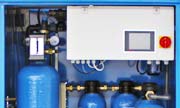
SCM 24
|
|
Cleans 24.000 liters per day
|
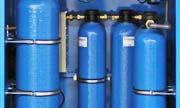
SCM 60
|
|
Cleans 60.000 liters per day
|
Video: How it works

The SCG Advantage
Our market-leading, water cleaning solutions have many advantages. To read more click the items below:
No Chemicals
Our machines and technology does not use any chemicals, at all.
Read more...
No Waste Water
Our machines do not waste any water. Yield = 100%.
Read more...
Low energy use
Uses 50 times less energy than a Reverse Osmosis Machine.
Read more...
Low ownership cost
Lower maintenance and operation costs due to our technology.
Read more...
Easy to install
Simple "plug and play" installation makes for easy deployment.
Read more...
Extremely compact
A compact system, contained in an easy to transport cabinet.
Read more...
Outperforms R.O.
SCG technologies outperform Reverse Osmosis systems.
Read more...
Faster ROI
Get a faster Return on Investment with our systems.
Read more...
Latest News
Latest Blog Posts
| Chemicals in water treatment? |
| Water storage - Whats best for keeping water clean and drinkable? |
| Case: Disaster Management Water Treatment |
Contact SCG
891 Showroom Place
Suite 101
Chula Vista, CA, 91914
Phone: +1 619-878-2730
Contact us by email