







Clean water for hydroponic farms
Treating water for hydroponic farms means solving two linked problems: delivering a stable ionic nutrition mix and preventing organisms from moving through the crop. Feed water becomes irrigation, interacts with fertiliser stock, and can carry contamination into every growing bed. A visually clear supply is not proof of microbiological safety, just as a nutrient-balanced supply may still contain a toxic metal.
Pathogen control should remove the immediate risk of waterborne organisms and stop cross-contamination after treatment. Nutrient control should manage pH, alkalinity, electrical conductivity, and the ratios of calcium, magnesium, sulfur, potassium, and sodium. These goals must be planned together because a treatment that strips useful ions, adds unwanted salts, or changes pH can move the problem rather than solve it.
For Australian growers, the source may be chlorinated municipal water, bore water, harvested rain, or tank water, with quality that changes across seasons and locations. Swiss Cleanwater Group provides chemical-free treatment systems designed around these challenges, with contaminant-specific performance that should be confirmed against an actual source-water profile before installation.
Start with a source-water profile
Begin by characterising the raw water rather than selecting equipment from a general product description. Take samples at the intended intake and repeat them during wet and dry periods where relevant. In recirculating systems, also record how fertiliser dosing, cleaning procedures and drainage concentrate affect water quality.
| Treatment route | Pathogen control | Effect on nutrient delivery | Hydroponic use |
|---|---|---|---|
| Chemical-free physical filtration | Must match validated organism ratings and filter integrity | Can retain useful dissolved minerals while targeting selected contaminants | Source water with sediment, metals, pesticides or microbial risks |
| UV polishing | Inactivates many bacteria and protozoa; virus performance depends on dose | Leaves dissolved minerals in the water | Final control within recirculating loops |
| Reverse osmosis | Broad separation of many microbes and dissolved contaminants when membranes are intact | Removes much calcium, magnesium, sulfate and nitrate, so blending is often needed | Saline or otherwise difficult source water |
| Oxidation and filtration | Mainly targets iron, manganese and turbidity; microbial performance varies | Alters little of the overall nutrient balance | Scaling, staining and water-quality correction |
These options are not interchangeable. Turbidity reduction does not establish pathogen safety, while reverse osmosis can create a new nutrient-management requirement. For water supplied to workers and edible crops, use the Australian Drinking Water Guidelines and relevant state requirements as practical benchmarks, then document any site-specific controls.
Separate pathogens from nutrient chemistry
Physical filtration provides a practical pathway for controlling waterborne organisms while retaining much of the water’s useful mineral content. The correct barrier or treatment media must be selected for the target contaminant, flow rate and operating conditions. This makes source-water analysis more valuable than a generic claim that a system removes “bad water.”
Swiss Cleanwater Group’s chemical-free systems are designed to address challenges including manganese, arsenic, bacteria, pesticides and uranium without routine chemical dosing. Because performance depends on contaminant form, concentration and system design, request organism-specific test data, contaminant removal guarantees and guidance on filter replacement. Independent laboratory results should confirm the intended water profile before a unit is scaled up.
Other technologies can complement the selected process. UV disinfection leaves dissolved nutrients unchanged but does not remove metals or particles. Reverse osmosis provides broader separation, including many dissolved salts, but usually requires nutrient replacement or blending. In either case, the final water still needs a defined sanitation and sampling regime after it enters the farm.
Preserve nutrient balance through treatment
Set a treated-water baseline for pH, electrical conductivity, alkalinity, calcium, magnesium, sulfur, potassium, sodium, chloride and nitrate. Compare every result with the raw supply and the nutrient recipe already used by the farm. This reveals whether treatment has removed something useful, concentrated another substance or simply exposed an imbalance that previously remained hidden.
Use the differences to adjust stock-solution calculations and irrigation strategy. If conductivity rises but calcium remains unchanged, adding more complete fertiliser may create an imbalance rather than correct it. Dilution, source blending and targeted nutrient dosing should be calculated from actual water chemistry, with separate profiles for seedlings, leafy greens and fruiting crops where those requirements differ.
Blending also provides flexibility when one source varies significantly. A fixed municipal connection can change after rain, while bore water may shift with pumping levels or seasonal groundwater conditions. Recheck the profile after every major source change and keep a controlled reserve of suitable water for periods when the incoming supply does not meet specification.
Stop cross-contamination after treatment
Treat the point where clean water enters the production system, not only the raw-water intake. A final purification stage should sit close to the reservoir or recirculation loop, with pressure maintained so contaminants cannot enter through damaged hoses, loose fittings or poorly sealed tank lids. Separate clean and wastewater lines, and label them clearly.
Biofilm can form inside pipes, emitters and nutrient tanks when warm water sits under low flow. In northern Australia, elevated ambient temperatures can accelerate this biological growth. Use food-grade materials, eliminate dead legs, inspect seals and clean the complete circulation path according to a documented schedule. Cleaning and sanitation must include the treatment equipment itself, as an incorrectly maintained filter can become a contamination point.
Verification should include routine visual checks, calibrated turbidity readings, conductivity and pH records, and periodic microbiological sampling. For edible produce, align handling and water records with Food Standards Australia New Zealand requirements and applicable state and local food-safety rules. Workers also need access to potable water and suitable hand-washing facilities independent of the production loop.
Fit the system to Australian conditions
Australian conditions make site-specific design essential. Sydney’s chlorinated municipal supplies, Melbourne’s variable catchments and Perth’s salinity pressures cannot be treated as interchangeable sources, while regional farms may depend on groundwater, roof collection or tanks. In rural districts, bore and harvested-rain supplies can change sharply after storms. The company’s guidance on rural turbidity filtration explains how suspended material affects both treatment performance and irrigation components.
Commercial implementation must also account for the Australian market. Imported pumps, skids and controllers should have appropriate electrical documentation, Australian-compatible components and a clear local service pathway. Buyers should check customs classification, landed costs, replacement-part availability and warranty coverage before purchase. A local distributor that can stock filters, provide technical support and arrange prompt servicing is often more valuable than a lower purchase price.
Build resilience into daily operation
Reliable operation depends on a short, repeatable monitoring routine. Record source quality, treated-water results, flow, filter runtime and every deviation from normal operation. Calibrated instruments need their own verification schedule, while laboratory testing should be scheduled according to contaminant risk and seasonal change. These records reveal deterioration before it affects crop growth or water quality.
For temporary peaks, equipment failures or emergency demand, mobile purification units can provide additional capacity when a fixed installation cannot meet demand. This capability is relevant after bushfires, floods or major pump downtime, particularly where uninterrupted crop production and safe worker water are priorities.
Maintenance should focus on predictable costs rather than emergency replacement. Keep critical spares on hand, establish cleaning intervals for pre-filters and treatment stages, and confirm how reject water and filter changes will be managed. Chemical-free operation can reduce chemical handling, but energy use, labour and consumable requirements still need to be assessed against the farm’s production scale and operating schedule.
Put the right water strategy in place
The strongest hydroponic water strategy combines verified contaminant removal, measured nutrient retention, downstream hygiene and responsive maintenance. Begin with representative samples, model the intended flow and identify the consequences of seasonal source changes. A pilot installation can then validate nutrient delivery, pathogen control, cleaning frequency and operating costs under real farm conditions.
Contact Swiss Cleanwater Group with the source-water results, daily flow requirements, crop profile and operating schedule. Request a site-specific treatment proposal, validated performance information, monitoring plan, installation pathway and local support arrangement, then move directly to a controlled pilot and documented commissioning process.
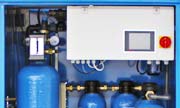
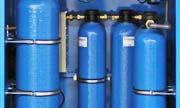
SCM 24
|
|
Cleans 24.000 liters per day
|
SCM 60
|
|
Cleans 60.000 liters per day
|
Video: How it works
The SCG Advantage
Our market-leading, water cleaning solutions have many advantages. To read more click the items below:
No Chemicals
Our machines and technology does not use any chemicals, at all.
Read more...
No Waste Water
Our machines do not waste any water. Yield = 100%.
Read more...
Low energy use
Uses 50 times less energy than a Reverse Osmosis Machine.
Read more...
Low ownership cost
Lower maintenance and operation costs due to our technology.
Read more...
Easy to install
Simple "plug and play" installation makes for easy deployment.
Read more...
Extremely compact
A compact system, contained in an easy to transport cabinet.
Read more...
Outperforms R.O.
SCG technologies outperform Reverse Osmosis systems.
Read more...
Faster ROI
Get a faster Return on Investment with our systems.
Read more...
Latest News
Latest Blog Posts
| Chemicals in water treatment? |
| Water storage - Whats best for keeping water clean and drinkable? |
| Case: Disaster Management Water Treatment |
Contact SCG
891 Showroom Place
Suite 101
Chula Vista, CA, 91914
Phone: +1 619-878-2730
Contact us by email