


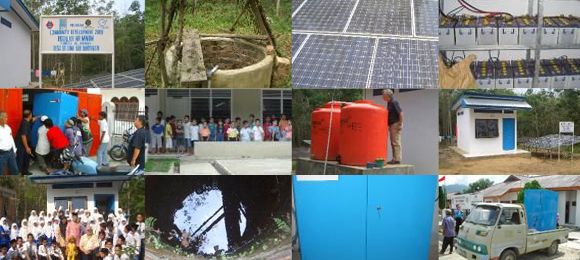







A school district upgrades to chemical-free water treatment
This case study follows a regional school district west of Parkes in New South Wales as it upgrades its central water plant to chemical-free technology. The decision followed families describing drinking water at several schools as rusty or metallic, while operators noticed brown staining around fountains and discoloured water after storage tanks were replenished. These were familiar complaints in parts of regional Australia, where communities can rely on a mix of council schemes, groundwater bores and rainwater storage rather than one metropolitan treatment network.
The district’s response reflected how Australian water projects are delivered. NSW public schools are overseen by the state’s education department, while a local council or service contractor may operate the reticulated supply and treatment assets. Any change therefore has to fit council asset plans, procurement rules and water-quality monitoring against the Australian Drinking Water Guidelines. Hot summers, dust, bushfire-affected catchments and sharp rainfall events can all change raw-water conditions, making reliability as important as contaminant removal.
Swiss Cleanwater Group was asked to assess a chemical-free treatment option for the school’s central plant. The proposed system used staged physical separation and filtration to target manganese, arsenic and other contaminants without adding treatment chemicals while reducing waste and energy demand. The project team treated laboratory results, disinfection requirements and drinking-water compliance as separate but connected responsibilities: the technology had to remove the target contaminants without weakening overall water safety.
From brown water to a clearer diagnosis
Initial work focused on diagnosis rather than equipment. Operators reviewed complaint records, tank-cleaning frequencies and historical sample results. They sampled water at source, after storage and at the point of use because a problem appearing at a tap can have several causes. Heavy sediment after rain, corrosion within old pipes and manganese released from groundwater can produce similar discolouration, while elevated arsenic requires analytical confirmation rather than judgement based on taste or colour.
Once the data were mapped, the district found that treatment was being asked to compensate for inconsistent source quality. Filters were carrying more load than expected, and chemicals were being introduced to manage variable iron and manganese. That arrangement required monitoring and dosing, created waste streams and made operation dependent on operator availability. School holidays offered limited windows for intrusive work, so the preferred solution had to be compact, predictable and suitable for a site with little spare room.
Swiss Cleanwater Group’s modular purification systems were assessed against these constraints, including the need for pre-filtration and reliable operation with local technical support. The resulting design placed protective filtration ahead of the main contaminant-removal stages, allowing each stage a stable duty and reducing the chance that fine sediment would foul sensitive media downstream.
Redesigning the treatment process
The selected treatment train began with robust pre-filtration. This mattered because suspended material can block the surfaces used for arsenic and trace-contaminant removal, increasing pressure losses and shortening media life. A staged arrangement also made performance easier to interpret: operators could check inlet conditions, inspect each stage and isolate a problem without shutting down the whole school network. The equipment was configured as a skid that could be installed within the existing plant footprint.
Technical teams also considered why pre-filtration must be designed as part of the process rather than added later. The company’s guidance on chemical-free arsenic removal describes how source-water characteristics, particle loading and maintenance practices affect treatment reliability. Those lessons shaped the final specification, including sufficient contact time, accessible service points and a practical cleaning routine for the district’s maintenance crew.
Chemical-free contaminant removal simplified the operating envelope. There were no coagulant or oxidant dosing duties for the targeted contaminants, less chemical storage to manage and no routine sludge to dispose of. Energy use was kept within a sensible share of the plant’s budget through appropriately sized pumps and gravity-assisted flows where possible. The system still required routine sampling, instrument checks and a documented response plan; removing chemicals from the main treatment step did not remove the district’s duty to monitor drinking water.
Delivering the project the Australian way
Delivery had to fit the Australian project cycle. The council reviewed hydraulic capacity and asset ownership, while education stakeholders required assurances about student safety, continuity during commissioning and responsibilities for long-term maintenance. Tender documentation set out performance requirements, testing protocols, spare-parts availability and training. That division of duties matters in small regional districts, where procurement, laboratory services and skilled technicians may come from different organisations.
Installation was planned around term dates and the district’s summer operating pattern. Crews isolated the old plant in short, controlled windows, connected the new skid and tested each component before returning flow to the buildings. Work zones were managed with the same site controls used for other school works, including access separation, dust control and clear supervision. The central location reduced duplicated equipment across campuses and gave operators one point for routine checks.
Training focused on practical local ownership. Facility staff and contractors learned to read pressure trends, recognise abnormal noise or flow, carry out routine checks and know when to escalate a sample or shutdown. Local electricians and plumbers were included where their support was needed for pumps, valves and controls. This approach suits Australian regional communities, where a supplier may travel considerable distances and an on-site worker is best placed to handle simple faults without waiting for an overseas dispatch.
What schools noticed after commissioning
After commissioning, the most visible change was consistency. Water at fountains and kitchen taps remained clear through normal seasonal variation, and the district received fewer complaints about metallic taste, brown staining and cloudy water. Maintenance schedules became shorter and more predictable because there was no chemical feed to calibrate and less sediment waste to remove. Staff described the result in the plain language familiar across the district: the water simply looked and tasted cleaner.
The operational gains were as important as the appearance. The new plant reduced reliance on routine chemical handling, simplified spare-parts management and created a clearer record of plant performance. Pressure and flow could be checked at accessible points, while laboratory testing continued to verify that the whole supply met the applicable standards. For school communities, that reliability means fewer disruptions to drinking fountains, meal preparation and outdoor learning activities during hot weather.
The district’s experience also offers a useful comparison with the Swiss village example. Both projects begin with a community-scale need, sound source-water analysis and treatment designed around local operating capacity. The Alpine example shows how a compact system can protect a dispersed supply; the Australian case adds the different demands of school schedules, council governance and a wide rural service area.
Building a model for other regional communities
Long-term performance depends on disciplined monitoring, not simply installation day. The district set baseline readings, reviewed them after high flows and documented any change in source chemistry. Filter condition, pump performance and water quality were checked together because a stable sample can hide early mechanical strain. This layered approach gives operators time to address gradual issues before users notice a change.
Economic value was assessed across the asset life rather than purchase price alone. Expenditure on media replacement, servicing and energy was compared with previous chemical, waste-disposal and labour requirements. The capital decision also had to sit within council funding cycles and education infrastructure planning. For a district serving several campuses, centralising treatment can avoid duplicated plant and provide a clearer maintenance budget, particularly where small enrolments make individual school installations inefficient.
The same model can suit other Australian sites facing similar constraints: remote communities, farms, livestock operations, industrial facilities, swimming pools and mobile or military deployments. Each needs its own water analysis, treatment objective and service arrangement. A proven school installation provides a useful reference point, while local engineering review determines the appropriate configuration.
District planners, council water teams and school facilities managers can begin with a straightforward site assessment: review raw-water results, operating conditions and available space, then ask Swiss Cleanwater Group to model a suitable chemical-free treatment pathway. A project discussion can cover contaminant targets, pre-filtration, commissioning, operator training and ongoing support, giving stakeholders the evidence needed for a practical upgrade decision. Contact Swiss Cleanwater Group to arrange a tailored discussion for your site.
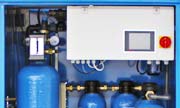
SCM 24
|
|
Cleans 24.000 liters per day
|
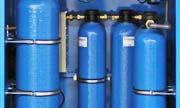
SCM 60
|
|
Cleans 60.000 liters per day
|
Video: How it works
The SCG Advantage
Our market-leading, water cleaning solutions have many advantages. To read more click the items below:
No Chemicals
Our machines and technology does not use any chemicals, at all.
Read more...
No Waste Water
Our machines do not waste any water. Yield = 100%.
Read more...
Low energy use
Uses 50 times less energy than a Reverse Osmosis Machine.
Read more...
Low ownership cost
Lower maintenance and operation costs due to our technology.
Read more...
Easy to install
Simple "plug and play" installation makes for easy deployment.
Read more...
Extremely compact
A compact system, contained in an easy to transport cabinet.
Read more...
Outperforms R.O.
SCG technologies outperform Reverse Osmosis systems.
Read more...
Faster ROI
Get a faster Return on Investment with our systems.
Read more...
Latest News
Latest Blog Posts
| Chemicals in water treatment? |
| Water storage - Whats best for keeping water clean and drinkable? |
| Case: Disaster Management Water Treatment |
Contact SCG
891 Showroom Place
Suite 101
Chula Vista, CA, 91914
Phone: +1 619-878-2730
Contact us by email