


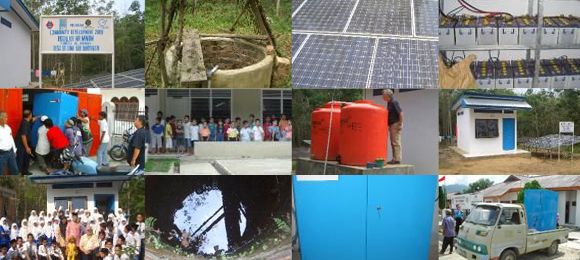







Designing a chemical-free system for treating water from open wells
An open well can supply dependable water for a farm, property or small community, but groundwater quality can shift after rain, drought or nearby land activity. A chemical-free treatment design must therefore begin with the source, not a standard filter chosen from a catalogue.
For many Australian premises, this is familiar. Around Sydney and Melbourne, some rural and peri-urban properties rely on bores, open wells or rainwater tanks, while Perth households are accustomed to storing roof water for gardens and household use. Mains water remains the norm in major cities, so private supplies demand careful owner-managed quality control.
Chemical-free means no routine dosing with chlorine, coagulants, acids or other treatment chemicals. It does not mean poor water can be left unchecked. Physical filtration, adsorptive media and ultraviolet disinfection can provide strong barriers when each stage is selected from analysis of the actual well water.
Start with a source survey
Start with a source survey that records the well depth, construction, pumping method, static level, nearby farms, septic systems, roads and flood paths. An open well is more exposed to surface water than a properly sealed bore, so a cracked lining, loose cover or inadequate overflow can become the main contamination route.
A brief history of water treatment shows how sanitation advanced from simple settling and sand filters to controlled disinfection and membrane processes. That history also explains why modern systems depend on several barriers: one filter may handle sediment or metal oxidation, while another protects against bacteria introduced after treatment.
Collect samples before final equipment selection and repeat them across dry, wet and post-flood conditions. Testing should cover turbidity, pH, hardness, iron and manganese, plus locally plausible arsenic, uranium, pesticides, E. coli and other microbiological indicators. An accredited Australian laboratory can establish what the system actually faces.
Set performance targets around intended use
Set performance targets around the water’s intended use. Drinking water, irrigation, livestock, process water and pool filling have different acceptance criteria. Irrigation equipment may be protected by removing suspended solids, while potable water also needs reliable pathogen control, taste management and protection from recontamination in tanks and pipework.
For Australian projects, distinguish public-supplier obligations from private-water responsibilities. The Australian Drinking Water Guidelines inform water utilities and are not automatically applied to a household or private bore, although councils and state authorities may impose conditions. A formal installation should also consider AS/NZS 4021, relevant plumbing and backflow rules, and any local permit required for the well or pump.
Size the plant from measured demand rather than a peak headline flow. Include irrigation cycling, stock watering, cleaning cycles and reasonable growth in household use. Check pressure, simultaneous outlets and storage turnover; a well that cannot sustain the selected flow will undermine filtration performance and may encourage untreated overflow.
Build a practical treatment train
Build a treatment train in the order the water requires. Coarse screens and sediment stages protect downstream components. Catalytic oxidation and filtration can tackle iron and manganese, specialised adsorptive media can target arsenic, uranium or pesticide residues, and a final barrier can polish the water for its designated use.
Do not assume one cartridge handles every hazard. Manganese usually needs oxidation and depth filtration; dissolved arsenic and uranium need validated media or an appropriate membrane; pesticides may require activated carbon or another sorbent. Each option has a service life, and consumable replacement must be included in the operating budget.
Design hydraulically so gravity and correct pressure do most of the work. Low-head filtration, gravity-fed distribution and appropriately sized pumps can reduce electricity demand, while variable-speed control avoids unnecessary cycling. Where practical, capture backwash or select serviceable stages to avoid a continuous waste stream. On larger sites, a staged layout makes it easier to isolate a failing filter, inspect media and expand capacity without redesigning the whole plant.
Plan bacteria control with the distribution system in mind. Ultraviolet treatment can inactivate pathogens without chemical dosing, but it leaves no disinfectant residual, so tanks, taps and downstream pipework still need hygienic maintenance. Include UV intensity monitoring, lamp status alarms, cleanable vessels and an emergency response plan if treated water cannot be safely stored.
Engineer for Australian site conditions
Adapt the installation to Australian conditions rather than importing a generic skid. Heat, dust, leaf litter, insects, heavy rain and power outages affect pumps, filters and controls; coastal groundwater around Sydney, Perth and other coastal cities may also carry salinity that attacks materials and affects treatment chemistry. Local materials, corrosion protection and service access belong in the first drawings.
Real-world operating conditions matter in agricultural settings. This vineyard filtration case study shows how chemical-free filtration can protect irrigation hardware from contaminants in well water, reducing scale and blockage while avoiding routine chemical dosing. The lesson for other farms is to test the source and design for seasonal changes, pump reliability and the cost of keeping sprinklers and drip lines open.
Storage needs the same attention as treatment. A lockable, insect-resistant well cover and sanitary sampling tap are basic controls, while a separate air gap and backflow prevention stop recycled or pumped water entering the supply. Overflow routes must be clear, and storage turnover should be fast enough to prevent warm water becoming a microbial risk.
Match the design to the application
Match the package to the application. Municipal and government projects need redundancy, operator documentation and institutional approval; farming systems must handle variable flows and irrigation sediments; livestock operations prioritise reliability and animal-health limits. Swiss Cleanwater Group can configure modular equipment for these different duties, with site-specific flow and contaminant data driving the selection.
Swimming pools are a separate design environment with their own standards and user expectations. A chemical-free pool treatment overview explains the appeal of managing water without routine chlorine dosing, but pool systems still need dependable circulation, filtration, algae control and routine microbiological testing. Do not reuse a potable-water specification without adapting it to bather load and splash exposure.
Mobile and military installations add constraints such as rapid deployment, transport weight and unreliable utility connections. Compact modules, protected controls, quick-change cartridges and solar-compatible pumping may suit these sites. Buildings and workshops need the same core filtration logic, but each fitting must prevent untreated water from bypassing the treatment path.
Verify treatment and operational safeguards
Commission the system with evidence. Test raw and treated water at design flow, measure pressure and turbidity through each stage, verify alarms and inspect sanitation barriers. Where a claim depends on contaminant removal, challenge testing or independent laboratory verification provides stronger assurance than a clean-water sample collected only after startup.
Establish a monitoring schedule based on risk and use. Potable systems need frequent sanitary checks and periodic chemical analysis; irrigation systems need checks for scaling and filtration performance; pools need clear water, disinfectant status where applicable and laboratory testing under the relevant operating regime. Record every result, corrective action and filter change.
Keep the wellhead, storage tanks and service points cleanable and secure, and use a maintenance calendar for pump lubrication, filter inspection, media replacement and calibration. Supply an as-built diagram, parts list and operating manual so local pump and plumbing contractors in the Australian market can service the installation without specialist knowledge of the manufacturer.
Move from assessment to installation
Before ordering equipment, prepare a site pack: location coordinates, well depth, available flow, intended uses, peak demand, recent laboratory results, photographs, power availability and expected future expansion. A proposal based on those facts can define flow rates, treatment stages, tank volume, controls, installation boundaries, commissioning tests and an ongoing consumables schedule.
Installation should be handled by competent pump, electrical and plumbing professionals, with manufacturer support for setup and operator training. Confirm pipe materials, pump selection, electrical protection, drainage, access and maintenance clearances on site. Avoid installing a system around conditions the supplier has not assessed, since local geology and water chemistry can change the performance assumptions.
Contact Swiss Cleanwater Group to request a site-specific assessment and a chemical-free treatment proposal for your open well. Provide the available water data and operational requirements, and the team can match purification capacity, filtration stages and controls to the project while providing the product information and case studies needed for an informed investment.
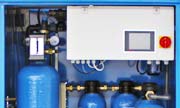
SCM 24
|
|
Cleans 24.000 liters per day
|
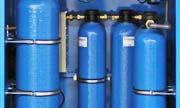
SCM 60
|
|
Cleans 60.000 liters per day
|
Video: How it works

The SCG Advantage
Our market-leading, water cleaning solutions have many advantages. To read more click the items below:
No Chemicals
Our machines and technology does not use any chemicals, at all.
Read more...
No Waste Water
Our machines do not waste any water. Yield = 100%.
Read more...
Low energy use
Uses 50 times less energy than a Reverse Osmosis Machine.
Read more...
Low ownership cost
Lower maintenance and operation costs due to our technology.
Read more...
Easy to install
Simple "plug and play" installation makes for easy deployment.
Read more...
Extremely compact
A compact system, contained in an easy to transport cabinet.
Read more...
Outperforms R.O.
SCG technologies outperform Reverse Osmosis systems.
Read more...
Faster ROI
Get a faster Return on Investment with our systems.
Read more...
Latest News
Latest Blog Posts
| Chemicals in water treatment? |
| Water storage - Whats best for keeping water clean and drinkable? |
| Case: Disaster Management Water Treatment |
Contact SCG
891 Showroom Place
Suite 101
Chula Vista, CA, 91914
Phone: +1 619-878-2730
Contact us by email