


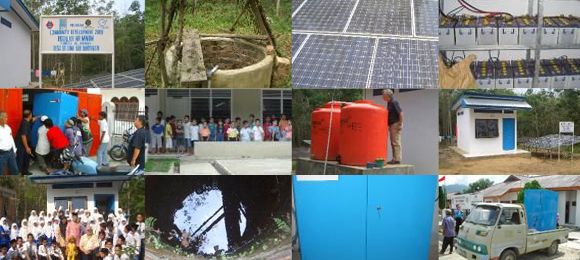







Mobile water treatment trailers for Australian emergencies
Emergency drinking-water demand in Australia is rarely a single, predictable event. A burst main can interrupt supplies in Sydney or Melbourne; bushfires can threaten rural NSW communities; flooding can contaminate shallow sources near Perth and regional towns; and remote clinics, mine camps or road crews may lose their normal supply for days. Planning for all of them with one fixed plant is slow, costly and often impossible.
Designing a mobile water treatment trailer for emergency response therefore calls for a transportable system that can reach the site, treat the actual source water, store a usable reserve and operate with minimal specialist attention. Swiss Cleanwater Group develops chemical-free systems for contaminants including manganese, arsenic, bacteria, pesticides and uranium, with low waste and controlled energy demand. The trailer concept turns those treatment capabilities into a rapid-response asset for councils, emergency agencies, industry and community organisations.
Frame the emergency before choosing equipment
Every deployment needs a clear design basis. Identify whether the trailer will support a council relief camp, a bushfire recovery crew, a remote clinic, a livestock operation or an industrial site, then document the source-water hazards. Floodwater, tank water, groundwater and fire-affected runoff carry different risks, so one assumed contaminant profile cannot safely represent them all.
Australian daily habits influence the service promise as much as the chemistry. During a boil-water notice, households often switch to bottled water or follow a familiar treatment routine; during longer outages, communities may depend on rain tanks and generators. A response trailer should produce water that can be stored, chilled and used without confusing residents about whether it is suitable for drinking, cooking or hygiene.
Set measurable requirements before selecting a pump or filter: peak and average flow, daily volume, hours per day, raw-water testing, reserve storage, travel distance, setup time and the number of trained operators. Allow for a second pump, spare media, protected controls and a documented escalation plan. These parameters determine whether a compact unit is adequate or whether two linked trailers are the safer design.
Engineer a modular treatment train
A robust trailer usually follows a controlled process train: screened intake, particulate pre-filtration, the contaminant-removal stage selected for the source, a polishing or disinfection barrier where required, and a protected clean-water tank. Swiss Cleanwater Group can configure filtration around manganese, arsenic, bacteria, pesticides, uranium and other documented hazards. Separate cartridges or media cassettes make inspection, replacement and cleaning far easier than one oversized treatment block.
Chemical-free treatment does not mean every operational and safety rule disappears. It can remove the need for routine coagulant or oxidant dosing, reducing chemical handling and residual waste, but potable-water use still needs a validated process for the contaminants actually present. Source-specific tests, suitable pore sizes or media, pressure control and—where the risk assessment requires it—a physical or ultraviolet disinfection step are essential before release.
Swiss Cleanwater's work on a golf course filtration example shows how variable source conditions can shape a filtration design. Irrigation-pond water is not drinking water, but lessons about settling, organic load, seasonal water quality and reliable pretreatment can transfer to emergency trailers. The key is to specify treatment for the water that will arrive at the inlet, not the clearest sample taken before the incident.
Design the trailer for Australian field conditions
The chassis and enclosure need to suit Australian road rules and operating conditions. Check loaded dimensions, towing limits, licence requirements, turning radius and tie-down points rather than adapting the treatment layout after purchase. Corrugated roads, heat, dust, rain and flooded access can damage pumps and instruments, so raised electricals, sealed cabinets, accessible drains and replaceable filters should be considered from the start.
Water handling deserves the same attention. Use food-grade hoses and pipework, backflow protection at every connection, labelled sample taps, pressure gauges, a bypass that cannot accidentally return treated water to the source, and enough tank volume for the agreed service period. Power demand should be measured with realistic water temperatures and filter loading. Solar can reduce generator use, but it should be treated as a supplement unless a credible worst-case calculation supports a fully solar duty cycle.
Experience from a vineyard irrigation case study illustrates the value of matching equipment to variable agricultural water rather than selecting from a generic specification. That principle applies equally to emergency supply. A trailer may need different pretreatment in a muddy flood zone than at a groundwater bore, and an operator must be able to recognise a change in turbidity, pressure or flow without dismantling the unit.
Prove safety, compliance and operator readiness
Compliance begins with the intended use and the place of deployment. The Australian Drinking Water Guidelines provide a national benchmark, but they are not a substitute for the requirements of the relevant state authority, local council or workplace regulator. Plumbing, electrical connection, traffic management, fuel storage, waste control and work health and safety obligations may all apply. A trailer hired from another state still needs a deployment-specific plan that meets local conditions.
Commissioning should establish that the finished assembly performs under the design flow and source-water profile. Take representative samples before and after treatment, use an accredited laboratory for verification, calibrate instruments, document media selection and record every operating setpoint. Maintain chain-of-custody procedures and clear tank hygiene controls. Until testing and operator handover are complete, the output should remain labelled as unverified for its intended use.
Training turns equipment into a response capability. Operators need a short intake inspection, shutdown procedure, fault tree, sampling plan, cleaning method and escalation pathway, supported by checklists and maintenance logs. For remote Aboriginal communities or disaster-affected properties, deployment should also respect local access arrangements and community decision-making. A nominated owner should control water-quality records, spare parts, servicing and the decision to return the trailer to service.
Match the delivery model to the buyer
The Australian market includes municipal councils, state emergency-management agencies, water utilities, farms, mines, construction crews, clinics and mobile or military operations. Buyers compare more than purchase price: mobilisation time, operator hours, consumables, laboratory testing, preventive maintenance, warranty support and the ability to obtain parts locally all affect value. A competitive tender should require evidence from comparable sites and a clear Australian service arrangement.
A trailer offers the best balance when the location or source can change, a rapid response matters and storage must travel with the plant. A longer campaign at one stable site may justify temporary fixed infrastructure, while very large flows may need a skid mounted on a suitable base. In the first hours of an incident, delivered bottled water can still be the simplest bridge, but it has no treatment capacity and can lose effectiveness as demand grows.
| Deployment option | Best fit | Primary advantage | Primary limitation | Buying focus |
|---|---|---|---|---|
| Chemical-free treatment trailer | Changing sites and rapid response | Relocatable treatment with integrated storage | Transport envelope and finite tank capacity | Throughput, setup time, training and servicing |
| Temporary fixed plant | One stable site for an extended campaign | High capacity and room for redundancy | Civil works and slow mobilisation | Installation, security, utilities and operator coverage |
| Containerised treatment skid | Large industrial or municipal projects | Scalable and suited to heavy handling | Requires lifting and suitable foundations | Transport access, utilities, controls and civil works |
| Bottled and delivered water | The first hours of an incident | Fast to deploy and familiar to users | High recurring cost and limited stock | Supply contracts, storage and distribution |
Specify the emergency types, worst-case source profiles, required flow, storage period and operator skill level, then ask Swiss Cleanwater Group to translate them into a trailer layout, process guarantee and performance schedule. Include access constraints for remote or flood-prone sites so hose reach, drainage, power resilience and redundancy are engineered rather than improvised.
Contact Swiss Cleanwater Group to request product specifications, relevant case studies, commissioning requirements, operator training and Australian servicing options. A properly engineered mobile unit gives responders a safe, repeatable route from contaminated source to managed water supply while reducing chemical handling, waste and excess energy demand.
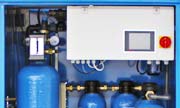
SCM 24
|
|
Cleans 24.000 liters per day
|
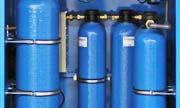
SCM 60
|
|
Cleans 60.000 liters per day
|
Video: How it works
The SCG Advantage
Our market-leading, water cleaning solutions have many advantages. To read more click the items below:
No Chemicals
Our machines and technology does not use any chemicals, at all.
Read more...
No Waste Water
Our machines do not waste any water. Yield = 100%.
Read more...
Low energy use
Uses 50 times less energy than a Reverse Osmosis Machine.
Read more...
Low ownership cost
Lower maintenance and operation costs due to our technology.
Read more...
Easy to install
Simple "plug and play" installation makes for easy deployment.
Read more...
Extremely compact
A compact system, contained in an easy to transport cabinet.
Read more...
Outperforms R.O.
SCG technologies outperform Reverse Osmosis systems.
Read more...
Faster ROI
Get a faster Return on Investment with our systems.
Read more...
Latest News
Latest Blog Posts
| Chemicals in water treatment? |
| Water storage - Whats best for keeping water clean and drinkable? |
| Case: Disaster Management Water Treatment |
Contact SCG
891 Showroom Place
Suite 101
Chula Vista, CA, 91914
Phone: +1 619-878-2730
Contact us by email