









The Hidden Costs of Chemical Water Treatment and How to Avoid Them
Chemical treatment is often selected because it appears familiar, measurable, and easy to install. A dosing pump adds a disinfectant, oxidant, coagulant, or pH-adjusting agent, and the immediate water-quality result can look satisfactory. Yet the purchase price of chemicals represents only one part of the expense.
Over time, treatment chemicals can create costs associated with storage, handling, monitoring, sludge disposal, corrosion, equipment maintenance, and regulatory compliance. These burdens may be especially significant for municipalities, farms, industrial facilities, livestock operations, and remote installations where supplies and technical support are not always close at hand.
A more complete assessment compares the entire water-treatment lifecycle. It considers the source water, target contaminants, flow rate, energy requirements, by-products, maintenance schedule, and the consequences of a treatment failure. Chemical-free filtration can provide a sustainable alternative when the system is correctly matched to the water chemistry.
Where Chemical Treatment Costs Accumulate
Chemical purchasing is the most visible expense, but it is rarely the largest over the life of a plant. Prices can fluctuate because of transport costs, shortages, energy markets, and local supply conditions. Facilities that depend on imported products may also need to maintain larger inventories, tying up capital and increasing the risk of expired or degraded stock.
Storage adds another layer of expense. Many treatment products require secure rooms, ventilation, spill containment, temperature control, and clear separation from incompatible substances. A small leak can damage electrical equipment, contaminate floors, or trigger reporting and cleanup obligations. Sites must also budget for safety training, protective clothing, emergency procedures, and routine inspections.
Chemical treatment can produce secondary waste streams. Coagulation and precipitation may generate sludge containing concentrated metals, suspended solids, or residual chemicals. Disposal is not simply a matter of removing material from the site; it may involve testing, licensed transport, special containers, and disposal fees. These recurring costs can make a low-cost treatment process considerably less economical than expected.
The Operational Burden Behind Dosing
Chemical dosing depends on accurate flow measurement and consistent water quality. When source-water conditions change, operators may need to adjust dosage, contact time, pH, or mixing intensity. Under-dosing can leave contaminants or microorganisms untreated, while over-dosing increases expense and can damage downstream equipment or create undesirable taste and odor.
Automation can reduce manual work, but it introduces its own requirements. Sensors need calibration, dosing pumps require replacement parts, and control systems must be checked to ensure that a faulty reading does not lead to an incorrect chemical feed. In smaller communities and agricultural settings, a process that relies on frequent specialist attention may be difficult to operate reliably.
Chemical reactions can also affect pipes, membranes, tanks, and pumps. Low or high pH, oxidants, and concentrated disinfectants may accelerate corrosion or degrade seals. The resulting leaks and unplanned shutdowns can cost more than routine maintenance, especially where treated water is essential for irrigation, production, sanitation, or public supply.
Health, Environmental, And Compliance Implications
Residual chemicals and reaction by-products require careful control. Depending on the treatment method and source-water composition, disinfection can create compounds that must be monitored under local drinking-water standards. Treatment chemicals can also alter water chemistry in ways that affect aquatic ecosystems if discharge is not properly managed.
Environmental costs are often difficult to include in a basic equipment quotation. Transporting chemical products consumes fuel, packaging becomes waste, and sludge treatment requires additional energy. A process that appears efficient at the point of use may have a larger environmental footprint when its full supply chain is considered.
Compliance adds further complexity. Operators may need to document chemical inventories, dosing rates, residual concentrations, waste transfers, staff training, and incident response. A dependable physical or biological treatment process can simplify some of this administration, although every installation still requires appropriate testing and verification against applicable regulations.
Water chemistry also determines whether a low-chemical or chemical-free solution will work. Dissolved oxygen, alkalinity, temperature, and contaminant concentration all influence oxidation and filtration. A useful explanation of dissolved oxygen's role shows why natural oxidation can sometimes replace added oxidizing agents when the filtration system is designed around the source water.
Comparing Treatment Approaches
Avoiding chemical expenses does not mean ignoring engineering fundamentals. Every water source needs analysis, and some applications may still require limited disinfection or conditioning. The relevant comparison is between total operating requirements rather than between the price of a chemical container and the price of a filtration unit.
| Cost factor | Conventional chemical process | Chemical-free filtration approach |
|---|---|---|
| Consumables | Ongoing chemicals, test reagents, and packaging | Mainly filter media and replacement components |
| Storage | Secure, ventilated areas and spill control | Usually simpler equipment and material storage |
| Waste | Sludge, containers, residual chemicals, or brine depending on process | Captured solids and periodic backwashing |
| Energy demand | Pumps, mixers, dosing systems, and possible heating | Pumping, aeration where needed, and backwashing |
| Monitoring | Chemical residuals, dosage, pH, and reaction control | Flow, pressure, water quality, and media performance |
| Failure risks | Incorrect dose, chemical shortage, corrosion, or by-products | Media exhaustion, clogging, poor sizing, or inadequate pretreatment |
| Best financial outcome | Stable supply chain and well-controlled water chemistry | Reliable source data and correctly selected media |
The table highlights an important point: chemical-free treatment does not eliminate maintenance. Filters must be backwashed, pressure losses monitored, and media replaced when performance declines. However, the maintenance burden may be more predictable, and the process can avoid the recurring logistics and hazards associated with chemical handling.
A well-designed system can also be modular. This allows a municipality, building, farm, or industrial site to scale treatment according to actual demand instead of installing complex dosing infrastructure for occasional peak conditions. Mobile and military applications may benefit particularly from reduced dependence on chemical deliveries.
Preventing Contaminants Before They Cause Damage
Pretreatment is one of the most effective ways to lower long-term operating costs. Sediment, turbidity, organic matter, and elevated metals can overload a primary filter or shorten the life of downstream equipment. Removing these loads early improves hydraulic performance and makes the main purification stage more stable.
Arsenic treatment illustrates the value of process sequencing. A suitable oxidation and filtration arrangement can convert dissolved arsenic into a form that filtration media can capture, but suspended solids and competing contaminants may interfere with that process. Guidance on pre-filtration for arsenic explains how an upstream barrier can support reliable arsenic removal without automatically increasing chemical consumption.
Iron and manganese deserve similar attention. In agricultural irrigation, oxidized iron can accumulate in pipes, emitters, and filters, reducing flow and increasing cleaning requirements. For orchards, the relationship between source-water quality and irrigation reliability is described in iron removal for orchards. Preventing clogging can protect both equipment and crop-water delivery.
Pretreatment is also valuable for buildings, livestock facilities, and swimming pools. Removing particles and problematic minerals before final polishing reduces the load on pumps, membranes, ultraviolet units, and disinfection stages. The result is often a longer service life and fewer emergency interventions.
Designing For Lower Total Cost
The first design step should be a complete water analysis rather than a generic equipment selection. Testing should identify target contaminants, pH, hardness, alkalinity, turbidity, conductivity, dissolved metals, microbiological risks, and seasonal variation. Flow patterns are equally important because a system sized only for average demand may fail during peak use.
The treatment objective must then be defined clearly. Drinking water, irrigation water, process water, animal consumption, and swimming-pool water have different quality requirements. A solution that removes manganese effectively may not address bacteria, pesticides, uranium, or arsenic without additional stages. Clear performance targets prevent both under-design and unnecessary equipment.
Lifecycle costing should include installation, energy, consumables, labor, waste, testing, replacement media, downtime, and disposal. It should also assign a value to operational resilience. A system that continues functioning during supply interruptions or difficult transport conditions may offer substantial savings even if its initial purchase price is not the lowest.
Practical Choices For Avoiding Unnecessary Expense
A cost-conscious water purification strategy should be based on evidence and operational reality. The following measures help reduce avoidable spending:
- Test raw water during different seasons before selecting filtration media or treatment stages.
- Compare chemical, physical, biological, and combined processes using full lifecycle costs.
- Install pretreatment where sediment, iron, manganese, or organic matter could cause clogging.
- Select equipment with accessible parts, clear monitoring points, and manageable backwashing requirements.
- Plan for future flow changes so expansion does not require replacing the entire treatment plant.
Chemical-free systems are most effective when they are engineered for the actual source water rather than promoted as universal replacements. In some applications, a hybrid arrangement may be appropriate, combining filtration with a limited final barrier where regulations or microbiological conditions require it. The goal is controlled, efficient treatment with the lowest practical resource burden.
Turning Water Quality Into A Reliable Asset
The hidden costs of chemical water treatment become easier to avoid when decision-makers evaluate the complete operating model. Chemical purchases, storage, waste, safety, corrosion, energy, and downtime all belong in the same calculation. So do the benefits of simpler logistics, reduced hazardous-material exposure, and stable performance.
Swiss Cleanwater Group develops water-treatment technologies for municipalities, agriculture, industry, livestock, buildings, pools, and mobile applications. Its systems are designed to address contaminants such as manganese, arsenic, bacteria, pesticides, and uranium while limiting chemicals, waste, and excessive energy use.
Begin with a source-water assessment and a clear statement of the required water quality. Then use the results to compare a properly designed filtration solution with the ongoing cost of dosing, storage, waste handling, and maintenance. Contact Swiss Cleanwater Group to discuss a treatment configuration that protects water quality while keeping long-term operating costs under control.
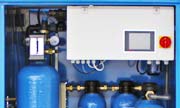
SCM 24
|
|
Cleans 24.000 liters per day
|
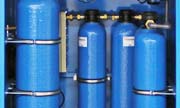
SCM 60
|
|
Cleans 60.000 liters per day
|
Video: How it works
The SCG Advantage
Our market-leading, water cleaning solutions have many advantages. To read more click the items below:
No Chemicals
Our machines and technology does not use any chemicals, at all.
Read more...
No Waste Water
Our machines do not waste any water. Yield = 100%.
Read more...
Low energy use
Uses 50 times less energy than a Reverse Osmosis Machine.
Read more...
Low ownership cost
Lower maintenance and operation costs due to our technology.
Read more...
Easy to install
Simple "plug and play" installation makes for easy deployment.
Read more...
Extremely compact
A compact system, contained in an easy to transport cabinet.
Read more...
Outperforms R.O.
SCG technologies outperform Reverse Osmosis systems.
Read more...
Faster ROI
Get a faster Return on Investment with our systems.
Read more...
Latest News
Latest Blog Posts
| Chemicals in water treatment? |
| Water storage - Whats best for keeping water clean and drinkable? |
| Case: Disaster Management Water Treatment |
Contact SCG
891 Showroom Place
Suite 101
Chula Vista, CA, 91914
Phone: +1 619-878-2730
Contact us by email