







Treating Industrial Boiler Water Without Chemical Softeners
Industrial boilers depend on stable water quality. When dissolved minerals enter the feedwater and concentrate inside the steam cycle, they can form hard deposits on heat-transfer surfaces, restrict circulation, increase fuel consumption, and contribute to unplanned shutdowns. The problem becomes more severe when a plant uses groundwater with elevated calcium, magnesium, silica, iron, or manganese.
Chemical softeners have traditionally been used to exchange calcium and magnesium for sodium. That approach can reduce conventional hardness, but it creates a brine waste stream and does not remove every contaminant that affects boiler performance. A carefully designed physical treatment system can reduce scale-forming minerals while limiting chemical use, wastewater, and operating complexity.
The correct solution depends on boiler pressure, feedwater chemistry, condensate recovery, makeup-water volume, and the required steam quality. Treating water for industrial boilers therefore begins with analysis rather than with a standard piece of equipment. The objective is to produce consistent feedwater and control concentration throughout the system.
Why Boiler Feedwater Needs Careful Control
Scale develops when dissolved substances become concentrated as water evaporates. Calcium carbonate, calcium sulfate, magnesium compounds, and silica can precipitate on tubes and internal surfaces. Even a thin mineral layer acts as insulation, forcing the burner to consume more fuel to transfer the same amount of heat. Thick deposits can cause localized overheating and shorten equipment life.
Boiler water quality also affects corrosion. Low alkalinity, dissolved oxygen, acidic conditions, and high levels of chloride or sulfate may attack metal surfaces. Carryover is another concern: excessive dissolved solids can enter the steam, contaminating processes, damaging turbines, or reducing product quality.
A useful treatment program separates three tasks: removing contaminants from incoming water, controlling concentration inside the boiler, and protecting the distribution system. Pretreatment may involve filtration, membrane separation, degassing, or polishing. Blowdown then removes concentrated boiler water, while monitoring confirms that conductivity, pH, hardness, and other parameters remain within the operating range.
What Causes Scale in Industrial Boilers
Hardness is a major contributor, but it is not the only source of deposits. Calcium and magnesium react with alkalinity and form low-solubility compounds as temperature rises. Silica can create hard, glass-like deposits or combine with other minerals. Iron and manganese may foul filters, stain equipment, and accumulate in areas with poor circulation.
Groundwater quality can vary substantially between wells and seasons. Surface water may contain suspended solids, organic matter, microorganisms, and agricultural residues. Recycled process water can introduce oil, chemicals, or dissolved salts. Condensate return usually improves efficiency, but contaminated condensate can carry corrosion products or process contaminants back to the boiler.
This is why a simple hardness test is insufficient for high-demand facilities. A complete water analysis should consider total dissolved solids, alkalinity, chloride, sulfate, silica, iron, manganese, pH, conductivity, turbidity, and microbial indicators where relevant. The results establish whether the plant needs a membrane system, specialist media, polishing, or a combination of treatment stages.
Chemical-Free Treatment Technologies
A chemical-free approach does not mean that the water bypasses engineering controls. It means that the main contaminant-removal process avoids routine dosing of softening chemicals, coagulants, or regeneration brine. Depending on the source water, a treatment train may combine sediment filtration, catalytic media, ultrafiltration, reverse osmosis, or another low-waste separation technology.
Ultrafiltration is effective for suspended particles, colloids, bacteria, and some larger organic materials, but it does not remove dissolved hardness. Reverse osmosis is more suitable when the aim is to reduce dissolved salts, hardness, silica, and many other ionic contaminants. It produces a concentrate stream, so recovery rate and concentrate management must be included in the design.
Iron and manganese require particular attention because they can foul membranes and interfere with downstream equipment. Appropriate oxidation and filtration, or a dedicated media system, may be installed before the main desalination stage. A practical explanation of this process is provided in manganese filtration methods, especially for facilities using groundwater as a source.
| Treatment stage | Primary purpose | Boiler benefit | Key design consideration |
|---|---|---|---|
| Screening and sediment filtration | Removes grit and suspended solids | Protects pumps, valves, and membranes | Filter loading and backwashing |
| Iron and manganese removal | Reduces dissolved metals and oxidation products | Limits fouling and deposit formation | Source-water chemistry and contact time |
| Ultrafiltration | Reduces particles, colloids, and microorganisms | Improves downstream membrane stability | Pretreatment and cleaning frequency |
| Reverse osmosis | Removes hardness, salts, silica, and many dissolved contaminants | Produces lower-mineral feedwater | Recovery rate and concentrate disposal |
| Final polishing | Controls remaining ions or specific contaminants | Supports high-pressure or high-purity steam systems | Required quality and monitoring points |
Designing a Reliable Treatment Train
The best equipment arrangement is determined by the boiler’s operating conditions. A low-pressure heating boiler may require less extensive treatment than a high-pressure process boiler, where silica and conductivity control are critical. Makeup-water demand also matters: a plant with strong condensate recovery may need a smaller purification system than one that continuously introduces large volumes of fresh water.
Membrane systems should be protected from fouling through suitable pretreatment. Excessive turbidity, oxidized metals, oil, and biological growth can reduce flow and increase cleaning requirements. Automatic backwashing, differential-pressure alarms, flow meters, and conductivity sensors help operators identify changes before they become expensive failures.
The system should also be designed around water use, not just contaminant removal. High recovery reduces wastewater but may increase scaling pressure inside the membrane system. Lower recovery produces more concentrate but can offer greater operational stability. For industrial users assessing the full operating cost, this analysis of industrial purification energy costs connects water quality with pumping, heating, maintenance, and energy consumption.
Managing Boiler Water After Treatment
High-quality feedwater reduces the mineral load, but it does not eliminate the need for boiler-water control. As steam leaves the vessel, residual dissolved solids become more concentrated. Conductivity-based blowdown can automatically remove a controlled portion of the boiler water, limiting the buildup of salts while avoiding unnecessary heat loss.
Monitoring should be continuous or frequent enough to reflect the plant’s operating pattern. Typical control points include feedwater conductivity, boiler-water conductivity, pH, hardness leakage, silica, phosphate where used, dissolved oxygen, and condensate quality. Alarm limits should be based on the boiler manufacturer’s requirements and the steam application.
pH deserves special attention because it influences both corrosion and contaminant behavior. The relationship between acidity, alkalinity, and removal performance is discussed in pH and contaminant removal. In a boiler installation, pH should be interpreted alongside conductivity, alkalinity, material compatibility, and the selected treatment technology rather than treated as an isolated number.
Evaluating Performance And Total Cost
A chemical-free system should be assessed by measurable operating results. Useful indicators include reduced hardness leakage, lower boiler conductivity, fewer deposit-related cleanings, stable heat-transfer performance, lower blowdown volume, and consistent steam quality. Energy use by pumps and membranes should be compared with the fuel and maintenance costs associated with untreated or poorly treated water.
Capital cost is only one part of the decision. A conventional softener may appear simple, yet salt deliveries, brine discharge, regeneration water, storage, labor, and compliance requirements can add substantially to lifecycle cost. A membrane-based system may require more advanced controls, but it can reduce chemical handling and provide broader contaminant removal.
The financial model should include water recovery, concentrate management, replacement media, membrane life, cleaning intervals, boiler efficiency, and downtime risk. Pilot testing or a monitored trial can be valuable when the source water is variable or the plant has experienced unexplained deposits. The objective is a stable treatment process that operators can maintain, not a nominal specification that performs only under laboratory conditions.
Practical Steps For A Lower-Waste Boiler Program
A disciplined implementation reduces the risk of replacing one problem with another. Begin with representative water samples from the source, condensate return, and boiler circuit. Seasonal sampling may be necessary when groundwater levels, rainfall, or production schedules alter the chemistry.
The treatment design should include clear operating procedures and maintenance responsibilities. Operators need to know when to inspect filters, verify sensors, review membrane performance, test hardness leakage, and adjust blowdown settings. Data logging makes it easier to connect water quality with fuel consumption, deposit formation, and production interruptions.
- Analyze source water, condensate, and boiler water before selecting equipment.
- Match hardness, silica, conductivity, and contaminant limits to boiler pressure and steam use.
- Use pretreatment to protect membranes from sediment, metals, oil, and biological fouling.
- Automate conductivity monitoring and blowdown where process conditions allow.
- Track water recovery, energy consumption, maintenance, and cleaning frequency as lifecycle indicators.
A chemical-softener-free program is most effective when water treatment, boiler operation, and maintenance are managed as one system. Swiss Cleanwater Group can help industrial and municipal users evaluate purification options for difficult water sources, with solutions tailored to contaminant levels, flow requirements, and sustainability targets. Contact the company to discuss an analysis-led approach to cleaner boiler feedwater and more efficient plant operation.
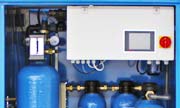
SCM 24
|
|
Cleans 24.000 liters per day
|
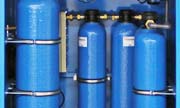
SCM 60
|
|
Cleans 60.000 liters per day
|
Video: How it works
The SCG Advantage
Our market-leading, water cleaning solutions have many advantages. To read more click the items below:
No Chemicals
Our machines and technology does not use any chemicals, at all.
Read more...
No Waste Water
Our machines do not waste any water. Yield = 100%.
Read more...
Low energy use
Uses 50 times less energy than a Reverse Osmosis Machine.
Read more...
Low ownership cost
Lower maintenance and operation costs due to our technology.
Read more...
Easy to install
Simple "plug and play" installation makes for easy deployment.
Read more...
Extremely compact
A compact system, contained in an easy to transport cabinet.
Read more...
Outperforms R.O.
SCG technologies outperform Reverse Osmosis systems.
Read more...
Faster ROI
Get a faster Return on Investment with our systems.
Read more...
Latest News
Latest Blog Posts
| Chemicals in water treatment? |
| Water storage - Whats best for keeping water clean and drinkable? |
| Case: Disaster Management Water Treatment |
Contact SCG
891 Showroom Place
Suite 101
Chula Vista, CA, 91914
Phone: +1 619-878-2730
Contact us by email