


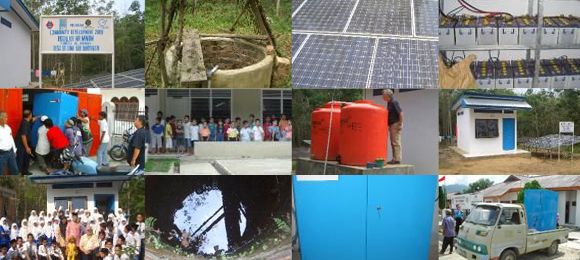







Biological Denitrification for Chemical-Free Nitrate Removal
Nitrate in groundwater is an invisible problem for many Australian households, farms and businesses that depend on bores. It dissolves in water and is not removed by ordinary sediment filters, so clear water can still exceed a health guideline. Biological denitrification offers a sustainable route to lower nitrate concentrations without chemical coagulants or the bulky sludge associated with some conventional treatment methods.
Chemical-free removal of nitrates from groundwater using biological denitrification depends on microorganisms rather than strong oxidising chemicals. In an oxygen-depleted treatment zone, these organisms use nitrate as an electron acceptor and convert it mainly into nitrogen gas, which leaves the water. Swiss Cleanwater Group develops systems on this principle for municipal, agricultural, industrial and mobile applications.
The technology suits Australia’s widespread use of groundwater for drinking, irrigation, livestock and process water. However, successful performance depends on flow, temperature, pH, carbon availability and the contaminants accompanying nitrate. A site-specific assessment is more useful than a treatment claim based on laboratory water alone.
Why Groundwater Nitrate Matters
Nitrate enters groundwater through fertiliser, manure, leaking septic systems and wastewater infiltration. The risk is greatest where shallow bores draw from sandy or highly permeable aquifers beneath agricultural land or developed areas. In parts of peri-urban Melbourne and the Hawkesbury region north-west of Sydney, changing land use and ageing wastewater infrastructure can affect shallow groundwater quality.
The Australian Drinking Water Guidelines set a health-based value of 50 mg/L for nitrate, expressed as nitrate. State and territory authorities apply their own requirements for reticulated supplies, while owners of private bores, tanks and rainwater systems remain responsible for their supply and its routine testing. Households using bore water for drinking, cooking or infant formula preparation should obtain accredited laboratory analysis for nitrate and nitrite. Common household cartridge and carbon filters should not be credited with nitrate removal unless certified for that purpose.
Routine habits can also contribute. Nitrogen-rich lawn fertiliser, garden compost and wastewater from small-scale sewage systems may eventually reach the same aquifer. Stock watering, irrigation and food processing add demand without necessarily changing nitrate levels. Testing at the point of use remains essential because treatment needs and discharge rules differ between a garden hose, a dairy washdown and a town water connection.
How Biological Denitrification Works
Biological denitrification is an engineered form of anoxic filtration. Water passes through a bed containing microorganisms and a carbon-bearing medium. Under oxygen-limited conditions, the organisms gain energy by reducing nitrate, in sequence, to nitrite, nitric oxide, nitrous oxide and nitrogen gas. The gas diffuses out, while a relatively small amount of new biomass remains.
A controlled supply of usable carbon is essential because nitrate reduction consumes an electron donor. Appropriate media can provide this carbon without adding conventional treatment chemicals such as coagulants or oxidants. The description “chemical-free” should not be interpreted as requiring no operating inputs: a sound system manages carbon supply, pH, dissolved oxygen and bed flow so the biological reaction stays balanced.
Compared with ion-exchange regeneration or reverse osmosis, a biological denitrification plant can avoid routine chemical dosing, salt-bearing waste streams and high-pressure membrane operation. That does not make it maintenance-free. Filters still need inspection, flow needs monitoring, and spent media or biomass must be handled responsibly. Where nitrate levels are modest and raw water is suitable, the process can offer an economical long-term option.
Designing Around Flow and Water Quality
Sizing starts with actual demand, not simply the number of taps. A rural household may have a low daily average but a sharp morning peak, while a livestock operation or small food processor may require continuous flow and a separate stock-water peak. Design flow, daily volume and peak-hour demand should be measured or estimated before tank capacity and treatment-bed dimensions are chosen.
Cold groundwater slows nitrate-reducing organisms, while warm water can increase biological activity. Inadequate carbon or poorly controlled conditions can produce nitrous oxide instead of fully finished nitrogen gas. The temperature range through the year matters in places such as southern Tasmania, inland Victoria or high-altitude New South Wales. Pumps, flow meters and sample points should make changes in performance visible rather than leaving operators to judge treatment from taste alone.
Industrial users also need an appropriate balance between recovered water and production downtime. The principles in brewery filtration sizing apply to other small businesses: peak demand determines vessel size, while feed quality determines pretreatment and maintenance frequency. A brewery can also separate streams so relatively clean wash water is reused for tasks that do not contact product.
Other Contaminants and Site Conditions
Nitrate treatment is not a substitute for removing every other contaminant. Iron and manganese can foul biological media or occupy treatment space, particularly where bore water has been aerated. A practical guide to manganese removal without waste highlights the broader benefit of avoiding hazardous residuals. Any iron-bearing sludge or used media still needs an approved disposal pathway.
Arsenic requires different treatment chemistry and should not be assumed to disappear in a denitrification bed. The contaminant-specific lessons in remote arsenic removal reinforce the need to identify what is actually present. Groundwater testing should normally include arsenic, manganese, iron, turbidity, hardness, alkalinity, pH and, where relevant, microbial indicators.
Site conditions can influence both installation and performance. A fractured-rock bore may deliver water from changing horizons; a sandy coastal aquifer may recharge rapidly after rain; and contaminated runoff near a tank or well can bypass the intended process. Hydraulic separation, protected storage and good drainage reduce these risks. Where treatment serves drinking water, adequate disinfection remains a separate requirement.
Commissioning, Monitoring and Compliance
Commissioning should follow a clear protocol. Confirm the bore depth and construction, establish baseline water quality, verify flow and pressure, then bring the biological bed into operation gradually. Startup logs should record temperature, pH, dissolved oxygen, nitrate and nitrite. Carbon supply, flow distribution and media condition need adjustment before stable nitrate removal is accepted.
Ongoing monitoring protects both the installation and the people relying on it. A useful schedule combines routine household checks with periodic accredited laboratory analysis and event-based testing after floods, drought, nearby construction or a change in land use. Food processors, swimming-pool operators and livestock facilities should document performance against relevant fit-for-purpose criteria rather than rely only on an initial commissioning certificate.
Australian water regulation is divided among state and territory authorities. Public water suppliers operate within regulated frameworks built around the Australian Drinking Water Guidelines, whereas private bore and rainwater supplies normally sit outside the reticulated network’s monitoring programme. Plumbing, backflow prevention, workplace and environmental approvals may apply in addition to the treatment system itself.
Contact Swiss Cleanwater Group with your laboratory results, bore details, daily and peak flow estimates, seasonal water temperatures and intended use so the team can assess the site and propose a biological denitrification system matched to those conditions. Ask for the treatment pathway, monitoring schedule, maintenance requirements and expected performance in writing, then confirm nitrate reduction on your own water before expanding the application.
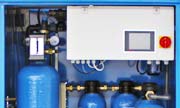
SCM 24
|
|
Cleans 24.000 liters per day
|
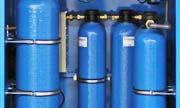
SCM 60
|
|
Cleans 60.000 liters per day
|
Video: How it works
The SCG Advantage
Our market-leading, water cleaning solutions have many advantages. To read more click the items below:
No Chemicals
Our machines and technology does not use any chemicals, at all.
Read more...
No Waste Water
Our machines do not waste any water. Yield = 100%.
Read more...
Low energy use
Uses 50 times less energy than a Reverse Osmosis Machine.
Read more...
Low ownership cost
Lower maintenance and operation costs due to our technology.
Read more...
Easy to install
Simple "plug and play" installation makes for easy deployment.
Read more...
Extremely compact
A compact system, contained in an easy to transport cabinet.
Read more...
Outperforms R.O.
SCG technologies outperform Reverse Osmosis systems.
Read more...
Faster ROI
Get a faster Return on Investment with our systems.
Read more...
Latest News
Latest Blog Posts
| Chemicals in water treatment? |
| Water storage - Whats best for keeping water clean and drinkable? |
| Case: Disaster Management Water Treatment |
Contact SCG
891 Showroom Place
Suite 101
Chula Vista, CA, 91914
Phone: +1 619-878-2730
Contact us by email