


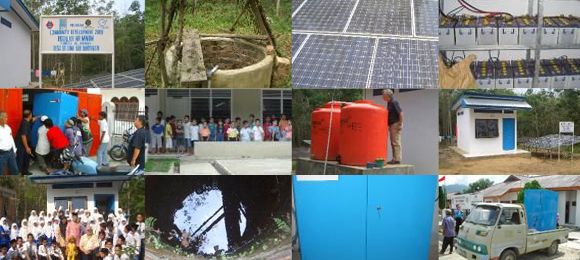







Designing a Mobile Unit for Emergency Water Treatment in High-Turbidity Environments
When floods, cyclones, bushfires or infrastructure failures disrupt a water supply, the immediate challenge is rarely a lack of raw water. Rivers, dams, farm storages and flooded bores may still contain large volumes, but they can also carry clay, silt, organic matter, bacteria, pesticides and other contaminants. A mobile treatment unit must convert that unstable source into safe, usable water quickly and consistently.
High turbidity makes emergency purification particularly demanding. Suspended solids can block filters, reduce disinfection performance and damage pumps. A system designed for clear groundwater may struggle when supplied with floodwater from a creek near Brisbane, a farm dam in regional Victoria or a shallow bore affected by a cyclone in northern Queensland.
The right design begins with the intended use. Water for drinking, a temporary evacuation centre, livestock, irrigation, industrial cleaning and firefighting support will require different flow rates and quality controls. Operators also need equipment that can be transported on Australian roads, powered at remote sites and serviced by local technicians.
Chemical-free treatment can be valuable where chemical storage, dosing accuracy and waste disposal are difficult. Swiss Cleanwater Group develops purification systems aimed at removing contaminants such as bacteria, manganese, arsenic, pesticides and uranium while limiting chemical use, reject water and energy demand. A mobile configuration brings those advantages to locations where fixed infrastructure is unavailable or damaged.
Defining the Emergency Operating Brief
The first design decision is the required production rate. A small unit for a rural clinic may produce a few thousand litres per day, while a council-operated emergency station may need tens or hundreds of thousands of litres. Peak demand should include drinking, cooking, hygiene and essential cleaning rather than relying on an average daily estimate.
Source variability must also be documented. Turbidity can rise sharply after heavy rain, and floodwater may contain fine colloidal particles that remain suspended for hours. A practical specification should state the expected minimum and maximum turbidity, temperature range, salinity, pH and likely contaminants. It should also identify whether the unit will draw from a river, dam, bore, tank or tanker.
Australian deployments often involve long distances and limited access to parts. A design for the local market should therefore prioritise simple connections, robust frames and components available through established pump, electrical and plumbing suppliers. Compatibility with common tanker fittings and standard Australian power arrangements can reduce delays during an urgent deployment.
Managing Turbidity Before Fine Treatment
Pre-treatment protects the main purification stage. A floating intake or screened suction line can keep leaves, sticks and larger debris away from the pump. Coarse screening should be easy to remove and clean without specialist tools, since flood sites rarely provide a controlled plant-room environment.
The next barrier may include a settling tank, hydrocyclone, lamella clarifier or washable depth filter, depending on the source and required capacity. The purpose is to remove heavier solids and reduce the load on fine filtration. Automatic backwashing can save labour, although the backwash stream still needs a safe disposal or containment plan.
Fine particles require particular attention. A water sample that looks acceptable after settling may still contain enough colloidal material to foul a membrane or carry microorganisms through an undersized filter. Operators should use turbidity measurements at several points in the process, rather than judging performance by appearance alone.
For a treatment train focused on microbiological safety, the principles described in removing bacteria and viruses can help inform the selection of physical purification barriers. The final configuration should still be validated against the actual source water and Australian drinking-water requirements.
Selecting a Chemical-Free Treatment Train
A mobile system may combine screening, sediment removal, membrane filtration and a final polishing stage. Ultrafiltration can provide a physical barrier for many bacteria and suspended contaminants, while other technologies may be required for dissolved substances such as arsenic, manganese, pesticides or uranium. The best arrangement depends on laboratory results rather than a generic equipment list.
Chemical-free treatment can simplify logistics, especially where chlorine transport, storage and dosing are impractical. It may also reduce taste and odour concerns for drinking water. However, chemical-free does not mean maintenance-free. Pumps, sensors, membranes, seals and electrical controls still require inspection, cleaning and planned replacement.
The process should include safeguards against water-quality changes. Online turbidity, conductivity, pressure and flow instruments can signal when a source has deteriorated or a filter is becoming blocked. A programmable controller can stop production automatically if critical limits are exceeded, preventing untreated or inadequately treated water from entering a storage tank.
Water intended for consumption needs a verified monitoring plan. Portable units should include sampling points before and after key treatment barriers, along with clear procedures for microbiological testing. During an emergency, documentation is as important as hardware because councils, health authorities and relief organisations need evidence that the water is safe for its intended use.
Building for Transport, Power and Rapid Setup
The treatment package can be installed on a skid, trailer, truck body or container. A skid is often suitable for a local council or mining site with lifting equipment, while a trailer offers greater independence for rural and disaster-response teams. The frame should protect pipework and instruments without making access to service components difficult.
Weight distribution matters on Australian roads. A trailer carrying tanks, pumps and filtration equipment must meet relevant towing, braking and load requirements. Stabilising legs, lifting points and weatherproof enclosures support safe setup on uneven ground. Quick-connect hoses can shorten commissioning time, but they should be clearly labelled to prevent incorrect connections between raw water, treated water and waste lines.
Power options should match the deployment environment. A unit may connect to a site generator, mains electricity, batteries or a hybrid solar system. Remote stations near Alice Springs or regional Western Australia may value low-energy pumps and solar-assisted operation, while a flood response in New South Wales may depend on generator compatibility and rapid refuelling.
Controls should remain usable when operators are wearing gloves, working in rain or dealing with poor lighting. A simple interface showing flow, pressure, turbidity and alarms is generally more valuable than a complex display filled with rarely used data. Remote monitoring can assist a central operations team, but local manual controls should remain available if communications fail.
Designing for Australian Deployment Conditions
Climate and geography can change the equipment requirements. Northern Australia brings intense heat, humidity and cyclones, while inland locations may experience dust, large temperature swings and very limited technical support. Enclosures, cabling and exposed fittings should be selected for these conditions rather than for a permanent indoor plant.
Water sources also vary considerably between Australian regions. A flood-affected river near Cairns may contain heavy organic debris, while a farm dam in South Australia may have algae, salts and fine sediment. In mining or industrial areas, the source may contain metals or process-related contaminants. A portable plant should allow treatment stages to be adjusted without rebuilding the entire system.
Local operating culture is relevant as well. Council crews, SES volunteers, defence teams, farmers and water contractors may all use the same equipment during different phases of an incident. Clear labels, short operating procedures and practical training help ensure that a unit can be handed from one team to another without introducing errors.
The system should also account for Australian drinking-water guidance, site safety rules and environmental obligations for concentrated waste or backwash water. A mobile plant that produces safe water but discharges contaminated solids beside a creek is not a complete emergency solution.
Planning Maintenance, Verification and Expansion
A reliable mobile unit is designed around its maintenance schedule from the beginning. Consumables should be listed by part number, expected service interval and storage requirement. Spare hoses, gaskets, screens, sensors and filter elements can prevent a minor fault from stopping production during a regional response.
Operators should record source-water quality, operating hours, cleaning events, pressure changes and treated-water test results. These records reveal gradual fouling and help determine whether the pre-treatment stage is adequate. They also provide an operational history when the equipment is moved between sites.
A modular arrangement makes future expansion easier. Additional filtration skids, storage tanks or pumping modules can be added when demand grows. This is useful for farms, livestock operations and regional industries that may first purchase a small emergency system and later use it for everyday water supply.
The same principle applies to dissolved contaminants. A case involving chemical-free irrigation illustrates why source testing and the intended end use should guide treatment selection. For industrial sites where hardness and scaling are concerns, salt-free softening alternatives may also be considered as part of a broader water-management strategy.
A well-designed mobile treatment unit is a complete operating system rather than a collection of filters. It combines source assessment, turbidity control, contaminant removal, safe power, transportability, monitoring and trained operation. That integrated approach gives Australian communities and businesses a stronger response when normal water infrastructure is unavailable.
Swiss Cleanwater Group can help assess a source-water profile, define the required capacity and select a mobile purification configuration for municipal, agricultural, industrial, livestock, building or emergency use. Share the expected turbidity, contaminants, daily volume, power availability and deployment conditions to begin developing a practical treatment solution.
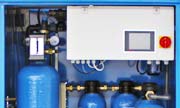
SCM 24
|
|
Cleans 24.000 liters per day
|
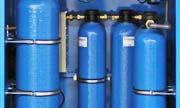
SCM 60
|
|
Cleans 60.000 liters per day
|
Video: How it works
The SCG Advantage
Our market-leading, water cleaning solutions have many advantages. To read more click the items below:
No Chemicals
Our machines and technology does not use any chemicals, at all.
Read more...
No Waste Water
Our machines do not waste any water. Yield = 100%.
Read more...
Low energy use
Uses 50 times less energy than a Reverse Osmosis Machine.
Read more...
Low ownership cost
Lower maintenance and operation costs due to our technology.
Read more...
Easy to install
Simple "plug and play" installation makes for easy deployment.
Read more...
Extremely compact
A compact system, contained in an easy to transport cabinet.
Read more...
Outperforms R.O.
SCG technologies outperform Reverse Osmosis systems.
Read more...
Faster ROI
Get a faster Return on Investment with our systems.
Read more...
Latest News
Latest Blog Posts
| Chemicals in water treatment? |
| Water storage - Whats best for keeping water clean and drinkable? |
| Case: Disaster Management Water Treatment |
Contact SCG
891 Showroom Place
Suite 101
Chula Vista, CA, 91914
Phone: +1 619-878-2730
Contact us by email