









Monitoring pH in Chemical-Free Water Treatment Systems
pH is one of the fastest indicators of whether a treatment system is operating within its intended chemical window. It affects corrosion, scale, oxidation and contaminant adsorption, yet it cannot tell you whether water is safe. Reliable pH monitoring therefore needs source-water knowledge and contaminant-specific verification.
Chemical-free does not mean chemistry-free. Water still contains carbonate, dissolved metals and gases, and treatment media can alter their balance. The aim is usually to avoid adding treatment chemicals while maintaining stable conditions through source management, pretreatment, approved physical processes, suitable media and disciplined maintenance.
For Australian operators, that discipline must handle variable rainwater, alkaline inland bore water, chlorinated municipal supplies and remote sites. The following framework establishes a baseline, interprets trends and connects pH control to verified treatment performance.
Understand what pH reveals
A pH reading describes hydrogen-ion activity on a logarithmic scale; one unit represents a tenfold change. It is not the same as alkalinity, which measures buffering capacity, nor as acidity in general. A sample can have a moderate pH but little capacity to neutralise acids, so alkalinity and hardness belong in the broader control record.
Low pH can increase corrosion and metal release from pipes, while high pH can encourage scale and alter contaminant-removal reactions. pH also influences arsenic adsorption on some media and the oxidation of iron and manganese. It does not, by itself, verify removal of arsenic, pesticides, uranium or pathogens.
The Langelier Saturation Index (LSI) helps indicate calcite scaling tendency when combined with calcium, alkalinity, total dissolved solids and temperature; it is not a contaminant test. In Australia, the Australian Drinking Water Guidelines use 6.5–8.5 as the recommended pH range, but utilities, state regulators and local councils apply site-specific requirements under relevant plumbing and water-quality frameworks.
Set a monitoring routine that fits Australian conditions
Use an online sensor where continuous operation matters, supported by periodic handheld checks. Calibrate before a shift with fresh buffers that bracket the expected reading, commonly pH 7 plus pH 4 or 10, and compensate for temperature. Clean and recondition electrodes as specified, because fouling by iron or manganese deposits can make a stable-looking trend false.
Record pH with timestamp, temperature, flow, turbidity, pressure, conductivity and alkalinity at appropriate frequencies. Where relevant, include dissolved oxygen or oxidation-reduction potential. Set a narrow operating band from source data and manufacturer guidance, then define a trigger that starts investigation before an excursion becomes an incident.
Source changes matter. Sydney and Melbourne water networks may blend or change sources as catchments and seasons shift, and chlorinated reticulated water can behave differently from harvested rainwater. Perth and parts of South Australia rely heavily on household and commercial rainwater tanks, where variable collection practices and first-flush devices can create acidic or turbid slugs after rain.
Stop unstable water before it reaches treatment media
Protect the treatment train with appropriate pre-filtration. A stable pH cannot compensate for suspended solids repeatedly blinding adsorptive media or changing contact time. The technical case for why pre-filtration matters explains how particle removal supports reliable chemical-free arsenic removal.
Match each upstream stage to the next. Coarse screens and sediment filters handle grit and organics; finer filtration addresses particles that would settle on or enter treatment media. Confirm pressure drop, flow and backwash behaviour, because an overdue filter changes both water quality and the hydraulic conditions under which the main process operates.
Give pre-filters enough capacity for each event rather than cleaning them only after visible failure. In remote Australian installations, a simple differential-pressure gauge and scheduled backwash log can be more dependable than an alarm system without a defined response. Sudden pH drift should also prompt a check of source selection, tank bypasses and untreated bypass lines.
Match pH control to each treatment stage
Treatment stages should have a defined pH envelope. Some media need alkaline conditions to adsorb arsenic efficiently; oxidation-based manganese removal depends on pH and dissolved oxygen. Understanding multi-stage filtration logic helps prevent one stage from consuming capacity or releasing material captured earlier.
Specify how stages interact: pre-filtration, adsorption, oxidation or reduction, polishing and post-treatment. The sequence should reflect the contaminants present, rather than treating every site identically. For example, particulate iron can shield arsenic-binding surfaces, while changing oxidation conditions can alter manganese and iron behaviour in the next vessel.
Measure pH at each critical transition, not only at the finished outlet. That reveals whether a change originates in the source, a pretreatment stage or the main reactor. In alkaline bore water common across parts of the Murray–Darling Basin, monitor manganese and iron as well as carbonate and pH, because precipitation and scaling can occur together.
Adjust pH through physical and operational controls
Where correction is needed, start with physical and operational options. Blending compatible sources can bring pH toward the treatment envelope, although each blend must be checked for contaminant concentrations. Controlled aeration or degassing can change dissolved carbon dioxide and raise pH; a manufacturer-approved passive carbonate stage may also stabilise suitable water.
Use a control hierarchy: prevent shock loads, hold flow and contact time steady, maintain pretreatment, confirm media condition and adjust physical operating conditions in that order. Do not chase a single reading with an unvalidated change. A stable average can still conceal short pH spikes that break through a media bed.
If the required pH cannot be held without chemicals, the honest response is to redesign the process, change the source or select a different validated technology. Chemical-free operation must not become unsafe improvisation. This matters across Australian farms, livestock operations, mines and remote facilities, where water chemistry and maintenance access vary more than a generic specification suggests.
Maintain performance through turbidity and seasonal change
High turbidity is both a water-quality and control problem. Suspended material consumes filter capacity, distorts residence time and may carry contaminants past adsorption sites. The design considerations in high-turbidity treatment controls are particularly relevant after storms, fire events or flooding, when source turbidity can rise far above its daily baseline.
After a turbidity event, verify that filters were backwashed as designed, that bypass valves returned to their normal positions and that treated-water pH returned to its operating band. Compare upstream and downstream turbidity with pH and pressure trends. Australian drought, intense rainfall and bushfire ash can produce rapid changes that a monthly spot check will miss.
Use accredited laboratory testing to verify the contaminants the treatment process is designed to remove. Include arsenic, manganese, iron, pesticides or uranium where relevant, and test for bacteria according to the system’s use and local requirements. pH, conductivity and LSI support process control, but they cannot replace contaminant-specific compliance evidence.
Turn readings into a site-specific control plan
Begin with a baseline week across normal operations, including source changes and backwashes, then agree on operating limits, warning levels and required actions. Place sensors where representative water can be sampled without disturbing the main treatment path. Keep calibration standards, spare probes and clear instructions at the site.
Assign responsibility for reviewing trends, investigating alarms, isolating bypasses and arranging verification samples. A short escalation plan should state what happens at one abnormal reading, two consecutive abnormal readings and a confirmed contaminant exceedance. This turns pH monitoring into a preventive control rather than a decorative dashboard.
Swiss Cleanwater Group can help define the monitoring and control strategy for a specific source, treatment configuration and Australian operating environment. Contact the team with source-water results, site details and required water quality, then request a practical commissioning and verification plan for chemical-free pH management.
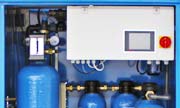
SCM 24
|
|
Cleans 24.000 liters per day
|
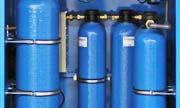
SCM 60
|
|
Cleans 60.000 liters per day
|
Video: How it works

The SCG Advantage
Our market-leading, water cleaning solutions have many advantages. To read more click the items below:
No Chemicals
Our machines and technology does not use any chemicals, at all.
Read more...
No Waste Water
Our machines do not waste any water. Yield = 100%.
Read more...
Low energy use
Uses 50 times less energy than a Reverse Osmosis Machine.
Read more...
Low ownership cost
Lower maintenance and operation costs due to our technology.
Read more...
Easy to install
Simple "plug and play" installation makes for easy deployment.
Read more...
Extremely compact
A compact system, contained in an easy to transport cabinet.
Read more...
Outperforms R.O.
SCG technologies outperform Reverse Osmosis systems.
Read more...
Faster ROI
Get a faster Return on Investment with our systems.
Read more...
Latest News
Latest Blog Posts
| Chemicals in water treatment? |
| Water storage - Whats best for keeping water clean and drinkable? |
| Case: Disaster Management Water Treatment |
Contact SCG
891 Showroom Place
Suite 101
Chula Vista, CA, 91914
Phone: +1 619-878-2730
Contact us by email